Pumpkin lasagna recipe
Pumpkin lasagna is a creamy and comforting alternative to the traditional version you're probably familiar with.
- 400 gr de calabaza pelada y sin semillas
- 6 láminas de lasaña, aproximadamente (120 gr)
- 200 gr de tomate triturado
- 1/2 cebolla pequeña
- 120 gr de ricotta o queso crema
- 1 diente de ajo
- 120 gr de mozzarella rallada
- 30 gr de queso parmesano rallado
- 1 cda de aceite de oliva
- 1/2 cdita de orégano seco
- 1/4 cdita de cucharadita de nuez moscada
- Sal al gusto
- Pimienta negra al gusto
- Precalienta el horno a 200 °C. Corta la calabaza en cubos pequeños, mézclala con la mitad del aceite de oliva, sal y pimienta y colócala en una bandeja. Hornea durante 20-25 minutos, hasta que esté tierna y ligeramente dorada.
- Mientras se cocina la calabaza, prepara la salsa. Sofríe la cebolla picada con el resto del aceite durante 3 minutos. Agrega el ajo y cocina durante 30 segundos.
- Incorpora el tomate triturado, el orégano, una pizca de sal y pimienta. Cocina a fuego medio durante 10-12 minutos, hasta obtener una salsa ligeramente espesa.
- Tritura aproximadamente la mitad de la calabaza asada con la ricotta y la nuez moscada. No es necesario conseguir una crema completamente lisa; algunos trozos pequeños aportarán textura.
- Cocina las láminas de lasaña según las instrucciones del paquete si requieren cocción previa. Escúrrelas bien para evitar que la preparación quede demasiado líquida.
- En una fuente pequeña para horno, coloca una capa fina de salsa de tomate. Añade láminas de lasaña, parte de la crema de calabaza y algunos cubos de calabaza asada.
- Repite las capas hasta terminar los ingredientes. Finaliza con salsa de tomate, mozzarella y queso parmesano.
- Cubre la fuente con papel de aluminio y hornea a 190 °C durante 20 minutos. Retira el aluminio y cocina otros 8-10 minutos, hasta que el queso esté dorado.
- Deja reposar la lasaña durante 8-10 minutos antes de cortarla. Esto ayudará a que las capas se mantengan en su sitio.
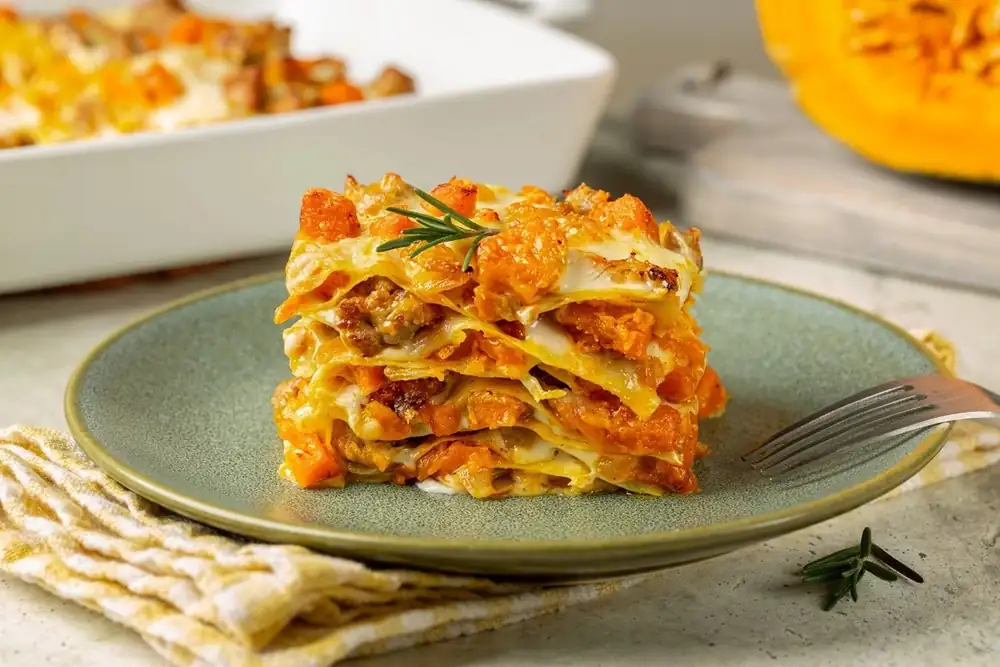
This recipe is made with layers of pasta, roasted squash, tomato sauce, and a blend of cheeses that melts in the oven. It's a great option to enjoy and welcome autumn.
Pumpkin lasagna: step by step
- 2 people
- 620 Kcal
- 400g of peeled and seeded pumpkin
- 6 lasagna sheets, approximately (120 gr)
- 200g of crushed tomatoes
- 1/2 small onion
- 120 gr ricotta or cream cheese
- 1 clove of garlic
- 120g of grated mozzarella
- 30g of grated Parmesan cheese
- 1 tbsp of olive oil
- 1/2 tsp dried oregano
- 1/4 teaspoon of nutmeg
- Salt to taste
- Black pepper to taste
- Preheat the oven to 200°C. Cut the pumpkin into small cubes, toss with half the olive oil, salt and pepper, and place on a baking sheet. Bake for 20-25 minutes, until tender and lightly browned.
- While the squash is cooking, prepare the sauce. Sauté the chopped onion in the remaining oil for 3 minutes. Add the garlic and cook for 30 seconds.
- Add the crushed tomatoes, oregano, a pinch of salt and pepper. Cook over medium heat for 10-12 minutes, until you have a slightly thickened sauce.
- Puree about half of the roasted pumpkin with the ricotta and nutmeg. It doesn't need to be completely smooth; some small pieces will add texture.
- Cook the lasagna sheets according to the package instructions if they require pre-cooking. Drain them well to avoid the filling being too runny.
- In a small ovenproof dish, place a thin layer of tomato sauce. Add lasagna sheets, some of the pumpkin cream, and a few cubes of roasted pumpkin.
- Repeat the layers until all the ingredients are used. Finish with tomato sauce, mozzarella, and Parmesan cheese.
- Cover the dish with aluminum foil and bake at 190°C for 20 minutes. Remove the foil and cook for another 8-10 minutes, until the cheese is golden brown.
- Let the lasagna rest for 8-10 minutes before cutting it. This will help the layers stay in place.
Tips for preparing a creamy pumpkin lasagna
- Use a pumpkin with firm, sweet flesh for better flavor and texture.
- Do not boil the squash before preparing the lasagna. Roasting it causes it to lose water and concentrates its flavors.
- Cut the pumpkin into similar-sized pieces so that it cooks evenly.
- Don't use too much tomato sauce. A lasagna that's too runny can fall apart when served.
- If you use sheets that do not need precooking, follow the manufacturer's instructions and make sure they have enough sauce around them.
- Ricotta can be substituted with cream cheese, but it should be used in a moderate amount so as not to mask the flavor of the pumpkin.
- A pinch of nutmeg goes especially well with pumpkin and cheeses.
- Don't overfill the dish. Leave room for the layers to cook evenly.
- Resting after baking is important: if you cut it immediately, the layers may slide.
- For a more golden surface, remove the foil during the last few minutes of cooking and keep an eye on the cheese so it doesn't burn.
Frequently Asked Questions
What type of squash can be used to make lasagna?
You can use butternut squash, kabocha squash, or another firm-fleshed variety. The important thing is that it has good flavor and doesn't release too much water during cooking.
Does the pumpkin need to be cooked before preparing the lasagna?
Yes. In this recipe, it's recommended to roast it before assembling the lasagna because it gives it a creamier texture and a slightly sweet and concentrated flavor.
Store it in an airtight container in the refrigerator and consume within 3 days. To reheat, use the oven or microwave until piping hot.
How to prevent pumpkin lasagna from becoming soggy?
The secret is to roast the squash instead of boiling it, cook the tomato until it thickens, and avoid excess sauce between the layers.