Espresso tonic: prepare it at home like at the bar
Thanks to summer and social media, the espresso tonic has become one of the most popular ways to drink iced coffee, from the local café to specialty coffee shops.
- 18-20 g of coffee with a specific espresso roast
- 36-40 g of espresso drink (extraction ratio approximately 1:2)
- 100-120 ml of high-quality, very cold, neutral tonic water
- ice in large, compact cubes, enough to fill the glass
- an untreated citrus peel
- Chill the glass beforehand and keep the tonic at around 4°C.
- Fill the glass to the brim with large, firm ice cubes.
- Slowly pour the tonic over the ice.
- Extract an espresso at the moment with a 1:2 ratio (about 18-20 g of coffee for 36-40 g of drink), adjusting it based on the roast and the result you are looking for.
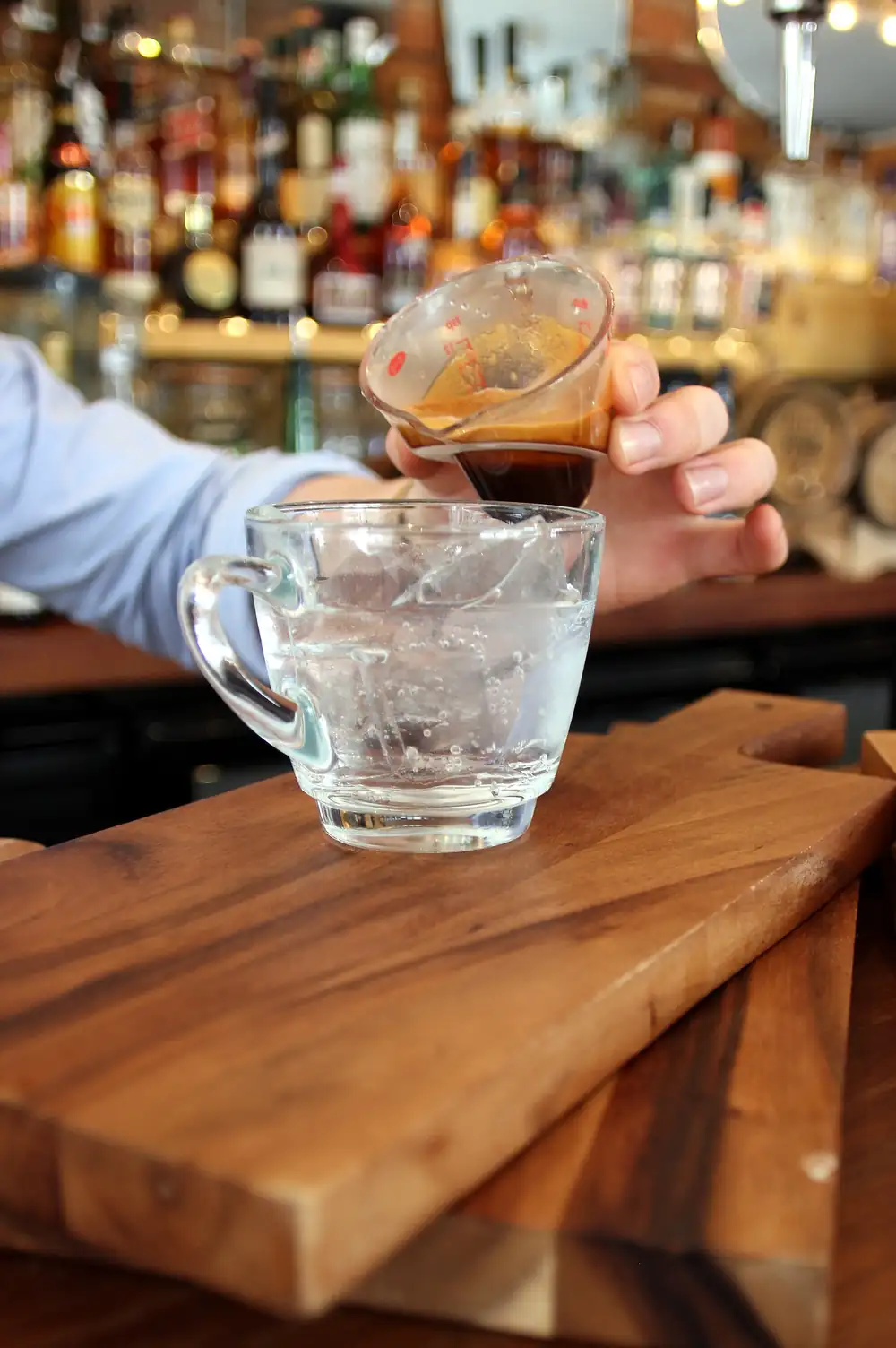
- Gently pour the espresso over the ice, using the back of a teaspoon to help you: this will avoid a too-abrupt reaction with the carbonation and will achieve the characteristic visual separation between the two layers.
- Stir gently before drinking, so that the coffee and tonic find the right balance.
- If you want a citrus note, squeeze only the essential oils from the zest into the glass, without using the juice, which would alter the acidity of the drink.
What is an espresso tonic (and why it's not a cold brew)
For a long time, cold coffee was thought of as a "stopgap" version of espresso: a drink prepared in advance, stored in the refrigerator, and generously sweetened to mask its flaws. Today, however, in the world of specialty coffee, cold has become a true design variable, with different methods—cold brew, cold drip, Japanese iced coffee—differing in timing, temperatures, and extraction dynamics. "What's changing today isn't simply the temperature of the coffee, but the intention behind the beverage," Surano emphasizes.
Espresso tonic occupies a special place. It's not a cold-brewed coffee: espresso is prepared hot and fresh, then combined with ice and tonic water. It's therefore a mixed drink, in which the coffee must interact with the bitterness of the quinine and the sweetness and carbonation of the tonic water. Precisely for this reason, Surano warns, there are no shortcuts: "If the coffee is defective, poorly roasted, or poorly extracted, the tonic water won't improve it. On the contrary, it risks amplifying the imbalances."
Where does espresso tonic come from?
The combination of espresso and tonic water is more recent than you might think. The first version of the drink was recorded in Oslo, Norway, around 2006. According to Anne Lunell, co-founder of Koppi Roasters, it all began almost by accident, the day after a company party, when a colleague mixed leftover tonic water with an espresso and a little syrup.
The following year, the drink, renamed "Kaffe & Tonic," appeared on the menu at Koppi Roasters in Helsingborg, Sweden, becoming almost a signature drink. From there, it spread throughout Scandinavia, then to Europe and North America through international barista competitions, eventually arriving, over the years, in Japan and the United Kingdom, with many local variations based on fruit and spices. Interestingly, both tonic water (patented in London in 1858) and the espresso machine (invented in Italy in 1905) had existed for over a century before anyone thought of combining them in a glass.
Coffee and blending: some examples
The espresso tonic is just the latest trend to emerge in the conversation between espresso cups and bartenders. In recent years, coffee has become a recurring ingredient for those who love creating drinks that balance bitterness, sweetness, and aromatic notes. These range from the Espresso Martini, born in the 1980s in London and a resurgent revival in recent years, to the Coffee Negroni, which adds coffee to the classic Italian aperitivo, and the Coffee Spritz. In Spain, there's the Carajillo, a Spanish and Latin American combination of coffee and liqueur, often served over ice.
How to choose the right coffee and tonic
The success of an espresso tonic depends first and foremost on the choice of ingredients. For coffee, Surano recommends starting with a quality raw material, with a sensory profile you like, but above all, roasted specifically for espresso extraction: "I'm not a fan of omni roast: different methods require roasting profiles that promote proper extraction and a sensory experience consistent with the chosen preparation."
The same attention should be paid to tonic water. The expert's advice is to choose a high-quality tonic water with a neutral profile, so that its contribution remains primarily focused on carbonation, freshness, and the delicate bitterness of quinine, without overpowering the coffee's identity. If desired, you can also work by pairing, choosing the tonic water based on the aromatic descriptors of the chosen coffee.
Mistakes to avoid and advice
A detail that surprises many: using too little ice isn't economical, but rather a mistake to avoid. Contrary to what you might think, fewer cubes melt faster and dilute the drink more, watering it down. It's therefore better to fill the glass well with large ice cubes.
Another tip concerns sugar: Surano advises against adding it by default. A good tonic already has its own sweetness, and the goal of this drink shouldn't be to enhance the coffee, but rather to let it express itself in a different way than usual.
The true evolution of cold coffee, after all, begins right here: when we stop asking the cold to hide something, and start using it to tell a different story, made of aromas and flavors.