Lettuce with Oyster Sauce (蚝油生菜)
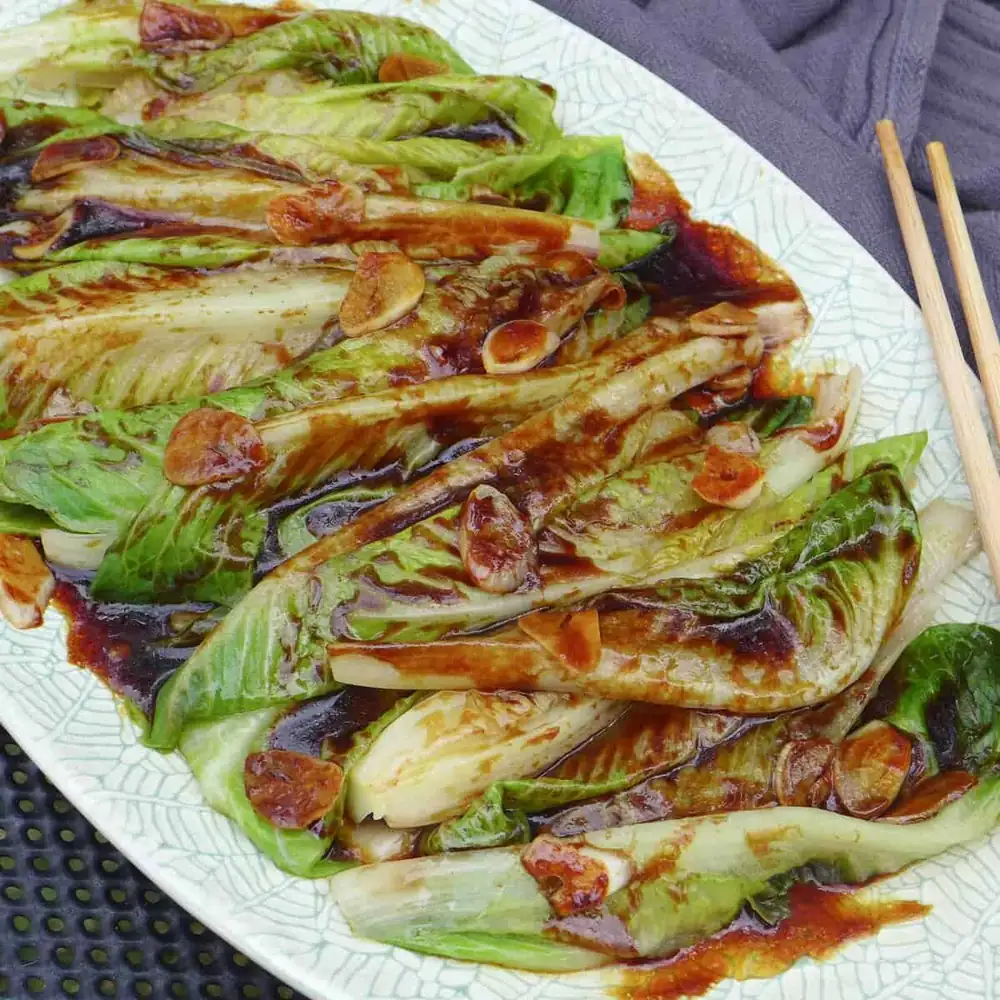
Briefly blanched lettuce topped with a sticky, garlicky, umami-rich sauce, Chinese lettuce with oyster sauce turns everyday greens into something truly flavorful.
- 1 lb little gem lettuce (or romaine lettuce, iceberg lettuce (see note 1))
- 1½ tablespoon oyster sauce ((see note 2))
- ½ teaspoon dark soy sauce
- ½ teaspoon cornstarch
- ½ teaspoon sugar
- 3 tablespoon water
- ½ tablespoon cooking oil
- 4 cloves garlic (sliced)
- Wash the lettuce and separate the leaves. If they’re large, tear them into big pieces by hand.
- Bring a pot of water to a boil, then turn off the heat. Add the lettuce and gently press the leaves down with a spatula to keep them submerged. After 10 to 20 seconds, drain well and transfer to a serving plate.
- In a small bowl, mix oyster sauce, dark soy sauce, sugar, cornstarch and water.
- In a skillet/wok, fry garlic in oil over medium heat. Once the garlic slightly browns, turn off the heat and pour in the sauce. Stir until thickened.
- Pour the sauce onto the lettuce. Serve immediately.
Recipe highlights
- Lettuce stays crisp under a richly-flavored sauce
- Ready in minutes with just a few common components - A humble side that brings balance to any Chinese meal
“I shall never see lettuce the same again. What a delightfully simple way to brighten up what can be a very dull vegetable.”
About the dish
What comes to mind when you think of lettuce? Many picture a simple salad, but in Chinese cookery it carries a little extra symbolic meaning.
Going to As I, in a Tasting Table interview, the Chinese word for lettuce, 生菜 (Shēng Cài), sounds like 生财 (Shēng Cái), meaning ‘bringing in wealth’. So beyond everyday meals, this humble vegetable often appears on elaborate Chinese New Year feasts as a wish for prosperity. Today’s dish, Lettuce with Oyster Sauce (Háo Yóu Shēng Cài/蚝油生菜), shows a popular way to transform its crisp leaves into something warm, savory, and deeply satisfying.
It’s typically served warm with steamed rice, alongside protein dishes like Pepper Steak, Hunan Chicken, etc. Quick to make and full of taste, it’s proof that simple vegetables can truly shine.
Here are a simple list of elements you need for this recipe: - Lettuce (learn more below) - Oyster sauce (learn more below)
- Dark soy sauce, to enhance the appetizing color - Sugar, to balance the saltiness - Cornstarch, to thicken the sauce
- Garlic, to add extra aroma
Lettuce choices
Among the many types of lettuce, those with tightly packed leaves, such as little gem lettuce (used in the method photos), romaine, and iceberg, are the best choices for this dish.
Their sturdy structure and crisp texture hold up well during quick blanching. In contrast, loose leaf varieties like green or red leaf lettuce, oak leaf lettuce, and butter (Boston) lettuce are too tender and will wilt too much when cooked.
Oyster sauce & vegan substitute
Oyster sauce (háo yóu/蚝油) is a staple in Chinese cookery, especially in Cantonese cuisine. It has a glossy brown color and a thick, honey-like consistency.
Made with oyster extracts (from cooked oysters), it delivers a deep umami taste that enhances close to any ingredient. Obviously, this lettuce with oyster sauce dish isn’t vegetarian/vegan.
But there’s a great alternative: vegetarian oyster flavored sauce (素食蚝油). Made from shiitake mushroom essence, it offers a similar savory taste and works beautifully in this recipe.
Pro tips
- Timing is key when blanching lettuce.
Nothing spoils the dish more than soggy leaves. Ten to twenty seconds in hot water is usually enough.
The lettuce should stay vibrant and retain some of the crunch. - Heat control matters when making the sauce. As soon as the garlic turns lightly golden, turn off the heat and pour in the seasoning mix.
The residual heat from the pan is enough to bring the sauce together without making it too thick. - Garlic plays a big role in flavor.
I like to use thin slices, but minced garlic works too if you prefer a stronger kick. Either way, don’t hold back! Generous garlic makes the dish shine.
This lettuce method indicates how vegetables can be cooked in a simple yet delicious way. Using the same method and seasoning, you can prepare other vegetables just as easily.
A classic example is Chinese broccoli (gai lan) with oyster sauce. Regular broccoli, asparagus, snow peas, and bok choy as well work well.
Just be sure to adjust the blanching time depending on the vegetable. For instance, broccoli florets usually need 2 to 3 minutes in boiling water to cook through.