The Key to a Very Good Brunch Pizza: ‘Nduja
Some of the best pizza I’ve had was in New York City—Brooklyn to be precise—at Lucali, Paulie Gee’s, Franny’s, Motorino, and Di Fara, though when I lived in Chicago, I did enjoy a pizza or two.
Coal Fire in West Town, with its wonderfully charred crust, was my go-to spot. (But, hush hush, they don’t serve deep dish pizza.) Oh. Then there’s Gabriele Bonci of Rome’s famed Pizzarium, a tiny, unassuming storefront near the Vatican. On any given day, Bonci will offer 20 different pizzas to choose from—perhaps the sublimely simple rosso (tomatoes with a thick layer of olive oil) or more unusual toppings such as aged goat’s cheese with guanciale, Taleggio with zucchini blossoms and sesame seeds, or pumpkin, speck and caciocavallo cheese.
All cut to order by the kilogram, the crust just as key as the toppings, thick with airy bubbles and perfectly crispy. As far as the sauce, all you need is a can of high-quality whole tomatoes—no sugar or other ingredients added.
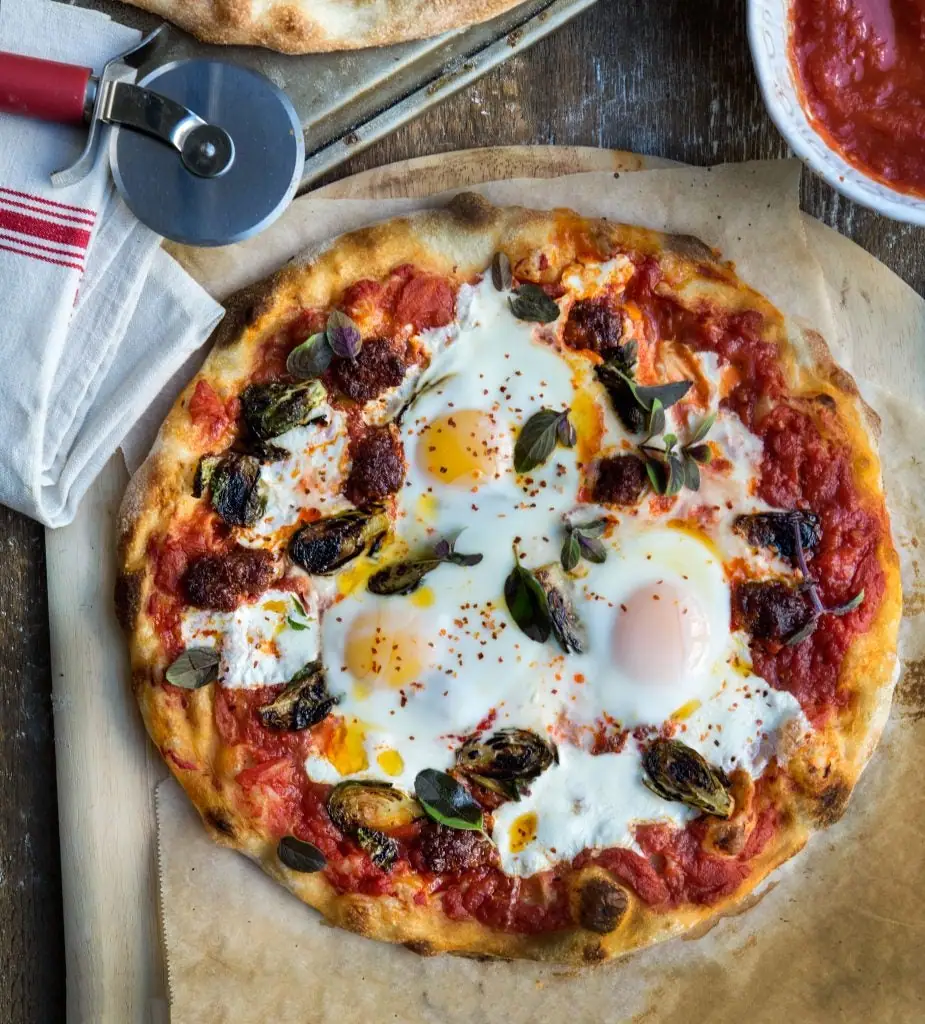
Just pulse the whole tomatoes in a food processor or mash them by hand until blended. For me, the key to Brussels sprouts is to find ones that are small, so they cook fast and all the way through, and to char the heck out of them in a hot skillet.
Preheat the oven (with a pizza/baking stone if you have one) to 500° to 550°F for at least 1 hour. 2. Place the tomatoes and their juices in a food processor, and pulse until fairly smooth. 3.
When hot, add the Brussels sprouts (cut side down), season with salt, and cook until nicely charred. If you don’t have a pizza paddle, you can use the back of a baking sheet. 5. Transfer the dough to your lined pizza peel. 6.
Using a pizza paddle, transfer the pizza to the hot stone. Bake for 2 minutes, then evenly distribute the eggs on top of the pizza. Continue to cook until the crust is golden brown and the eggs whites are set, but the yolks are still runny.
Use the pizza paddle to remove the pizza from the oven. 8. Mix and knead everything together, either by hand or using a stand mixer with the dough hook, until the dough is soft and smooth. By hand, knead the dough until springy and soft, about 7 to 10 minutes. 2.
Cover the dough and let it rise for 90 to 120 minutes or until it doubles in size (time will vary depending on the temperature in your kitchen). Cover with plastic wrap and let the dough rise at room temperature until it doubles in size, about one hour (or, ideally, at this point, allow the dough to slowly ferment in the refrigerator). 4.
For a slow, cold fermentation, transfer the dough to the refrigerator for 24 to 72 hours. Remove the dough from the refrigerator at least two hours before making the pizza so the dough comes up to room temperature.
- Who: Nduja