Learn how to peel cassava to include it in your recipes
It looks a lot like a potato, but it's bigger, sweeter, and more overlooked. Many people walk right past it at the fruit stand because they don't know how to peel it or what to do with it.
Cassava, also known as yucca, is very popular in South America and Africa. It's a great source of energy due to its high starch, fiber, magnesium, calcium, and vitamin C content, and can be cooked like a potato: fried, roasted, boiled, or stewed.
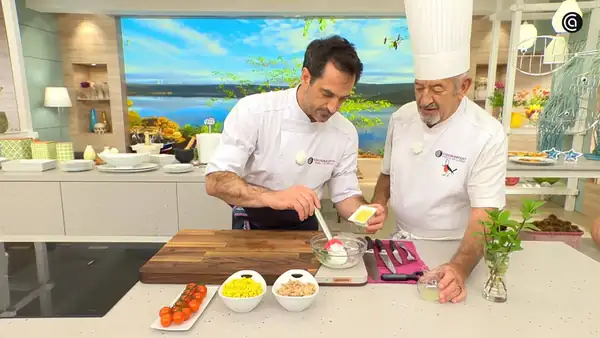
Before cooking it, you need to know how to peel it, and that's why today we're bringing you Karlos's trick. Grab a potato peeler and get to it!
How to choose a good cassava
To ensure it's cooked to perfection, look for pieces that are intact, without any bruises, and firm to the touch. If they smell strong or have an unusual color, discard them, as they're past their prime.
Never eat it raw, as it contains natural compounds that can release cyanide and that disappear when cooked.
How to preserve it
It's best to eat it as soon as possible, as this will preserve its properties. Otherwise, you can store it in the refrigerator or freeze it peeled and chopped.
The easiest way to peel cassava
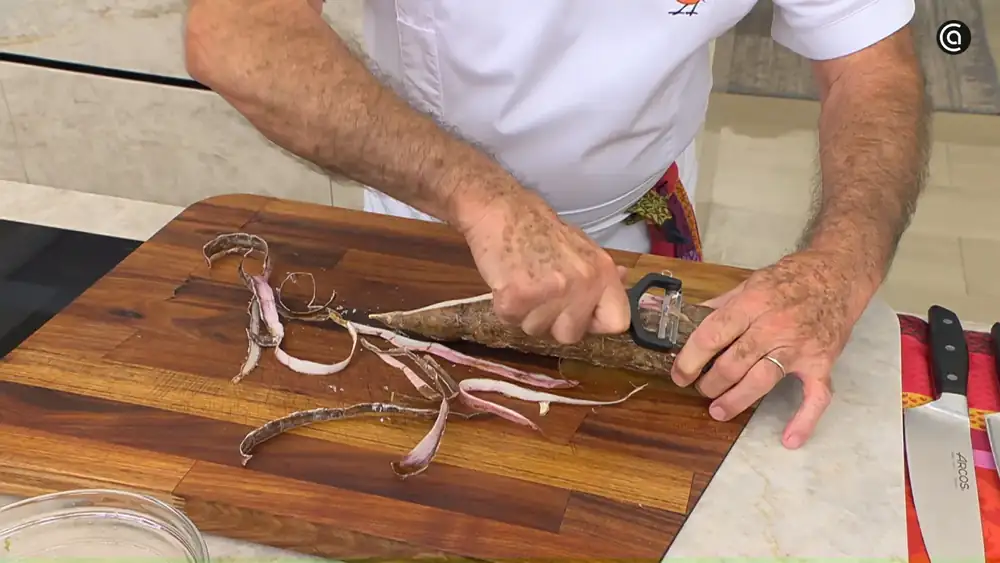
To peel cassava, all you need is a potato peeler and a firm surface to place it on. Let's get started!
Step 1: Peel the cassava
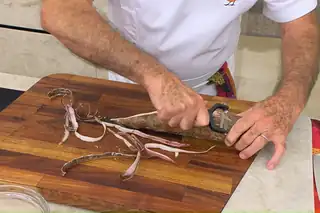
Hold the cassava firmly and run the peeler vertically, from top to bottom, to remove all the rind and wax that surrounds it.
Step 2: Take out the sheets
Using the same peeler, repeat the movement on the peeled cassava, applying a little more pressure to remove thin, elongated slices.
What can I serve cassava with?
With the flakes you've cut out, you can make fried cassava chips and serve them as a side dish, just like you would with potatoes: with hamburgers, meatballs, chicken wings, or fish like sea bass or sea bream.
If you prefer, serve it mashed, in stews, roasted in the oven, or as a base for pancakes. The possibilities are almost endless, just like with potatoes. You can also grind it into flour, which is very popular in Brazil, or into tapioca, which is made from its starch and used in both sweet and savory dishes. All of these are perfect ideas for people with celiac disease, since cassava is gluten-free.
Go ahead and try it in your recipes!