What does Balkan cuisine mean in Pécs today?
We talked to store manager Róbert Faragó about what remained from the concept of the launch, how the menu took shape, where they draw the line between tradition and their own interpretation, and why they want to show as much as possible of what begins beyond czevap and pljeskavica.
Balkan Bistro started with a very simple concept: a short menu, charcoal grill, your own meat mixes, homemade sauces. After more than ten years, what is it that you still stick to today, and what has the place outgrown in the meantime?
Since then, many things have changed: the restaurant has changed owners and with it the basic philosophy has also changed somewhat. In addition to expanding the menu, our important goal today is to offer something of the Balkan hospitality and attitude itself. The new location has brought many advantages, but unfortunately we do not have the opportunity to use the charcoal grill here. Apart from that, the basics of the original concept have remained.
The menu has also expanded a lot over the years. Was this primarily due to the demands of the guests, or did you want to show a broader view of what Balkan cuisine means?
Both played a role in making it this way. On the one hand, we wanted to respond to the needs of our guests, and on the other hand, we wanted to show the lesser-known side of the Balkans beyond the well-known staples.
Balkan now operates in Jókai Square, in a completely different environment than where it started. How has the move changed the way the place operates and the clientele?
The new place has a more modern, slightly trendier look, while we tried to keep the Balkan character. The location is much more frequented: the old place was typically visited by those who came to us in the first place, while Jókai Square has a lot more spontaneous guests. People who simply walk by, see the place and become curious about it also get to know us.
“Balkan cuisine” is a pretty broad definition in itself. For example, Bosnian pljeskavica, Serbian Karađorđeva šnicla, köfte, and Muraközi gibanica can all fit on one menu. How do you decide which country or region’s food can be included in the Balkan Bistro’s menu?
In the new concept, we primarily focus on the Balkans in a narrower sense: Serbian, Croatian, Bosnian, Slovenian, Macedonian and Dalmatian cuisine. But we also draw from the wider region, such as Turkish, Greek, Albanian or Bulgarian gastronomy, and with a little exaggeration, even the Mediterranean line fits in.
You launched a new menu in July, and you wrote that it was difficult to innovate while keeping the favorites of regulars. What is the one dish that you simply couldn't take off the menu now?
It's hard to please everyone, so there are dishes that are occasionally removed and then returned at the request of guests. However, what are practically indispensable are čevap, pljeskavica, and baklava.
And what happens with the new dishes? Was there anything on the new menu that you didn't know in advance how the audience would receive?
Our chef carefully researches the original recipes, and new dishes are first tested as weekly offers. If we see that they work and are liked by guests, they can be added to the next menu.
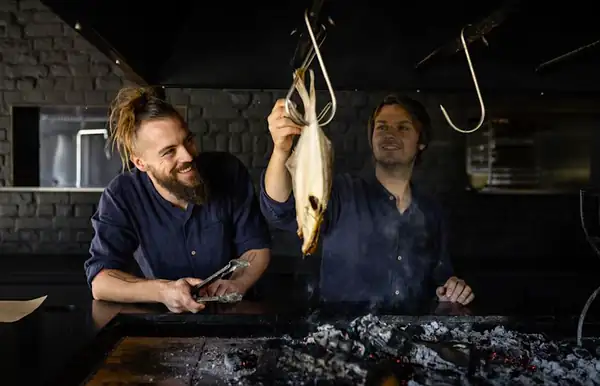
The current menu includes classic meat dishes, such as lentil moussaka, grilled cheese, and whole grilled trout. How consciously do you have to break away from the idea that Balkan cuisine is all about grilled meat?
Balkan cuisine is not synonymous with grilled meat, it is more of a common stereotype. I see many Balkan restaurants operating outside the Balkans sticking to the same, tried and tested grilled dishes, which can make the menu monotonous after a while. We are trying to break away from this, even if not all new dishes are equally popular with our guests.
Where do you draw the line between tradition and your own interpretation? What is it that you don't touch in a traditional recipe?
We don't want to change the basics: seasoning, texture, and recognisability are important for a traditional dish. But we also need to consider where we are and who we are cooking for.
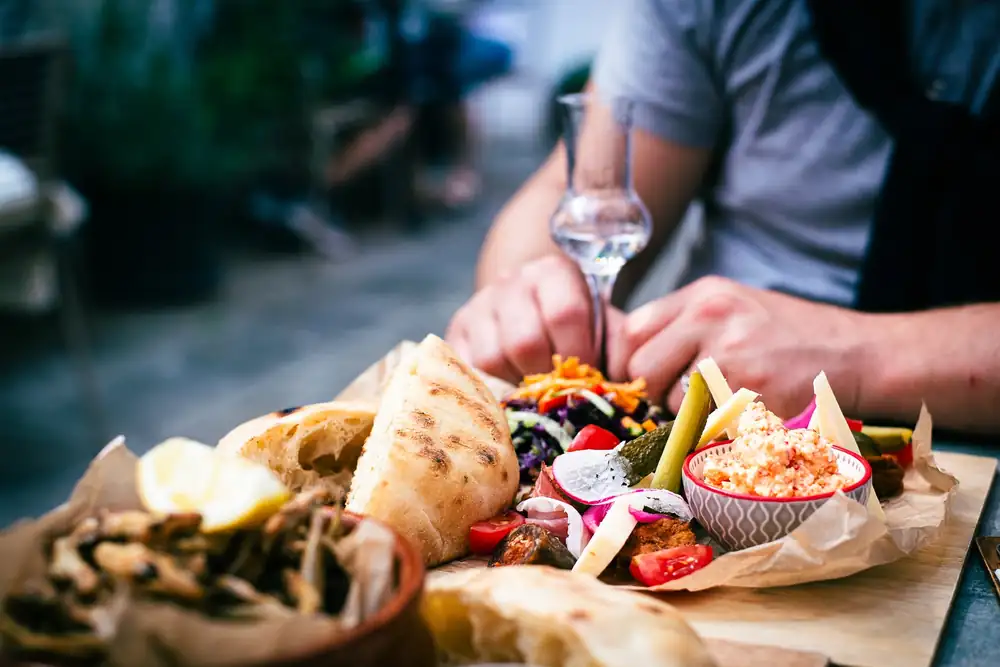
For example, eating habits are not the same in Western Europe as in the Balkans. Here, a cevap plate is often served with more vegetables to balance out the meaty, more substantial part. In the Balkans, you often simply have cevap, ajvar, onions, french fries and a flatbread, which can be quite concentrated for someone who is not used to it. What we allow ourselves more freedom in is the serving and presentation: we play bolder in this area, while the food itself retains its basic character.
You specifically state on the menu that the grilled cheese comes from a small producer in Baranya. For which ingredients is local sourcing important, and what do you prefer to bring from the Balkans for an authentic taste?
We work with local producers wherever we can: for example, vegetables, cheeses and meats. We season and mix the meats ourselves. However, there are some ingredients where it is important to use an original product. For example, we cannot make ajvár locally, so we buy it from a supplier who brings it from Croatia, and the same goes for the somun, or flatbread. Old recipes, suppliers and contacts from the time of the start have also been preserved.
Good value for money is still an important part of the concept. What is it that they haven't given up on, even if it makes it harder to keep prices under control?
Quality. It would be easier and cheaper to buy many things ready-made, but with us almost everything is made fresh in the kitchen. This includes dressings, sauces, salads and side dishes. This requires more work, but we think it is also noticeable in the end result.
During all this time, there must have been some dishes or ideas that turned out to simply not work in Pécs. What was your biggest mistake or surprise?
One of these was our specialty called the Yugo-dog. We essentially imagined it as a Balkan version of a hot dog: instead of a hot dog, it was grilled sausage, with Balkan seasoning. In the end, it wasn't as successful as we had hoped.
The gastronomy of Pécs has changed a lot in the past decade or so. How is running a restaurant in the city different today than when the Balkans started?
I see big changes not only in Pécs, but also in hospitality in general, and at the same time, the needs of guests are constantly evolving. We try to remain open to criticism and feedback, and incorporate what we see as worthwhile into our operations.
Beyond cevap and pljeskavica, there are many Balkan dishes that we are hardly familiar with here. Is your goal to and more of these?
Yes, because Balkan cuisine is far from being limited to csevap and pljeskavica. We are constantly looking for lesser-known dishes that are worth showing. We adapt them to our own environment, if necessary, but we keep their basics. We would like domestic guests and foreigners coming to Pécs to get to know as much as possible about the diversity of Balkan gastronomy.