They are under threat, they risk disappearing: a difficult time for these cheeses
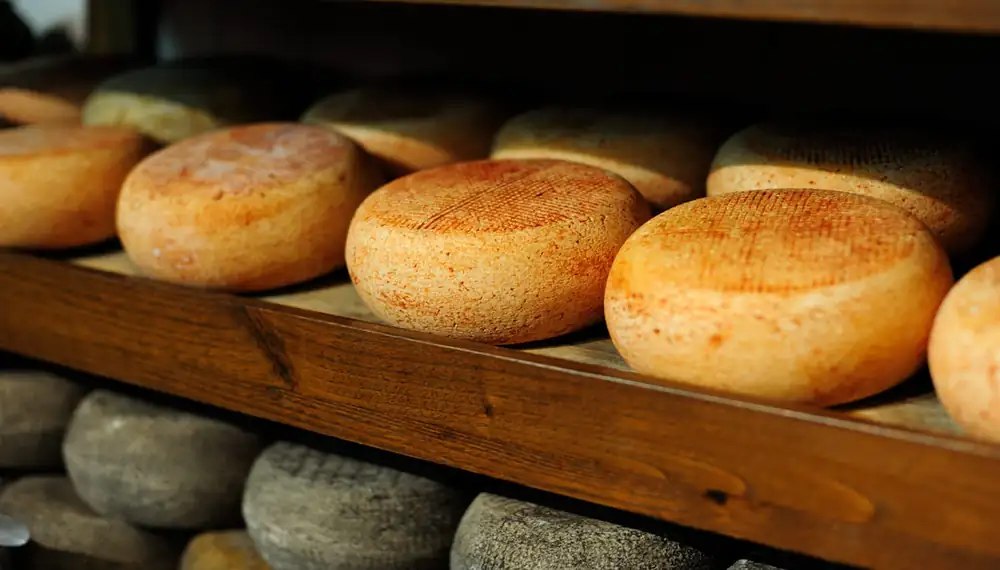
Mountain cheeses are at risk from the heat: they too could disappear.
Last summer was truly difficult for mountain cheese producers: if adaptation strategies aren't developed, their disappearance will be inevitable.
- Extreme heat is putting pressure on mountain cheeses, amidst depleted pastures, limited water, and ever-increasing challenges in the mountains.
- In Trentino Alto Adige, producers and farmers are facing harsher summers, with grass that doesn't grow back, herds forced to move, and hay supplies depleted.
- The consequences also impact final quality, with lower yields and different flavors, while the risk of losing unique dairy traditions increases.
Last summer's scorching heat is also putting mountain cheeses at risk. The future, according to industry experts, is far from rosy, meaning that several local cheesemaking traditions could disappear from one year to the next. Clearly, the balance between people, livestock, and pastures has always been delicate, but climate change is making it increasingly fragile, severely challenging the survival of unique—already rare—products that risk becoming a nostalgic memory.
The crisis of pastures and transhumance
Climate change isn't just putting crops under strain; it's also putting pastures under strain. Trentino-Alto Adige dairy producers are well aware of this, having encountered numerous difficulties during high-mountain grazing last summer. Naturally, their cheeses will suffer as well.
Today, transhumance, an ancient practice that supports the sustenance of herds and flocks, is not as widespread as it once was, but extreme events could wipe it out entirely. The alarm was raised by Stefano Mayr, a naturalist, ranger, and organic certifier who, in recent months, visited 30 high-altitude pastures in eastern Trentino. "Never has there been a more difficult year; from the beginning of June until today, the temperature at 3,000 meters has never dropped below 0°C," he explained.
The crises of summer 2026
It's not just a matter of temperature; the heat brings with it a series of consequences, both in cities and in the high mountains. From lack of rain to lack of grass, which also affects the variety: the problems faced by producers have been varied. Mayr, again, explains:
"The lack of rain has prevented the grass from growing again, and it hasn't grown back after the animals have passed through. Water reserves have been depleted, and it has been necessary to move the herds much further. Moreover, the advance of the forest has already significantly reduced the available grazing area."
To avoid losing regional funding and meet the minimum time limit for mountain pastures, producers were forced to transport loads of hay to high altitudes, obviously depleting their winter supplies. Furthermore, water also had to be transported, requiring kilometers and kilometers of temporary pipelines. These significant inconveniences, rightly, prompted some shepherds to end the transhumance prematurely.
Between lower yields and changes in flavor
The change in the grass cover is also a cause for reflection. "July saw the growth of August's grasses, and so on," Mayr emphasized. This, combined with the difficulties mentioned above, is also reflected in the final cheese yield. On the one hand, the milk volumes have dropped significantly, and the high temperatures have made processing more complex; on the other, the cheese has taken on entirely new flavor profiles.
As in other sectors, adaptation strategies will need to be developed here too, otherwise we risk seeing mountain cheeses become a "memorial food" that new generations will only know by hearsay. Or, if they are lucky enough to try them, they will no longer have the same taste as they once did.