Amatriciana: the original recipe for Amatrice's first course
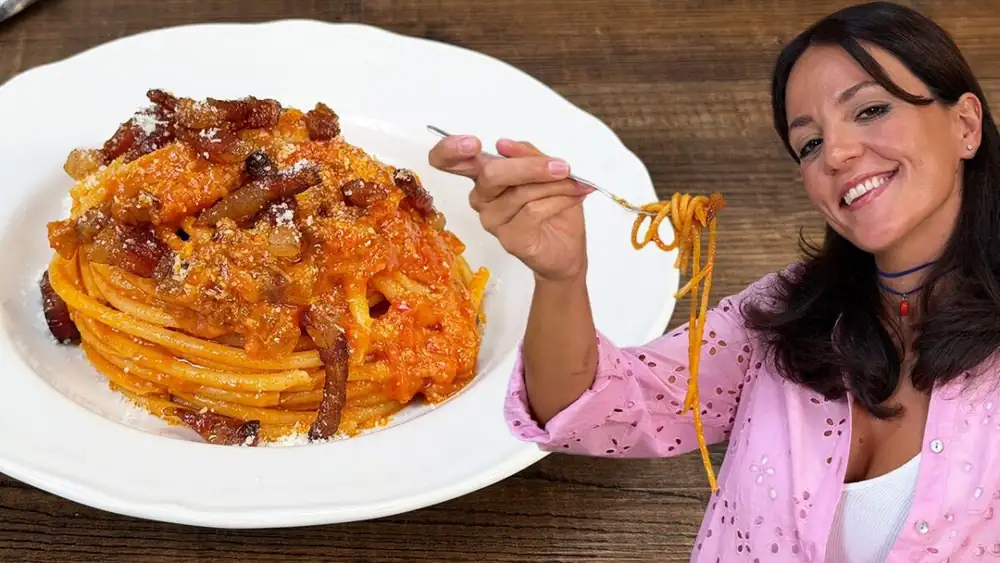
Amatriciana is a typical sauce from Lazio cuisine, originating in Amatrice, a town in the province of Rieti, from which it takes its name. This fragrant and delicious sauce is used to prepare one of Rome's most famous first courses: bucatini all'amatriciana.
- Bucatini, 300 gr
- Amatriciana bacon, 200 gr
- vino bianco, q.b.
- Chili pepper, to taste
- Sale, q.b.
- Peeled tomatoes, 400 g
- Grated Pecorino Romano, 80 g
- To prepare the amatriciana, first remove the rind and the most peppery part of the guanciale, which would become bitter during cooking. Then cut it into not too thin strips and place these in a large pan, preferably made of steel, which is still cold (1). Cook on a very low flame, so that the guanciale begins to lose its fat and brown gently, without burning.
- Remove half of the now nicely crispy bacon and set it aside. Then pour a drop of white wine into the pan (2).
- Raise the heat and let the alcoholic part evaporate completely (3), then remove the bacon and keep it aside together with the rest of the cured meat.
- Add the chopped hot peppers to the bacon cooking liquid and also add the peeled San Marzano tomatoes, crushed with your hands (4). Add a pinch of salt, without overdoing it. At this point, bring plenty of lightly salted water to the boil in a large saucepan.
- When the water boils, add the bucatini. Let them cook, then drain them al dente and transfer them directly into the pan with the sauce, after removing the chilli pieces (5). Mix well and let them flavour.
- Add the reserved guanciale and a little of the cooking water, then continue to sauté everything for a few moments. Turn off the heat and add the grated pecorino cheese (6).
- Mix everything until the sauce is creamy and has coated the pasta perfectly (7).
- Distribute the bucatini onto individual plates, cover them with the sauce and finish with a sprinkling of pecorino: the amatriciana is ready to be enjoyed (8).
The original recipe, codified by the Municipality of Amatrice and included in the European Union's list of Traditional Specialities Guaranteed (TSG), calls for spaghetti, sautéed Amatrice pork cheek and deglazed with white wine, peeled San Marzano tomatoes, Pecorino Romano DOP, chili pepper, salt, and pepper. Our Julia will show you how to make it in this version, without the onion and pancetta, which are often present in some variations.
It is said that the dish was once the main meal of the shepherds of the Rieti municipality and later arrived in Rome with the transhumance. It was originally prepared "in bianco" and called "gricia," because tomatoes arrived from the Americas much later. The first written reference to it dates back to the manual "L'Apicio moderno," published in 1790 by the Roman chef Francesco Leonardi: he, however, claimed that the term "amatriciana" did not refer to Amatrice, but rather to "matrice," an archaic word meaning "mother."
If you prefer, you can make amatriciana with spaghetti or even a short pasta, like rigatoni or fusilli.
Learn how to make amatriciana with step-by-step instructions and tips. If you enjoyed this recipe, try other traditional Roman dishes, such as cacio e pepe, carbonara, and penne all'arrabbiata.
How to prepare amatriciana
To prepare the amatriciana, first remove the rind and the most peppery part of the guanciale, which would become bitter during cooking. Then cut it into not-too-thin strips and place them in a large, preferably stainless steel, still-cold pan. Cook over very low heat, so that the guanciale begins to release its fat and brown gently, without burning.
Remove half of the crispy guanciale and set it aside. Then pour a splash of white wine into the pan.
Raise the heat and let the alcohol evaporate completely 3, then remove the guanciale and set it aside with the rest of the cured meat.
Add the chopped hot peppers to the guanciale cooking liquid and also add the peeled San Marzano tomatoes, crushed by hand. 4. Add a pinch of salt, but not too much. Now, bring plenty of lightly salted water to a boil in a large pot.
When the water boils, add the bucatini. Let them cook, then drain them al dente and transfer them directly to the pan with the sauce, after removing the chili pepper pieces. 5. Stir well and let the flavors blend.
Add the reserved guanciale and a little of the cooking water, then continue to sauté for a few moments. Turn off the heat and add the grated pecorino cheese.
Mix everything together until the sauce is creamy and has coated the pasta perfectly 7.
Divide the bucatini into individual plates, cover them with the sauce and finish with a sprinkling of pecorino: the amatriciana is ready to be enjoyed 8.