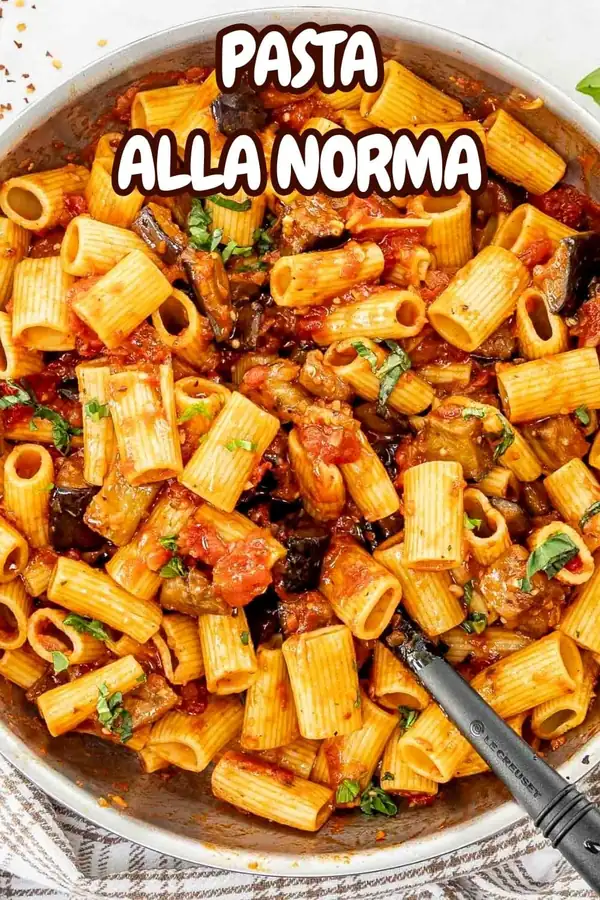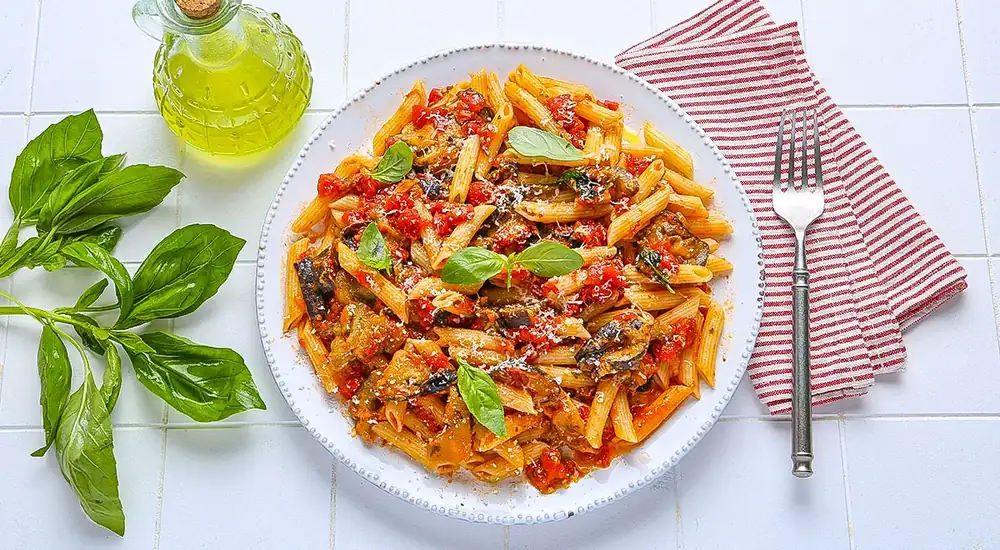
Pasta alla Norma
A typical Sicilian dish that originated in a small restaurant in Catania. It's said that this pasta owes its name to the admiring exclamation of director Nino Martoglio, who had just heard Bellini's most beautiful opera, Norma, and compared these two masterpieces of music and gastronomy.
- Paste
- Eggplant
- Peeled tomatoes
- Onions
- Garlic
- Basil
- Dried oregano
- Parmesan cheese (grated)
- Olive oil
- Salt
- Ground black pepper
- In a heavy-bottomed saucepan, place the tomatoes and their juices, the halved onion, garlic cloves, 1 teaspoon oregano, and 2 tablespoons olive oil. Bring to a boil. Reduce heat to low and simmer for 45 minutes, stirring occasionally. Remove the onion. Blend the sauce with an immersion blender. Season with salt to taste. Keep warm.
- Preheat oven to 210°C (410°F). Slice the eggplant into 1-cm-thick rounds. Place on a parchment-lined baking sheet. Brush with olive oil. Season with salt and pepper. Bake for 20 minutes, flip, and bake for another 15–20 minutes.
- Cook the pasta according to package directions. Drain in a colander, reserving 100 ml of the cooking liquid. Return the pasta to the pan.
- Add eggplant, chopped basil, remaining oregano, and 1 teaspoon of olive oil to the hot tomato sauce. Stir.
- Add the pasta and Parmesan to the sauce, reserving some for serving. If the sauce is too thick, add a little of the pasta cooking liquid. Season with salt and pepper and toss to combine.
- Divide the pasta among plates. Serve sprinkled with Parmesan cheese.
The secret to an Italian-style dinner has long been revealed—it's all about pasta, wine, and long, heartfelt conversations. You don't have to go to a restaurant: host such an evening at home and gather your loved ones around the table. Or invite just one special person.
Italian cuisine isn't just food, it's a way of life and part of a rich culture. Each region has its own traditions, individuality, unique flavors, and ingredients. Italian pasta is essentially noodles in sauce. It sounds boring, but in reality, it's a true work of art on a plate. Each region of Italy is renowned for its unique recipes, passed down from generation to generation. We invite you to embark on a culinary journey in your own kitchen.
There are few people in the world who don't like Italian cuisine. But have you ever wondered what makes it so distinctive? There are certainly many possible answers, but one will most often come up: flavors. Let's take a look at which Italian herbs and seasonings are most commonly used.