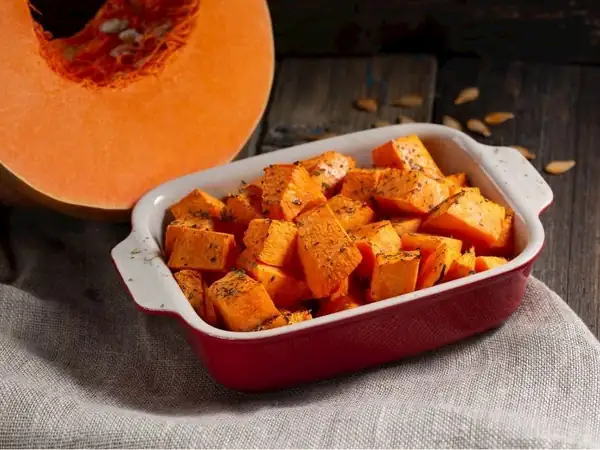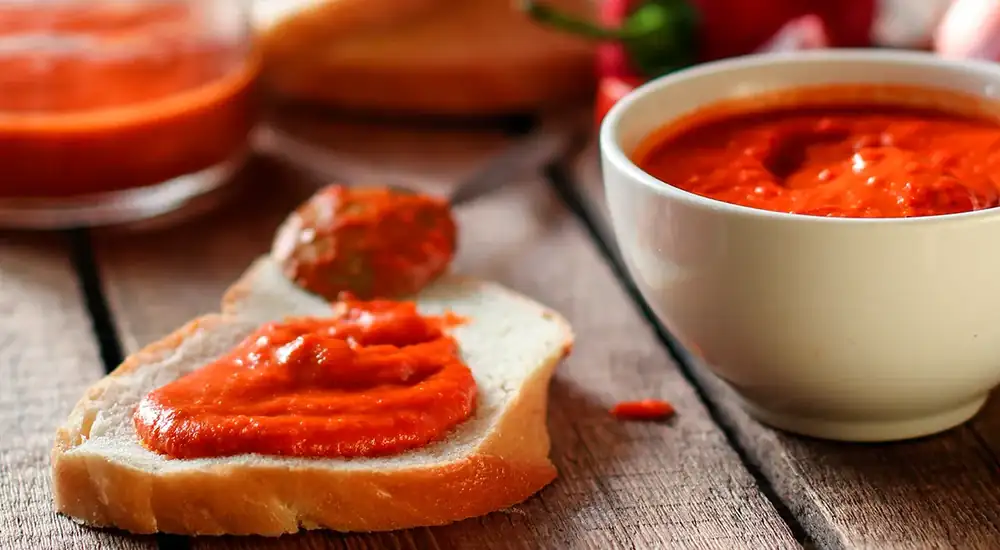
Pumpkin adjika
This version of adjika is used up much faster than the classic, flammable variety—it's not as spicy, but it makes a wonderful sauce for dinner or even a standalone spread on bread. It's a little more fiddly, but it's worth it, so don't be lazy and prepare this wonderful seasoning for the coming winter.
- Pumpkin
- Red sweet pepper
- Refined vegetable oil
- Tomato paste
- Table vinegar 9%
- Granulated sugar
- Garlic
- Hot capsicum
- Salt
- Bay leaf
- Ground black pepper
- Wash the pumpkin. Cut it in half, and remove the seeds and strings. Peel the pumpkin and then cut it into large, random-shaped slices (they should fit easily into the grinder's mouth).
- Wash the hot and sweet peppers. Remove the seeds. If you want the adjika to be really spicy, leave the seeds in the hot pepper. Grind the pepper, pumpkin, and sweet pepper through a meat grinder with a fine mesh.
- Transfer the resulting mixture to a large, thick-bottomed saucepan (this is important, otherwise the adjika will burn during cooking). Place the pan over medium-low heat. Stir with a spatula until it comes to a boil. Simmer over low heat, covered, for ten minutes.
- Open the pan. Add tomato paste, refined vegetable oil, whole bay leaves, sugar, and salt to the pumpkin mixture. Add ground black pepper. Press the peeled garlic cloves through a garlic press directly into the pan.
- Stir the vegetable mixture until smooth. Make sure the heat under the pan is at low. Cover loosely with a lid and simmer for 30–35 minutes.
- While the adjika is simmering, prepare four 500 ml jars and lids (tin or screw-on lids will do). Wash them thoroughly to remove any grease. Sterilize the jars using your preferred method. Simply boil the lids for 15 minutes.
- If desired, you can puree the adjika with an immersion blender, then return the pan to the stove and pour in the vinegar. Stir the contents and remove from the stove after a minute. Remove the bay leaves. Pour the adjika into jars and seal. Invert onto a wooden board. Make sure the jars are sealed tightly and cover with a blanket. Let sit for 24 hours.
Adjika needs no introduction, but it does require some preserving for the winter. To ensure everyone finds a flavor to suit their taste, we've compiled a variety of recipes: from the rich Abkhazian classic to a fiery horseradish-infused version from Vladivostok. There are variations with apples, herbs, zucchini, and even chokeberries—for those who aren't afraid to experiment.
Homemade adjika is easy to prepare, but there are some caveats. Of course, if you're taking on such a rewarding task, make a lot at once—working with hot peppers is quite a hassle. But if you don't plan on storing the snack for long and just want to try it out, divide the recipe by, say, five ingredients. The famous adjika seasoning originated in Abkhazia. In Abkhaz, this word means "salt." This leads to at least two conclusions. The first is simple and utilitarian: adjika is almost universally used in place of salt. The second is valuable: Abkhazian or Georgian cuisine would be impossible without this seasoning, just as it would be impossible without salt. Even the traditional Abkhazian greeting sounds similar to our "bread and salt," where salt is adjika. Abkhazians make their adjika in the fall, grinding dried pepper pods with garlic and dried herbs on a large flat stone to create a dark, pungent paste. But we're more accustomed to the bright red and slightly less spicy Georgian adjika. It can be spread on meat and poultry before roasting, added to all soups and sauces, or, as the more extreme, simply spread on bread.
Real adjika isn't a tomato sauce. Its foundation is hot peppers, garlic, salt, and spices that have been used for centuries in the Caucasus Mountains. Hot homemade adjika is rich and powerful in flavor and spiciness. A small spoonful of this dressing can dramatically change the character of a dish. If you want to tone down the heat, simply remove the seeds and membranes from the peppers; the flavor will be milder and more subtle.
How can you not make adjika when almost all the ingredients are grown in your garden? I make this incredibly delicious summer adjika every year using fresh, chemical-free vegetables – everyone in my family loves it – it's always a hit!
![[Seasonal Recipe] Mature Pumpkin with an Appealing Soft Sweetness](/static/img/063de0bae3b80e4c_p.webp)