How to make sushi at home (with recipe and tips)
Making sushi at home is easier than you think. All you need to do is buy your basic tool kit, get the rice just right, and you're good to go.
This is your starter kit for making sushi at home
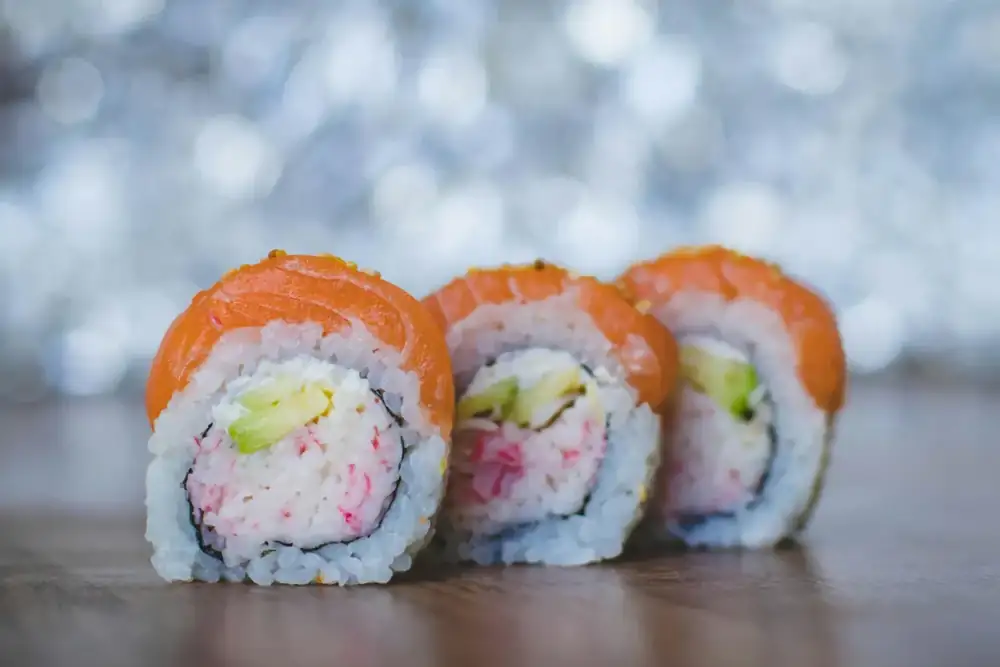
The word "sushi" refers exclusively to rice, and the word "maki" is added when we refer to sushi in the form of a roll with nori seaweed, which is what we will teach you to prepare today.
- Makisu, the bamboo mat
It's used to roll sushi pieces by twisting it until you get the rolls. You can substitute it with placemats, as long as they're made of thin wooden sticks joined by string.
- Hangiri, the rice container
There, the rice is prepared and left to rest so it cools down and loses some of its moisture. You can also use a wooden, clay, or ceramic bowl… or any deep dish from your kitchen.
- Hocho, the typical Japanese knife
This knife only cuts on one side. You can substitute it with any sharp knife.
- Shamoji, rice spoon
It's used to stir the rice inside the hangiri. You can substitute any spoon.
- Suihanki, the rice cooker for cooking rice.
It's an appliance used to cook rice easily and quickly, but you can substitute it with a regular pot.
- Uchiwa, the Japanese fan
It is used to cool rice.
Basic kits may also include other materials such as ohashi (chopsticks), paddles, or rice separators.
Now, the recipe
The key to preparing good sushi at home is in the rice. Make sure you buy sushi rice and cook it as we explain so that it acquires the ideal consistency.
Ingredients (for 4 makis)
- 200 grams of rice
- 345 milliliters of water (For each measure of rice, add one and a half measures of water).
- 2 tablespoons of rice vinegar
- 2 tablespoons of icing sugar (you can also use regular sugar, although powdered sugar dissolves better)
- 1 tablespoon of salt
- 1 cucumber
- 6 sheets of dried nori seaweed
- 1 large carrot
- 1 firm avocado
- 300 grams of salmon (fresh or marinated, some other fish, surimi or shrimp)
- Soy sauce or ponzu
- Pickled ginger flakes
1. Cook the rice
- Place the rice in the Suihanki or pot and cover with water. Wash to remove the starch, stirring well with your hand or a spoon.
- Remove the water, allowing the rice to settle to the bottom. Repeat this process until the water runs completely clear.
- When only rice remains in the saucepan, add the measure of water.
- Heat over medium-high heat and let boil for 2 or 3 minutes.
- Reduce the heat to low, cover the saucepan, and let it rest for 10 to 15 minutes. When you uncover it, the rice should be cooked and fluffy.
Prepare the binding mixture for the rice
- Mix the rice vinegar, sugar, and salt in a cup. Warm for about 20 seconds in the microwave. Alternatively, you can put the mixture in a saucepan over medium heat until everything is dissolved.
- Stir with a spoon and repeat until the sugar and salt have almost completely dissolved.
- Place the rice on a flat plate, add the liquid mixture and stir with a spatula, being careful not to break the grains or compact them too much.
- Cover with a kitchen towel (preferably cotton), and let it cool completely.
Making the rolls
- Cut all the ingredients into narrow sticks.
- Using the Shamoji or spoon, spread a not-too-thick layer of rice on top of half of the nori seaweed.
- Place the salmon strips, avocado, cucumber, and carrot on top.
- Roll the maki sushi with the help of the Makisu or bamboo mat, trying with your fingers to keep the filling in place until you form a roll.
- Wet your fingers in water and seal the seaweed with them.
- Cut with a hocho or very sharp knife into 2-centimeter-long pieces to obtain 6 to 8 pieces from each roll. Wet the knife in water between cuts.
- Serve immediately with classic condiments: soy sauce, pink ginger slices and wasabi in small dishes.
You can eat them with ohashi (wooden chopsticks), or with your hand.
As we explained earlier, this is the basic recipe, but you can change the ingredients for whatever you like; your creativity is the limit.