A Year in the Life of Wine
The so-called new world of wine faces more challenges each year. The region's two traditional major producers, Argentina and Chile, have been joined by the rest of the region: Mexico, Peru, Brazil, Uruguay, Bolivia, and Ecuador, in a shift that leaves virtually no markets without wine production.
At 7Caníbales, we've paid special attention to wine. More than sixty articles and interviews by our contributors (mostly women) have been dedicated to reviewing the perspectives of producers, winemakers, and oenologists, offering a tour of the main wine-producing countries.
Mariana Gianella publishes her perspective on the people and stories of Argentine wine every other Monday. The first piece selected is a reflection on the paths of wine and consumption trends, published under the title 'The Frenzy of Trends', a few weeks after she introduced us to the work of Mauro Villarejo, one of the winemakers to watch in the new generation of Argentine wine: 'Imagination to Power: Argentina's Most Disruptive Wines'.
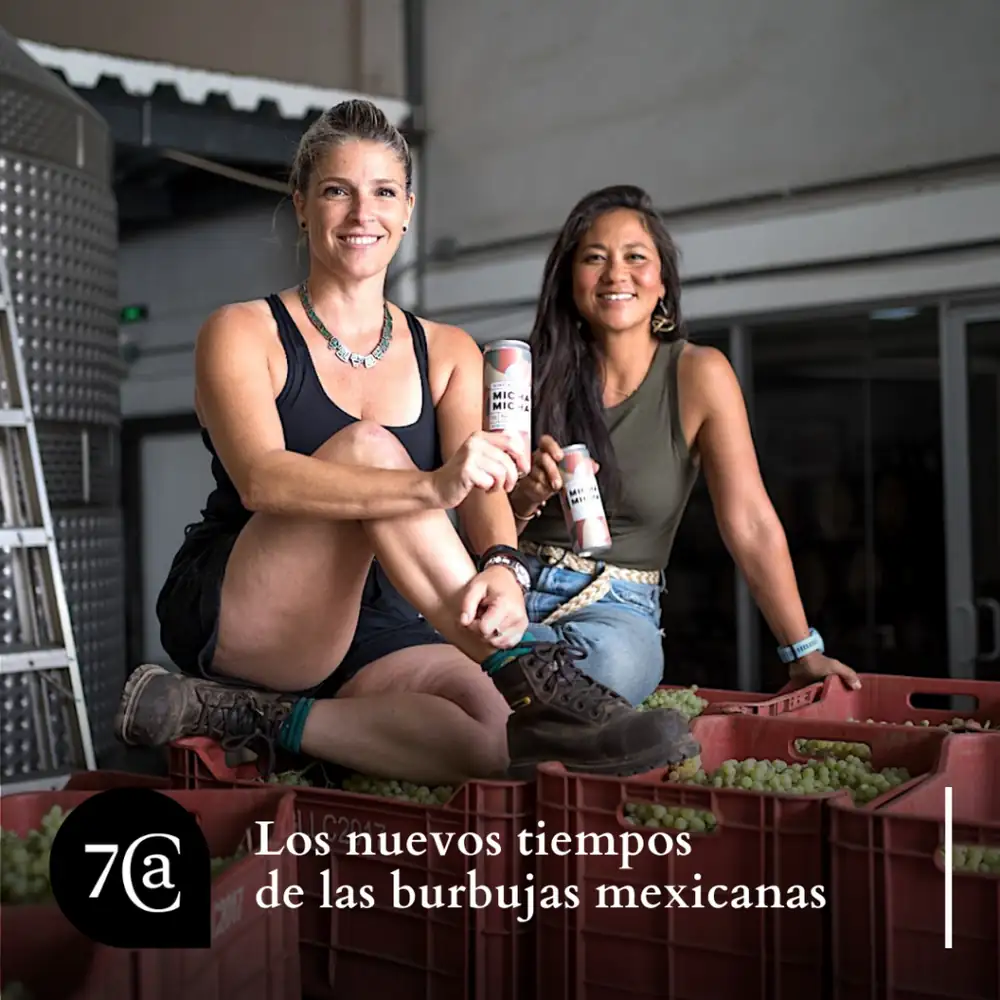
In Mexico, Fabiola de la Fuente, recently added to the 7Caníbales network of collaborators, was in charge of reviewing the stage of that peculiar wine-producing nation that grows full of bubbles, from traditional sparkling wines to canned bubbles or pét-nat, which is a return to the wines of one or two hundred years ago: 'The new times of Mexican Bubbles'.
Carlos Piérola began to show us the reality of Peruvian winemaking from the perspective of Intipalka, a winery that never stopped reinventing itself. Read his article 'The Revolutions of Intipalka' and get closer to Peruvian wine.
Chile is missing, a wine-growing region that Mariana Martínez has been exploring for many years, a journey she has been chronicling in 7Caníbales for the past twenty-two months. Among all her articles, tastings, narratives, and interviews, we have selected her conversation with Mauro Von Siebenthal – 'The Journey of Mauro Von Siebenthal' – and her encounter with new wines featuring Carmenère: 'Three Carmenères That Dared to Break the Mold'.
Spain, on the other side of the Atlantic
La Rioja is always in the spotlight. Always caught between two worlds. There are debates that go unchecked, such as the one surrounding the position of Rioja Alavesa within the Rioja DOC framework, analyzed by Juancho Asenjo in two seminal texts: 'Vineyards of Álava vs. Rioja, the battle has just begun,' in which he laid out the historical context, and a second, 'Rioja quo vadis? A transatlantic liner adrift?', in which he suggested possible paths forward. It's no small matter and will certainly generate discussion.
Igor Cubillo emphasized the generational shift within the area in 'Vineyards and Winegrowers who bring the new Rioja', a work that presents the new faces of Rioja wine.
The reality of the current wine market cannot be considered without taking one or more looks at natural wines, as Esperanza Peláez did with the story of this Malaga winemaker: 'Samuel Párraga, a magician of natural wines in Malaga'.
Oscar Caballero told us the inside story of the mother of all auctions, 'The auction of the century: 25,000 bottles for 50 million dollars'.
Raquel Castillo has just delved into the proposals of the Spanish market to select a package of Christmas bottles, in 'Wines for Christmas'.