The Racód'enBinu: the rescue from oblivion
It might sound a bit exaggerated, but of the more than 80,000 restaurants in Spain, El Racód'enBinu is one of the most unique. For its history, its ambiance, the type of food it offers, and the chef at the helm, this long-established restaurant in Argentona, in the province of Barcelona, has become a pilgrimage site in recent years for those seeking a restaurant experience that is no longer comm
So, stepping through its doors and sitting at one of the tables at El Racód'enBinu is not only like feeling like you have the keys to a kind of time machine, but it also allows you to experience firsthand the incredible story that Guillem Cabra and Mar Clapes, the directors of the documentary, tell in “Binu, story of two stars”.
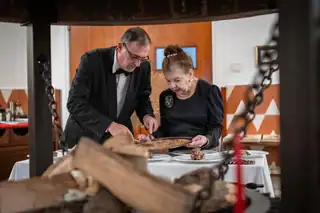
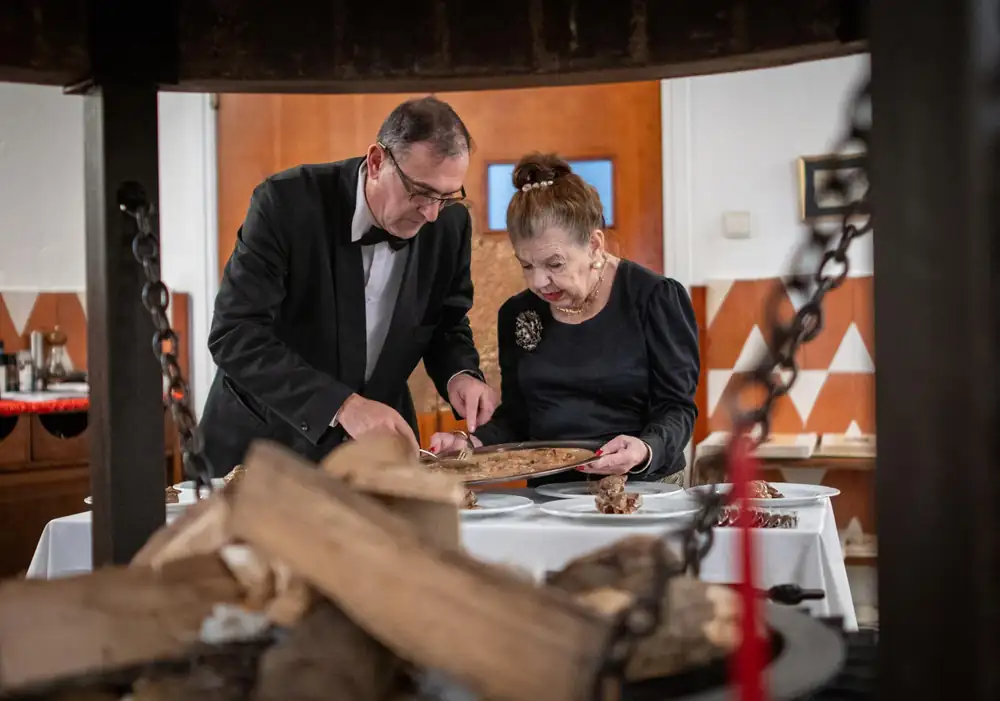
We shared a table with them, chatting warmly with Francina Suriñach. Smiling, she moved around the same room where she's worked for over half a century. The heavy trays were a bit of a challenge for her, but when it came to placing plates and cutlery in the exact position or preparing crêpes Suzette, she was unbeatable. The enormous central fireplace, she told us, wasn't needed now, but it was always ready for when it got chilly.
Francesc Fortí is in his kitchen and won't leave until every dish on the tasting menu has been served. One might think that the return of unexpected fame and recognition has made him complacent, but there's no better fuel than pride to keep you on your toes. To start, foie gras, seafood salad, and gratinated sea urchins, which, as he insists, he started making in the country and then everyone copied.
The history and the location are reason enough to come here. So are the recipes and the style that have remained unchanged for over 50 years. And the certainty that this will one day end, and in Fortí's plans, at 75 years old, neither retirement nor passing the torch to anyone else is on the table.
Without continuity
His recipes won't be continued either, he later confesses. Even if they're lost? "They don't deserve that," he replies with a smile. Though he's speaking quite seriously, and we imagine he's referring to the other cooks. Or to the diners who one day stopped coming. Or to the residents of the town where he's never been recognized. Or to everyone, probably.
The outpouring of affection the couple has received in recent years doesn't seem to have softened the chef, who is very clear that it's him against the world. It might sound harsh, though much less so when you hear him say it in person after having eaten a wonderful meal there. But if one thing is clear, it's that this is what keeps him going and gives him the strength to get up every morning, before dawn, to start making the puff pastry.
He prepares it on a small table inside the walk-in refrigerator because, he explains, temperature control is crucial. The result, as evidenced by the desserts, is extraordinary. A sheet of this puff pastry filled with cream and topped with fruit is, in fact, one of the first things diners see upon entering the restaurant's foyer.
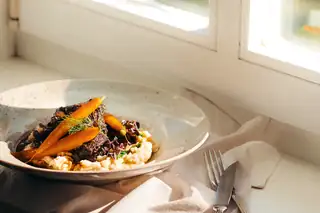
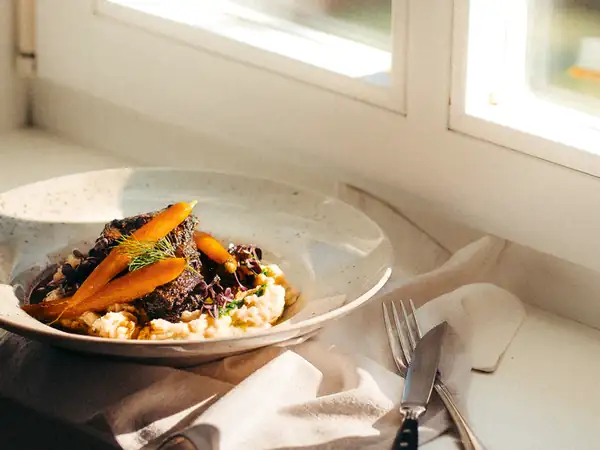
The chef, of course, is certain that his puff pastry is the best in the country. The only one worth trying, to be more precise. He's convinced it's not the character devouring the person. And we're not going to argue with him because it's part of Binu's magic. But before dessert, a sea bass en papillote with crab sauce and chopped nuts and the "Francesc" beef fillet parade across the table. Old-school French style, with plenty of butter. The result is frankly excellent.
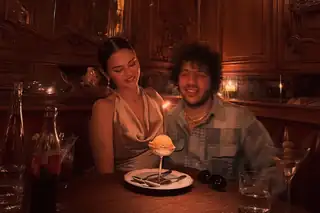
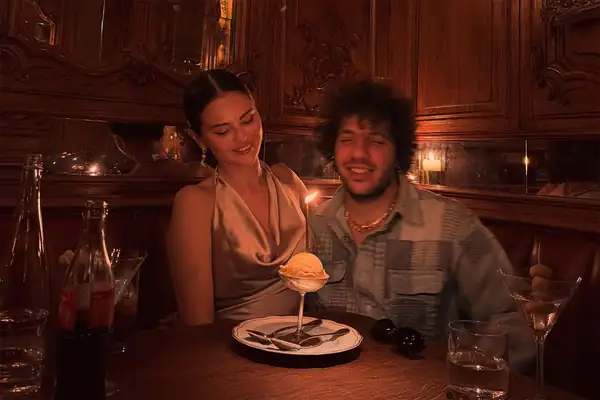
The tasting menu (90 euros) also includes another element that cements Binu's legendary status: his frozen orange soufflé. A unique creation that, as we understand it, he has stopped making for other restaurants—until recently it was also served at Dry Martini, for example—and whose recipe only Fortí knows. So this dessert will last as long as he can. Just like Binu. "Even the hedgehogs have copied us, but they don't dare try the soufflé," he jokes.
“I was born here, I will die here”
More than half a century of history provides ample material for anecdotes. It's often said, for example, that this was a place frequented by the former king, although no one seems to remember or confirm it. Fortí quickly dismisses the idea of celebrities passing through during its heyday with another of his characteristic lines that not even the best screenwriter could match: "I'm the famous one here."
Although the tasting menu is a simple introduction for those who are coming here driven by curiosity and that mix of gastronomic, historical and also anthropological interest, the à la carte menu (Maresme soup, steak stroganoff…) and special requests (lobster à la Cardinal, suckling pig, pheasant…) also work very well at El Racó. Fortí assures us that many foodies make the pilgrimage here and call to request a special dish.
Forgotten for decades, this restaurant, a living testament to a practically vanished cuisine, is now attracting renewed attention. But the question is unavoidable: how has the business managed to survive all these years? The answer lies in Francesc Fortí's character and determination. "I was born here and I'll die here," he asserts as we tour the kitchen. Then, as if it were another scene from the documentary, the phone rings, and he dismisses whoever is on the other end, presumably trying to sell something.
At El Racód'enBinu, you have to be prepared for a unique experience, and also for a price, because the main dishes start at around 30 euros. But you have to go. And soon, it's best.