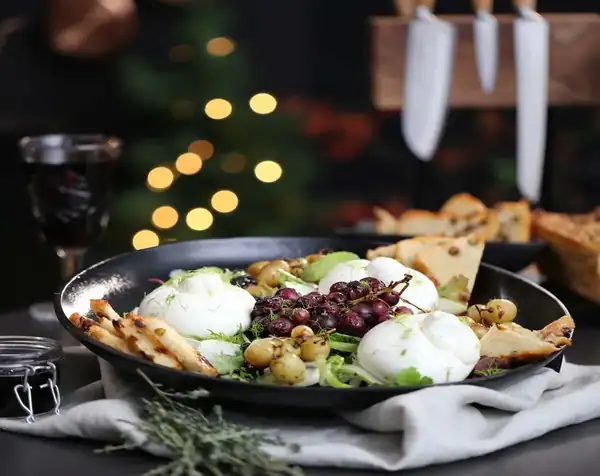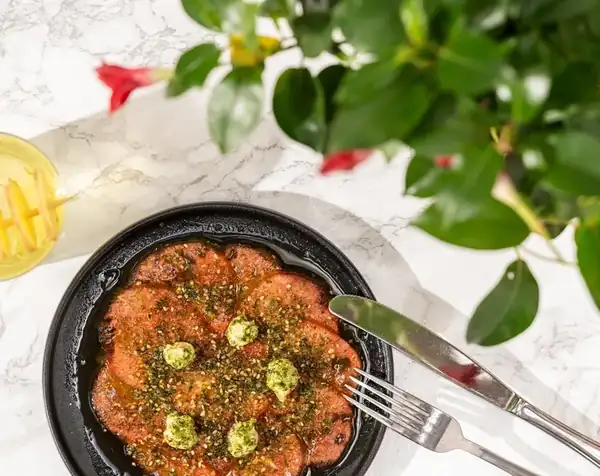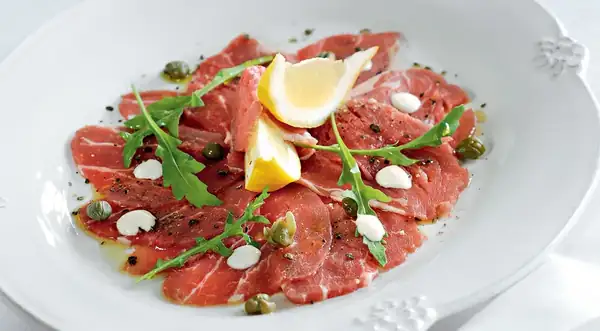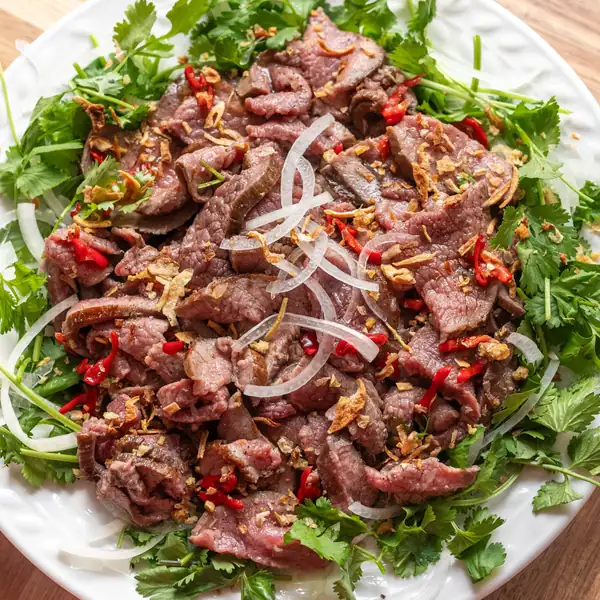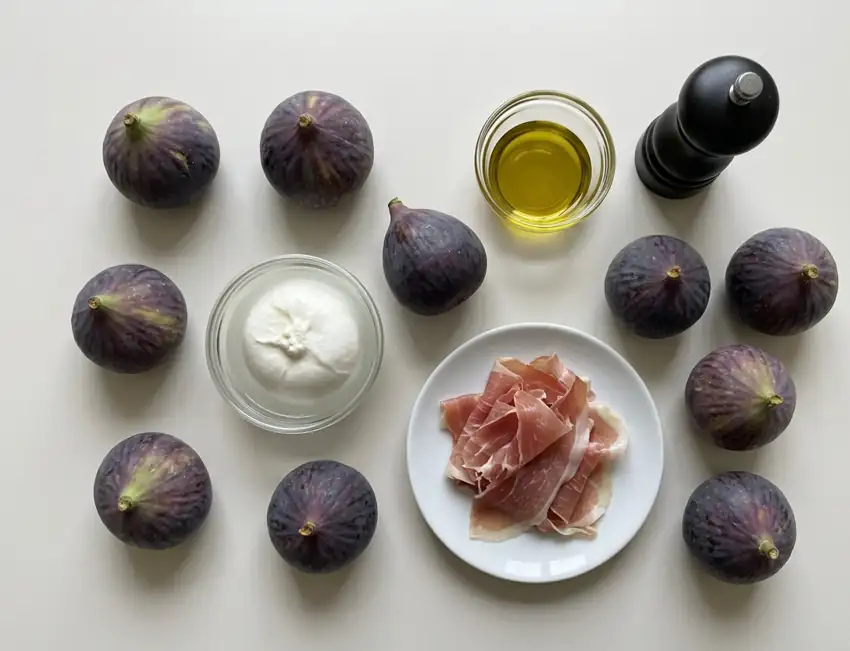
Fig carpaccio with burrata and ham, a fresh starter ready in 15 minutes
Para 4 2.7 €/pers. 175 kcal/100g.
- 8 fresh figs, about 450-500 g
- 1 burrata of about 200g
- 80g of finely sliced Serrano or Iberian ham
- 30 ml of extra virgin olive oil
- 5 ml of sherry vinegar
- Freshly ground black pepper
- We take the burrata out of the refrigerator, drain it well, and let it sit at room temperature for about 10 minutes. We don't want to heat it, just remove the harsh chill so that the inside is creamy when we open it.
- We wash the figs carefully and dry them very well with kitchen paper or a clean cloth. They should be completely dry. We remove the small stem from each one without peeling it.
- Using a very sharp knife, cut the figs crosswise into slices 4 or 5 mm thick. They don't all need to be perfectly uniform; the size of the fruit will mean some will be larger than others.
- Arrange the fig slices on a large, flat plate, slightly overlapping them to form a circle, leaving an 8 cm (3 inch) area in the center. Cover the figs with cling film and gently press down with the flat bottom of a glass until they are about 2 or 3 mm (1/4 inch) thick. Carefully remove the film. You should end up with a single, recognizable layer of flesh and skin, not a purée.
- We put the extra virgin olive oil, sherry vinegar, and a little black pepper in a bowl. We whisk them for a few seconds with a fork until they are lightly combined. For now, we're not adding salt, because the ham will already provide plenty.
- We place the drained burrata in the central hollow. We make one or two short cuts on top and open it slightly with the knife to reveal the creamy interior, but without spreading it throughout the carpaccio.
- We arrange the ham around the burrata in loose folds, without rolling it up or making compact piles. We place it mainly in the inner part of the carpaccio so that the fig remains visible on much of the plate.
- Stir the dressing again and drizzle it in small amounts over the figs and a little over the burrata. Finish with another sprinkle of black pepper and serve just before eating.
In a carpaccio, the difference isn't just in serving a raw ingredient. The key is in the cut and the thickness: the figs aren't quartered or sliced, but rather arranged in a thin, continuous layer of fruit that practically covers the entire plate. To achieve this, we slice them and then gently press them between the plate and a sheet of plastic wrap.
We need ripe but firm figs. If they're too green, it will be difficult to spread the pulp; if they're overripe, they'll turn to mush before we can form the carpaccio. On top of that, we place a creamy burrata and some very thinly sliced ham, which provides the dairy, fat, and saltiness that such a sweet fruit needs.
Burrata offers plenty of options when served cold; you can also find these three burrata salads at Rechupete. In this case, however, we haven't added arugula, nuts, honey, or balsamic cream. We're aiming for a cleaner preparation, with a simple dressing of oil, sherry vinegar, and pepper that refreshes the dish without overpowering the fig.
Furthermore, it falls squarely into the category of cold, no-cook recipes and works beautifully as one of those appetizers or starters that we can assemble shortly before sitting down to eat. The only tricky part is forming the fruit layer properly; the rest is just a few minutes of assembly.
It's important to work systematically here because, once the figs are cut and pressed, we don't want to be constantly moving the carpaccio around. Assembling it at the last minute and using a wide, flat plate will make things much easier.
If we want to continue with fresh preparations where fruit, cheese, and savory elements are balanced, there are three different options that work particularly well. They don't replicate this carpaccio, but they explore similar contrasts through different structures.
The fresh cheese salad with strawberries combines fresh fruit and cheese with Iberian ham; the melon salad with ham and cherry tomatoes brings the contrast between sweet fruit and ham to a summer salad; and the spinach salad with cottage cheese and fruit uses various types of fruit and cheese in a distinct cold preparation.