How to reduce your consumption of processed foods without complicating your life
Reducing your consumption of processed foods doesn't mean filling your refrigerator only with freshly picked produce or cooking absolutely everything from scratch. Processing a food doesn't automatically make it unhealthy.
The problem arises when a large part of the diet relies on highly processed or ultra-processed products, which, in addition to displacing simpler foods, often provide high amounts of salt, free sugars, saturated fats, or calories. The WHO states that the foundation of a healthy diet should consist primarily of minimally or unprocessed foods and a varied diet.
That doesn't mean grocery shopping has to be a chemistry exam. The most effective way to reduce processed foods is much more practical: identify which ones take up too much space in our daily diet, replace some with simpler options, and stop relying on them due to lack of time, hunger, or improvisation.
Processed and ultra-processed are not the same thing
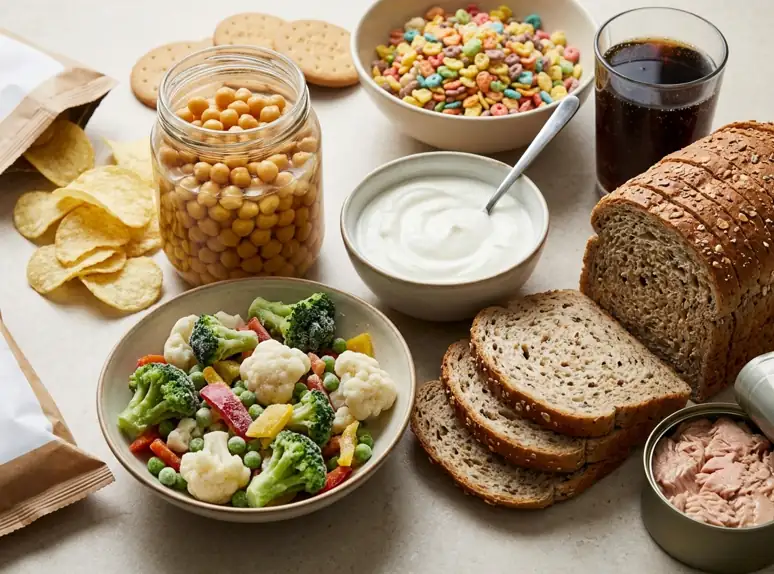
The word "processed" is so broad that, used without nuance, it's not very useful. The NOVA classification distinguishes between unprocessed or minimally processed foods, processed culinary ingredients, processed foods, and ultra-processed products. A bag of frozen vegetables, canned cooked chickpeas, or plain yogurt are not in the same category as flavored snacks, commercially baked goods, or certain ready-made meals.
Therefore, before you start removing foods from your pantry, it's important to understand what's behind processed food. The degree of processing matters, but so does the nutritional composition and the overall diet. Even among ultra-processed foods, there are differences, and a packaged product doesn't become bad simply because it has a long label.
The available evidence does advise caution regarding high consumption of ultra-processed foods. Extensive reviews of epidemiological studies have found associations between increased exposure to these products and various health problems, although for many outcomes the quality of evidence is low or very low, and the effect of processing cannot always be separated from the overall quality of the diet. Furthermore, a controlled clinical trial published in 2019 observed that an ultra-processed diet led participants to consume more calories and gain weight compared to a diet based on unprocessed foods. This does not prove that any ultra-processed food is harmful on its own, but it does reinforce the idea that habitual eating patterns matter.
Start with what you eat most often
Trying to eliminate all processed foods at once is usually an unrealistic strategy. It's much more effective to identify the three or four products that appear almost every day. In many homes, these will be soft drinks, pastries, cookies, sugary cereals, cold cuts, snacks, dairy desserts, commercial sauces, or ready-to-heat meals.
Frequency matters more than exceptionality. Eating potato chips on a Saturday doesn't define a diet, but having highly processed foods for breakfast, snacks, and dinner every day can lead to them displacing fruit, vegetables, legumes, whole grains, and other essential foods.
A simple method involves reviewing which packaged products we buy repeatedly over a few days and asking ourselves two questions: Do I buy it because I genuinely like it or because it's the easiest thing on hand? And is there an equally practical alternative that I can prepare in advance? That second question is often what changes our purchasing decisions.
Make the easy option a good option, too.
The main obstacle to a diet less reliant on ultra-processed foods is usually not a lack of information, but arriving home hungry and having nothing planned. If cooking a decent meal takes forty minutes, but opening a package only takes twenty seconds, we know which option will win many days.
The solution is to have quick and easy meals on hand. A well-stocked pantry might include cooked legumes, eggs, canned fish, natural or roasted nuts without excess salt, crushed tomatoes, whole-wheat bread, and rolled oats. Plain yogurt, washed fruit, and vegetables that can be cooked quickly are good choices for the refrigerator. And the freezer isn't the enemy: frozen vegetables can save a lot of time without forcing us to resort to a ready-made meal.
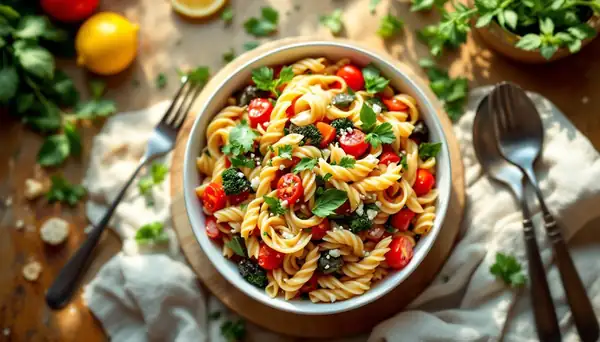
It also helps to have two or three easy-to-make meals: a legume salad, a vegetable omelet, a bowl of natural yogurt with fruit and nuts, whole-wheat toast with tomato, or hummus with vegetables. Convenience isn't exclusive to the food industry.
Change your breakfast and snacks before you complicate things with the main meal.
Breakfast, snacks, and light meals are times when ultra-processed foods easily find their way into our diets. But you can make big changes with very little cooking. If sugary cereals are a regular part of your diet, oatmeal or porridge can be a quick and easy breakfast option. If you eat pastries or cookies every day, try alternating with fruit, plain yogurt, nuts, or toast.
Something similar happens with beverages. Drinking water regularly reduces the space occupied by sodas and other sugary drinks without needing to look for a sophisticated substitute. There's no need to forbid yourself from drinking soda forever; the important thing is to stop making it the automatic drink with every meal.
This approach works better than designing a perfect menu that then doesn't fit into our routine. First, we reduce the most obvious repetitions and then fine-tune the rest.
Learn to read the label without obsessing over it
When buying packaged food, the label is useful for comparison. The first thing to do is look at what product you're buying and what ingredients it contains. Then it's a good idea to check the nutritional information, especially when comparing products in the same category.
A long ingredient list doesn't automatically mean the food is bad, and a short list doesn't guarantee it's healthy. Permitted additives shouldn't be treated as a default warning sign. Instead, it's worth paying attention to sugars, salt, saturated fats, and energy density, especially in products we consume frequently.
Hidden sugar in food deserves attention because it can appear in products we don't recognize as sweets. It's also important to understand what claims like "sugar-free" or "no added sugar" mean: they don't automatically make a food healthy.
Nutri-Score can help compare the nutritional quality of similar products, but AESAN itself points out that it doesn't measure the degree of processing. A favorable rating doesn't replace considering what the product is, how often we eat it, and its place in our overall diet.
Replace habits, not isolated foods
If we want the change to last, we need to find a specific replacement for each habit. It's not enough to decide "not to buy cookies" if there's nothing for a snack afterward. It's not enough to cut out ready-made meals if we get home late three nights a week and don't have dinner.
We can replace some pastries with fruit, yogurt, or nuts; some breakfast cereals with oats; certain commercial sauces with a homemade tomato sauce prepared in large quantities; and reserve sausages and other processed meats for less frequent consumption.
The key is that the alternative fulfills the same need: speed, satiety, something sweet, something crunchy, or a dinner that doesn't require much effort. If it doesn't address the same need, the change is unlikely to last.
Cook once and solve several meals.
You don't need to spend the whole Sunday filling twenty Tupperware containers. Just make the most of every time you cook. If you make lentils, a vegetable soup, rice, tomato sauce, or a stew, you can prepare larger quantities and store extra portions.
Batch cooking is based precisely on this idea: preparing meals in advance so that cooking well during the week doesn't depend on having a free hour. And freezing food correctly allows us to turn homemade meals into our own fast food.
Having a vegetable soup, a sofrito, a stew, or several servings of cooked legumes in the freezer greatly reduces the temptation to always resort to ready-made meals. Planning doesn't mean eating the same thing all week; it means eliminating difficult choices at times when we tend to make the worst decisions.
Don't confuse "packaged" with "bad"
There are processed foods that can make a reasonable diet easier. A can of cooked chickpeas, a can of fish, frozen vegetables, plain yogurt, crushed tomatoes, or whole-wheat bread can be very practical. In fact, trying to do without any packaged food can complicate meal planning so much that we end up going back to much worse solutions.
That's why it's important to learn how to choose instant food without always resorting to ultra-processed options. The goal isn't to eat perfectly clean, but to build a diet we can maintain, one in which products with the worst nutritional profile aren't the daily foundation.
The Mediterranean diet offers a much less obsessive framework: vegetables, fruits, legumes, cereals, nuts, olive oil and other simple foods take center stage, while other products are relegated to a minor role.
Common mistakes when trying to eat less processed food
One of the most common mistakes is wanting to go from everything to nothing. If someone relies on five or six ultra-processed products daily, eliminating them all at once forces them to change their shopping habits, cooking routines, schedules, and habits simultaneously. It's more sensible to start with the ones they consume most often.
Another mistake is switching to a product with its "fitness," "protein," "organic," "natural," or "free-from" version. These terms might describe a specific characteristic, but they aren't a guarantee of overall nutritional quality. You should still look at the actual product.
It's also important to avoid indiscriminate fear of ingredients. The goal isn't to find products with the fewest possible words on the label, but to improve your eating habits. A diet based on fruit, vegetables, legumes, whole grains, nuts, and simple foods makes more sense than a collection of products with health claims.
And there's one last, fairly common mistake: thinking that cooking at home automatically makes any dish healthy. We can make foods at home that are very high in sugar, salt, or saturated fats. Homemade and healthy don't exactly mean the same thing.
A simple plan to start this week
There's no need to restock the entire pantry. We can start with four specific steps:
- Identify the three ultra-processed foods that we consume most frequently during the week.
- Find a realistic alternative for two of them, not for twenty things at once.
- Add to your shopping list three emergency meals or dinners that you can put together in less than ten minutes with simple ingredients.
- Cook a preparation in quantity and store several portions, using the refrigerator or freezer as appropriate.
If after a few weeks your shopping list contains more staple foods and fewer products you eat out of habit, the change is already working. We don't need a perfect diet. We need a routine where eating well is easy enough to repeat.