Figs in syrup or candied, whole, shiny and honeyed
Para 8 1 €/pers. 170 kcal/100g.
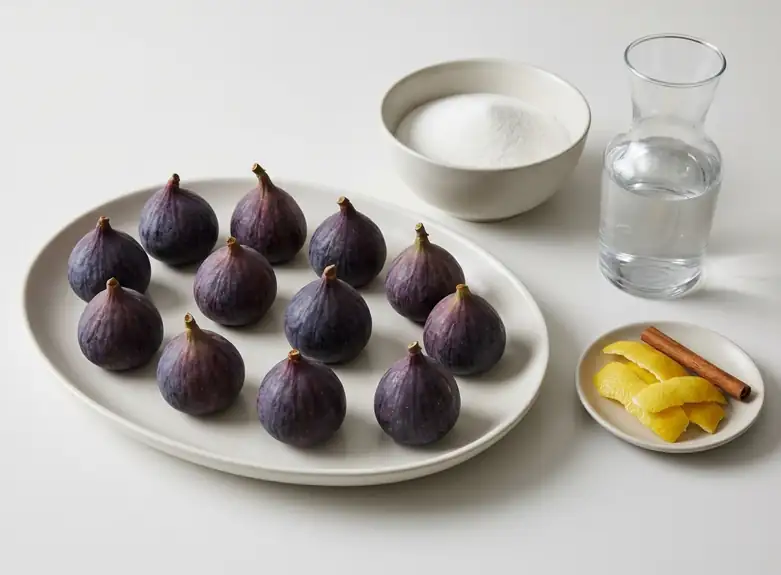
- 1 kg of fresh, ripe but firm figs
- 600g of white sugar
- 500 ml of water
- The peel of 1 lemon, only the yellow part
- 1 cinnamon stick, optional
- Wash the figs under a gentle stream of cold water and dry them carefully. Do not soak them and avoid squeezing them. Leave the stem intact if it is healthy; if it is too long or damaged, trim only the tip. This helps the fruit retain its shape better during cooking.
- In a large saucepan, combine the 500 ml of water, sugar, lemon peel, and cinnamon stick. Heat over medium-low heat until the sugar has completely dissolved. Once it begins to boil, let it simmer for about 5 minutes, without allowing it to thicken into a syrup.
- Lower the heat and add the figs one by one. They should be evenly distributed, preferably in a fairly even layer, without squashing them together. Once the liquid returns to a very gentle simmer, reduce the heat to low and cook for 25 to 30 minutes.
- During this time, do not stir with a spoon. If you need to move the fruit, gently rock the casserole dish by the handles to circulate the syrup. The figs will be ready when they look darker, shinier, and slightly wrinkled, with a somewhat more translucent skin, but are still whole. If one or two split a little, that's fine; what we want to avoid is most of them ending up broken.
- Remove the saucepan from the heat and let the figs cool in the syrup. Once it's no longer hot, transfer everything to a clean container, cover, and let it rest in the refrigerator for 8 to 12 hours. This resting time allows the fruit to absorb the syrup without requiring you to cook it for too long.
- The next day, we check the syrup's consistency. If it's to our liking, we don't change anything. If it's too runny, we remove the figs with a slotted spoon and reduce the syrup for just 5-10 minutes. It's better to reduce the syrup without the fruit than to continue overcooking figs that are already tender. We let it cool slightly and then cover them again.
- We store the figs in a clean jar or container, always covered by the syrup, and keep them in the refrigerator. This recipe is intended for refrigerated preparation, not as a shelf-stable preserve. To preserve figs for months at room temperature, a proven preservation process is necessary, with proper acidification and heat treatment; simply filling a jar while hot and turning it upside down does not replace this process.
- The firmness of the fruit is key. For this recipe, we don't use figs that are already almost mushy. Those are better suited for homemade fig jam or another preparation where they don't need to retain their shape.
- Choose a casserole dish where the figs can fit comfortably. Piling them in three layers increases the risk of the bottom ones getting squashed while the top ones receive less syrup.
- The lemon peel should contain very little of the white pith. If too much of the white pith is removed, prolonged cooking can introduce a bitterness that is not useful here.
- Cinnamon is optional. If you use it, a single stick is enough. We don't want the spice's flavor to overpower such an aromatic fruit.
- If the syrup seems a little thin when you turn off the heat, wait before adjusting it. It always thickens as it cools, and the figs continue to exchange water and sugar while resting.
- Don't try to fix a syrup that's too thin by leaving the figs on the heat for another half hour. Remove the fruit and reduce the syrup separately: it's a much more manageable adjustment.
- Leftover syrup can be used in many ways. At Rechupete you'll find ideas for using fruit syrup in cakes, drinks, and other desserts.
- If you want to change the sugar, keep in mind that it can also change the final color and flavor. This guide to different types of sugar is helpful for understanding those differences, although this recipe is calculated using white sugar.
Here's an important difference compared to jam: with figs in syrup, we want the fruit to remain whole. The fig is cooked in a sugar syrup until tender, glossy, and well-infused, but without becoming mushy. And, although the name "candied" might be misleading, we don't add honey in this version: the syrupy appearance comes from the syrup itself and the slow cooking process.
For this to work, we need ripe but still firm figs. Very green ones will withstand cooking, yes, but they'll have less flavor; those that already give way when touched can break in the pot before the syrup thickens. If you're unsure about the ripeness of the fruit, this guide on how to choose, store, and use figs will help you distinguish those that are ready to eat, cook, or use in another way.
The other key point is not to overdo it with the syrup. We're not aiming for caramel or a sauce so thick it becomes sticky when it cools. We want a syrup that coats the fruit well and thickens slightly as it rests. If you'd like to refine this point, you can see why the proportions and timing change depending on the intended use in the guide on how to make syrup and its different stages.
If you'd like to continue using fruit with different techniques, you can prepare homemade fig jam, where the fruit does break down; pears poached in red wine with cinnamon, which are also cooked whole in an aromatic liquid; or candied orange with chocolate, where the sugar works on the fruit in a different way.