Greek Galatopita without a crust, the milk cake of Mani
Para 6 0.6 €/pers. 220 kcal/100g.
- For the cream and semolina:
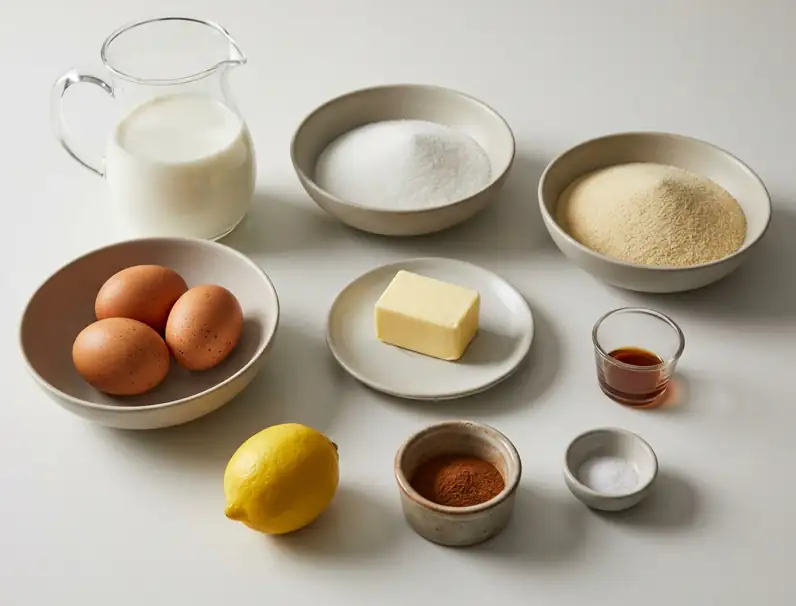
- 1.25 l of whole milk
- 160 g of sugar
- 150 g fine wheat semolina
- 3 large eggs
- 60g unsalted butter, reserving 10g for the mold
- 1 teaspoon of vanilla extract
- The finely grated zest of 1 small lemon, only the yellow part
- 1 teaspoon of ground cinnamon
- 1 pinch of salt
- For the thin top crust:
- 1 large egg
- 30g of sugar
- 20g of melted butter
- 30 ml of water
- 1/2 teaspoon of ground cinnamon
- Preheat the oven to 180°C (350°F), using the conventional setting (top and bottom heat). Grease a 24cm (9.5 inch) round cake tin with the reserved 10g (1/4 cup) of butter, coating the base and sides well.
- In a large saucepan, combine the milk, sugar, vanilla, lemon zest, cinnamon, and salt. Heat over medium heat, stirring occasionally, until the milk is very hot and begins to steam, but do not let it boil vigorously.
- Reduce the heat to medium-low and gradually add the fine semolina in a steady stream, whisking continuously. Cook for 4-5 minutes, until you have a thick, smooth cream. When you run the whisk through the semolina, a visible groove should remain that takes a moment to close; we're not aiming for a stiff dough.
- Remove from the heat, add the remaining 50g of butter and mix until completely melted. Let the cream rest for 10 minutes, stirring a couple of times to allow it to cool slightly without forming a skin.
- Lightly beat the 3 eggs for the cream in a bowl. Add a ladleful of the lukewarm milk and semolina mixture and stir; repeat with another ladleful. Return this mixture to the saucepan and beat until completely smooth, with no streaks of egg.
- Pour the cream into the greased mold and spread it with a spatula. It should fall with some weight but still spread easily. Gently tap the mold a couple of times to level the surface.
- In another bowl, whisk the egg for the crust with the water, sugar, melted butter, and cinnamon. Spread this mixture evenly over the surface using a silicone brush, being careful not to dip it into the cream. It should form a thin, continuous film, not a thick layer.
- Place the pan in the middle of the oven and bake for 45-50 minutes. The surface should be golden brown, with some darker areas, and the edges should be firm. The center may jiggle slightly when you gently shake the pan, but it should not appear runny.
- Remove the galatopita from the oven and let it cool in the pan on a wire rack. Wait at least 1 hour before cutting. If you want very defined portions, let it cool completely and refrigerate it for about 3 hours.
- The fine grating of 1 small lemon, only the yellow part.
In Mani, in the southern Peloponnese, there are galatopitas that go into the oven without a single sheet of filo pastry. The milk and semolina are first cooked into a thick cream, which is then poured directly into the mold. Just before baking, it's coated with a very fine mixture of egg, sugar, butter, water, and cinnamon. The result has neither a base nor a wrapper: the cream itself forms the pastry, with a firm yet creamy interior and a very thin, golden surface.
The resemblance to galaktoboureko is immediately apparent in the milk and semolina, but the two preparations then diverge considerably. Galaktoboureko encloses the custard between sheets of filo pastry and finishes with syrup; this galatopita from Mani omits both, allowing the oven to work directly on the custard. This results in a more uniform cut, and the focus remains on the milky texture, rather than the contrast between custard, crisp pastry, and syrup.
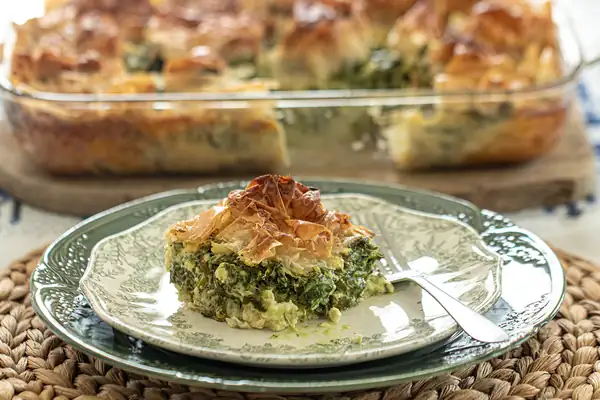
The ruffled milk pie also helps to place this recipe within Greek cuisine, although visually it takes a different approach: there, the filo pastry sheets are crumpled and baked, forming crispy folds that are then soaked in a mixture of milk and egg. In the phyllo pastry without filo, there are no gaps or layers to preserve; we aim for a continuous, creamy pastry, with the semolina evenly distributed from top to bottom.
And there's a closer echo in the ingredients of the cinnamon cake, where milk, eggs, sugar, and cinnamon reappear. The key difference lies in the thickener and the way it sets: here, the fine semolina absorbs some of the milk in the pan, and the oven finishes setting a cream that should remain moist. We don't want an airy crumb or a cake-like texture.