Fisuelos de Laciana, the sweet Leonese fried in a spiral
Para 6 0.8 €/pers. 210 kcal/100g.
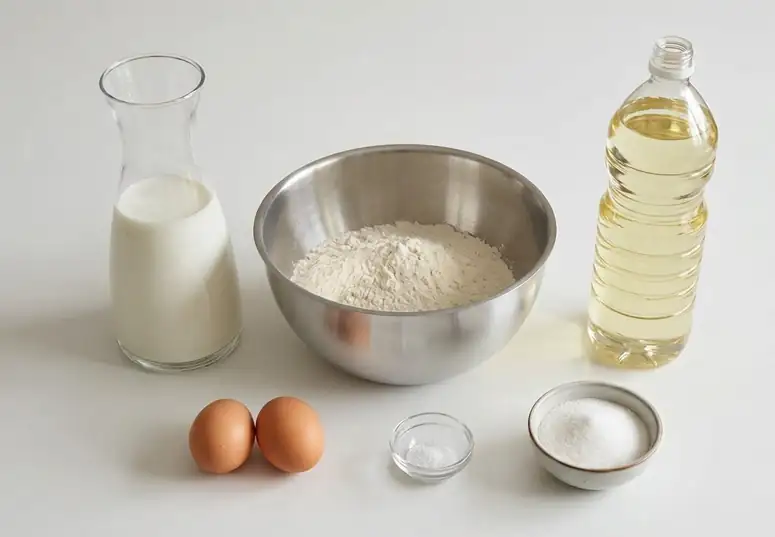
- 500g of all-purpose wheat flour
- 1 liter of whole milk, plus a little more if needed to adjust the dough
- 2 medium eggs
- 1 pinch of salt
- Approximately 750 ml of sunflower oil for frying
- 30g of sugar to finish
- In a large bowl, combine the flour, eggs, salt, and about 900 ml of milk. Mix first with a spoon to thoroughly moisten the flour and prevent it from flying out when using the mixer.
- We use a hand mixer until the mixture is smooth and lump-free. We scrape down the sides of the bowl if any flour is stuck and mix again for a few seconds.
- Gradually add the remaining milk. Lift a ladle or pour a little batter from a jug: it should form a continuous stream that flows easily but retains its body. If it falls in clumps, add a splash more milk; if it looks like water, a small amount of well-beaten flour will correct the excess.
- Heat the sunflower oil in a wide frying pan, approximately 2-3 cm deep. Work at around 175-180 ºC: the oil should react immediately upon receiving the batter, without smoking.
- We transfer the dough to a pitcher with a spout or a container that allows us to control the pour. We pour approximately one-sixth of it and draw a single, connected spiral from the center outwards. We can go over some gaps so that the strands cross and the piece is joined. We're not aiming for perfect circles.
- We let the first side fry until the top has lost its wet sheen and the edges begin to brown, approximately 45-60 seconds depending on the thickness. Then we insert a wide spatula underneath and carefully flip it over.
- Fry the second side for another 30-45 seconds, until evenly golden brown without over-darkening the thin strands. Lift it out with a slotted spoon and let the excess oil drain back into the pan before transferring it to a plate or wire rack.
- We repeat with the rest of the dough, one fritter at a time. Between batches, we briefly stir the mixture in case the flour has settled and monitor the oil temperature. After finishing each fritter, we drain it well before starting the next one.
- As they come out of the pan, we sprinkle a light coating of sugar on top. With the heat, the sugar adheres to the ridges of the fritter without needing to coat it completely.
- We serve them while they're still warm or hot, stacked loosely so they don't get squashed. They're especially good freshly made, when the edges are still crispy and the center is still tender.
In Laciana, a jug of batter and a pan of oil are all it takes to make a tower of Laciana fisuelos. These are a sweet treat made of flour, milk, and egg, poured in a thin stream directly into plenty of oil. The batter crosses over itself, sets quickly, and ends up as an irregular piece with delicate edges and a golden surface on both sides. The shape isn't molded beforehand; it emerges as you draw the spiral in the pan.
The name can be misleading because there are very similar dishes with comparable names in the northwest. Asturian frixuelos are spread in a lightly greased pan and come out thin, like a flexible pancake. These Leonese fisuelos are not a thin crepe: they are fried in plenty of oil, and the batter falls in a continuous stream that must join together so that the piece holds its shape when turned over, like thin porras or churros.
Technically, they're reminiscent of funnel cakes, and with that fried dough element that's eaten warm, they also remind us of our homemade churros. In the version we're going to prepare, the recipe is very simple: no yeast and no sugar in the dough; the sugar is added at the end, while the fisuelo is still warm. It's also one of those sweets that fits perfectly among the Carnival desserts of the northwest Iberian Peninsula.