The Creamiest Dill Sauce for Salmon You’ll Ever Make!
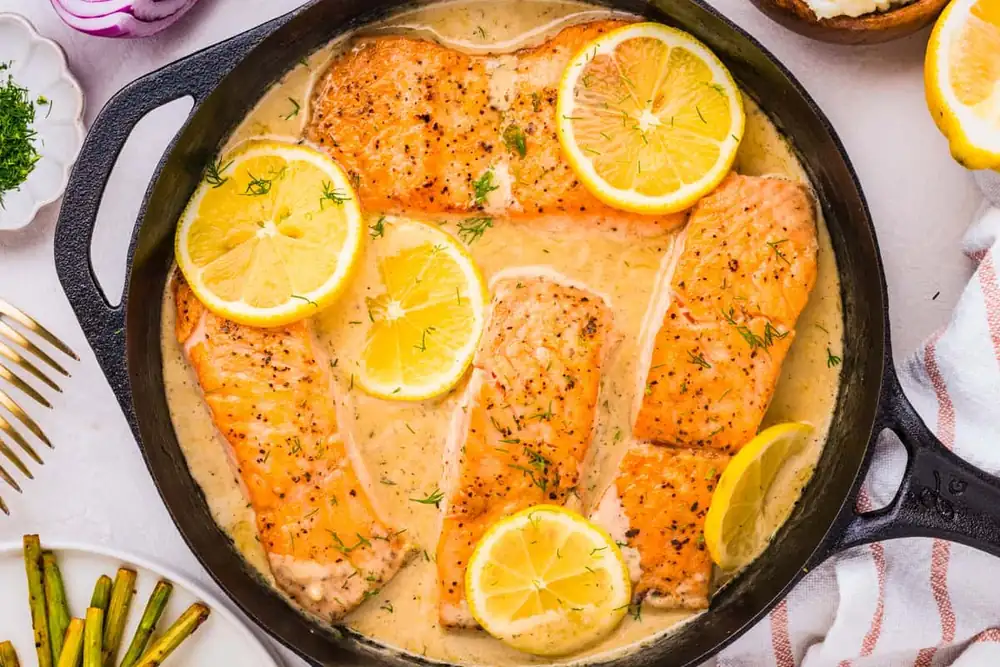
This lemon dill salmon is one of my fastest, most reliable stovetop dinners. I pan-sear the salmon first, then combine it with a creamy dill sauce made with fresh dill, lemon, garlic, and a splash of broth. It's ready in 15 minutes.
- 24 oz salmon fillets ((4 fillets about 6 ounces / 170 grams each))
- 1 teaspoon kosher salt
- ¼ teaspoon coarse ground pepper
- ¼ teaspoon garlic powder
- 1 tablespoon flour (optional, you can aslo use gluten-free flour)
- 1 tablespoon olive oil
- ½ cup chicken broth
- 3 tablespoons fresh dill (chopped)
- 2 tablespoons finely chopped red onion
- 1 tablespoon lemon juice
- 1 teaspoon lemon zest
- 2 cloves garlic (minced)
- 1 cup heavy cream
- ½ lemon (sliced, for garnish)
- Chopped dill (for garnish)
- Lemon wedges (for serving)
- Remove the salmon from the fridge 20 minutes before starting to cook it. Season all sides of the salmon fillets with salt, pepper, and garlic powder. Sprinkle the flour on all sides of the salmon, rubbing it into the fish to evenly cover.
- Heat a large cast-iron skillet or other heavy-bottomed skillet over medium-high heat. Add the olive oil, then place the salmon fillets in the pan. Cook without moving the fish for 3 minutes.
- Flip the fillets and cook on the second side for another 2-3 minutes. The salmon should not be fully cooked yet; it will finish cooking in the sauce. Remove the salmon to a plate and set aside.
- Reduce the heat to medium and add the chicken broth, dill, onion, lemon juice, lemon zest, and garlic. Bring the mixture to a simmer; allow to simmer for about 1-2 minutes, until the liquid has reduced a bit.
- Add the heavy cream and whisk to combine. Cook for 2 minutes, then nestle the salmon into the sauce. Continue cooking until the salmon reaches your desired internal temperature and the sauce thickens. If the sauce thickens too much, add a few teaspoons of water to thin it out to your desired consistency.
- Serve garnished with lemon slices, a sprinkle of fresh chopped dill and lemon wedges squeezed over the fish.
Salmon with Lemon Dill Sauce (15-Minute Dinner)
Salmon is one of my favorite weeknight proteins. It's easy to find, relatively affordable, cooks quickly, healthy, low in carbs, and is rich in Omega-3 fatty acids. I've made all kinds of saucy salmon recipes over the years, like my Tuscan salmon and salmon piccata, but this creamy dill sauce for salmon might honestly be my new favorite way to serve this fish.
The sauce is loaded with lemon juice, lemon zest, and fresh dill, which perfectly balances the richness of the fish and the cream. Perfect to pour over garlic mashed potatoes and green beans, or to serve over baked asparagus and roasted Brussels sprouts with bacon.
No dry salmon here! I sear the salmon until it has color but intentionally pull it before it's fully cooked. The fish finishes in the dill sauce, which keeps it moist and infuses it with flavor rather than just coating it at the end.
Why You'll Love It
- Done in 15 minutes, one pan, minimal cleanup.
- I use a simple flour dredge on the salmon for that crispy edge without deep-frying.
- Salmon finishes cooking in the dill sauce, so it stays tender and doesn't overcook.
- I use both lemon juice and zest for a more pronounced flavor.
- Fresh dill (no dried herbs!) makes a real difference in the dill sauce for salmon.
This recipe consists of two parts: the pan-seared salmon and the creamy dill sauce.
Salmon Ingredients
- Salmon fillets: I usually look for 6-ounce fillets. Skin-on or skinless both work here. Skin-on fillets tend to hold together better in the pan. I usually buy center-cut fillets because they're more even in thickness and cook more consistently than tail pieces. Wild-caught salmon (sockeye or coho) has a more pronounced flavor; Atlantic (farmed) is milder and often easier to find. Any works.
- Salt and pepper: I prefer kosher salt and coarsely ground black pepper.
- Garlic powder
- Flour: This helps the salmon brown beautifully, but is optional. For a gluten-free version, simply omit the flour or use GF flour.
- Olive oil: For searing the fish.
Dill Sauce Ingredients
- Chicken broth: Chicken stock will also work.
- Fresh dill: Finely chopped. If you only have dried dill, start with 1 teaspoon and add more as needed, since dried herbs are much more potent than fresh.
- Red onion: Finely chopped. You could substitute finely chopped shallot.
- Fresh lemon: We'll just the zest and the juice in the sauce. I also like to garnish the salmon with fresh lemon slice and have extra wedges available when serving.
- Fresh garlic: Finely minced.
- Heavy cream: Do not use milk or half-and-half in place of the cream, as they are more likely to curdle from the acid in the lemon juice. You can, however, use full-fat coconut milk to make it dairy-free.
How to Make Lemon Dill Salmon (Step-by-Step Photos)
- Prep the salmon: Let the salmon sit out on the counter for about 20 minutes before you start cooking. Season the salmon fillets on all sides with the salt, pepper, and garlic powder. Evenly sprinkle all sides with the flour, rubbing it into the flesh of the fish.
- Sear the salmon: Heat a cast-iron skillet over medium-high heat, then add the oil. Carefully place the salmon in the pan. If you are using skin-on fish, add it with the skin side down, flesh side up. Cook without moving the fish for 3 minutes.
- Flip the salmon: Carefully flip the fillets and cook on the second side for 2-3 more minutes. Remove the fish to a plate and leave the pan on the heat - the salmon will not be fully cooked yet.
- Make the dill sauce: Reduce the heat slightly, then add the chicken broth, dill, onion, lemon juice, lemon zest, and garlic. Bring to a simmer and cook for 1-2 minutes to let the liquid reduce a bit.
- Add the cream: While simmering (not boiling!), whisk in the cream. Let it cook for another 2 minutes on low heat.
- Add the salmon: Return the salmon to the pan, nestling it into the creamy dill sauce. Cook over medium heat, simmering (never boiling!) until the salmon reaches your desired doneness and the sauce thickens.
- Serve: Garnish the salmon with lemon slices and a sprinkle of fresh dill. Serve alongside lemon wedges for squeezing over the fish.
- The total cooking time will depend on how you like your salmon cooked. Use an instant-read thermometer to measure the internal temperature to know when the fish is done.
- Salmon is best served medium-rare to medium. The internal temperature for medium-rare salmon is 120℉ and medium is 130℉.
- For food safety, the FDA recommends cooking salmon (and other fin fish) to a minimum internal temperature of 145°F (63°C) measured in the thickest part of the fillet. At that temperature, the salmon should look opaque, feel firmer, and flake easily when you press it with a fork.
- No thermometer? Use visual cues: cook until the flesh is no longer translucent, turns opaque, and separates easily with a fork.
- If left in the pan, the salmon will continue to cook even after removing from the heat. If you don't plan to serve the fish immediately, either remove the fish to a serving platter once it reaches your desired doneness, or remove the pan from the heat when the salmon is just shy of your target temperature.
- Potatoes. The creamy dill sauce for salmon is practically made to be spooned over potatoes. My roasted garlic Parmesan mashed potatoes or scalloped potatoes are a natural fit.
- Steamed or roasted asparagus. Simple green vegetables balance the richness of the fish with cream sauce without competing with the dill and lemon flavors. I recommend my cheesy baked asparagus with bacon or Asiago cheese roasted broccoli.
- Lower-Carb Options. Serve salmon and dill sauce over a bed of perfectly cooked spinach, blanched green beans, or roasted spaghetti squash. You can also try cauliflower rice.
- Polenta. Plate it over creamy polenta for an unexpected but delicious pairing, similar to how I serve my Braised Short Ribs.
- Salad. Round out the meal with a green salad, such as my simple green salad or a bright strawberry orange salad with spinach and arugula.
- Flake leftover salmon into pasta with a bit of the reheated sauce for a quick next-day meal.
- Making lemon dill salmon for a dinner party? Turn your garden cucumbers into a cucumber gimlet for cocktails and make my strawberry galette for an easy-yet-impressive dessert!
Should I use skin-on or skinless salmon?
Either one works for this recipe. If using skin-on salmon, make sure to place the skin-side down in the pan first so the skin can crisp up.
Can I use frozen salmon?
Yes. Make sure the salmon is thawed completely and pat it dry with paper towels before seasoning it. This will help you get a better sear on the fish.
How do I know when the salmon is done?
I aim for salmon that flakes easily and looks opaque on the outside. If you want to use a meat thermometer, many people love salmon around 125-130°F for medium, and closer to 140-145°F if you want it more well-done. Since you're finishing it in the sauce, I pull it from the sear a bit early and let it gently finish.
Can I make dill sauce dairy-free?
Full-fat coconut cream is the best dairy-free alternative, though it does add a subtle coconut flavor that works surprisingly well with the dill and lemon.
Salmon with Creamy Lemon Dill Sauce (15-Minute Meal)
lemon dill salmon is one of my fastest, most reliable stovetop dinners. This
15-minute recipe is simple enough for a weeknight meal and fancy enough for entertaining! Serve over my
- Cast-iron skillet