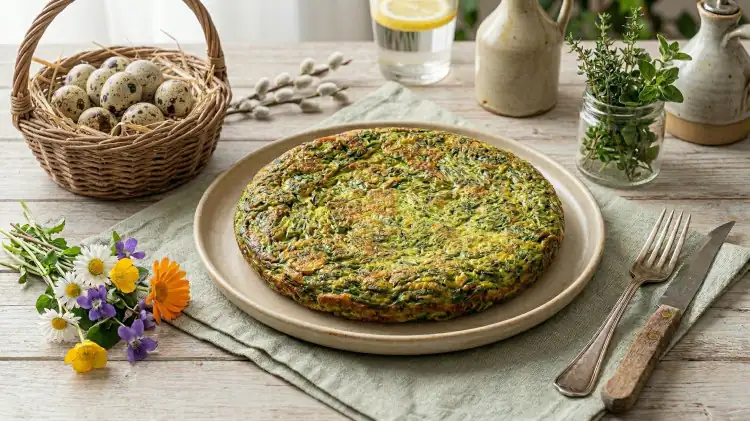
Wild Asparagus Frittata: The Trick to Making It Perfect in a Pan (Even for Easter Monday!)
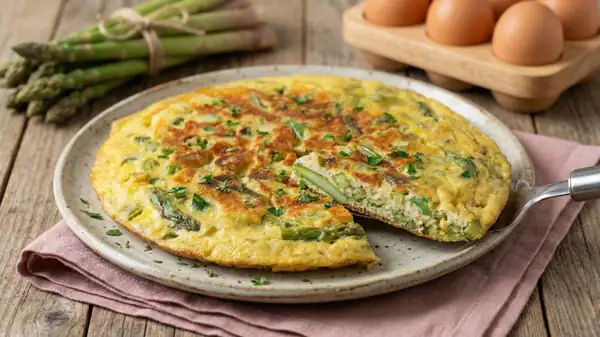
Wild asparagus frittata is a spring classic, a rustic and fragrant dish that instantly brings the authentic flavor of day trips and Easter Monday picnics to the table.
- Eggs 8
- Wild asparagus 300 gr
- Grana Padano 5-6 tablespoons
- Extra virgin olive oil (EVO) little
- Fine salt
- Black pepper
- The first essential step for perfect results is cleaning wild asparagus. Start by rinsing them thoroughly under cool running water to remove any remaining dirt or dust. Next, remove the end of the stem, which is always too tough and woody to chew. The secret to avoiding waste and making mistakes? Don't use a knife! Take one asparagus spear at a time and gently bend it with your hands, starting from the base and working upward. The stem will naturally snap cleanly (you'll hear a slight "click"), right at the point where the fibrous part ends and the more tender and flavorful part begins. Keep only these soft ends for your frittata.
- Once cleaned, it's time to blanch the asparagus. Heat a pot of water and, as soon as it comes to a boil, add a pinch of coarse salt. Drop the spears into the water and cook for about 5-7 minutes. It's crucial not to overcook them: the asparagus should soften but still be firm and compact. To check if they're ready, test with a fork: they should penetrate the spear without breaking it. If you overcook them at this stage, they'll fall apart when you fry them in the eggs.
- Once blanched, drain the wild asparagus well and let it cool for a few minutes in a colander. Make sure it loses as much water as possible, otherwise you risk ruining the texture of the eggs in the next step. Transfer them to a cutting board and roughly chop them using a mezzaluna or a very sharp knife. The pieces shouldn't be too small; you should be able to feel the rustic texture under your teeth. One extra tip: if you like to take care with the presentation, set aside a few whole asparagus tips to place on top of the frittata before flipping it!
- In a large bowl, crack the eight eggs (we recommend using them at room temperature for best results). Add a generous pinch of salt and, if you prefer bolder flavors, a sprinkle of freshly ground black pepper. Using a fork or a hand whisk, beat vigorously for a couple of minutes. The goal is to obtain a smooth, even mixture, with the yolks and whites perfectly combined. Beating vigorously also incorporates air into the mixture: this is the secret to ensuring the frittata puffs up beautifully during cooking and is incredibly tender.
- Now combine the ingredients: pour the chopped asparagus directly into the bowl with the eggs. Add the tablespoons of grated Grana Padano and stir carefully to evenly distribute the vegetables throughout the liquid, ensuring everything is perfectly combined. A touch of regional flair: If you love the intense flavors of Southern Italy, you can make the Apulian wild asparagus frittata simply by replacing the Grana Padano with the same amount of aged Pecorino. If you want to recreate the fragrant Sicilian version, the secret is to add half a white onion (previously gently sautéed in a pan) and a few hand-torn fresh mint leaves.
- Take a good nonstick pan (the ideal diameter for 8 eggs is about 24-26 cm) and pour in a generous drizzle of extra virgin olive oil. Turn on the heat and let it heat over medium heat. It's important that the oil is very hot before proceeding: the thermal shock will immediately create a crust on the base, preventing the egg from sticking. Once the oil is hot, pour the entire mixture into the pan. Distribute the asparagus pieces evenly across the entire surface, quickly using a wooden spoon or spatula, so that each slice has the right amount of vegetable.
- Let it cook over low heat for about 8-10 minutes. A great trick at this stage is to cover the pan with a lid: the trapped heat will help the tops of the eggs set, making the next step easier. You'll know it's time to proceed when the edges begin to easily separate from the pan. Gently lift one side with a spatula: if the bottom is golden brown and firm, you're good to go. Now comes the crucial moment: how to flip the frittata without breaking it. Place a flat lid (or a large plate) directly on the pan. With a quick, firm movement, flip the whole thing over, holding the lid firmly in place. Finally, gently slide the frittata back into the pan to cook the second side. It will take another 5-8 minutes without the lid for perfect, even browning.
Unlike cultivated asparagus, wild asparagus (which is harvested wild between March and May) has a more intense and slightly bitter flavor, which pairs perfectly with the sweetness of the eggs. It's a humble yet flavorful dish, rooted in the rural traditions of Central and Southern Italy.
Preparing it is really simple and quick, but to get a perfect result—a soft, tall, and tasty frittata—there are a couple of little secrets to know, especially regarding cleaning the stem, which should never be tough or woody under the teeth.
Whether you want to enjoy it hot as a main course, or cold between two slices of homemade bread during a picnic, cooking it in a pan remains the quickest and most foolproof method.
And if you've had a good harvest and are looking for more ideas to showcase this extraordinary ingredient, before moving on to the recipe, we suggest you try a creamy asparagus risotto, an inviting lasagna with asparagus pesto, or, to impress everyone, the traditional fiadoni from Abruzzo, a must-have during the Easter period, just like this frittata.
Ready to get your hands dirty? Let's take a look at the quantities and steps to bring spring to the table!
Doses & Ingredients
- Very low difficulty
- Low cost
- Food availability is difficult
- Salt to taste
- Black pepper to taste
- Bowl / Strainer / Fork / Crescent spoon / 26cm non-stick frying pan / Saucepan.