Have you ever heard of the white fish “hake”? We'll introduce its origins, taste, and recommended ways to eat it!
Are you familiar with the fish called "hake"? While it might not be a very common name, it's quite popular in European countries and used in various processed foods in Japan. This article will introduce the characteristics and types of hake, as well as its origins, taste, and recommended ways to eat it.
Have you ever heard of the white fish "hake"? We'll introduce its origins, taste, and recommended ways to eat it!
What is a hake?
What kinds of foods is it used in?
What are the characteristics of hake in terms of appearance and taste?
What kind of hake is it?
Here are some recommended ways to eat it!
It's mild and delicious! Let's try hake!
What is a hake?
"Hake" is a general term for fish belonging to the family Merlucciidae in the order Gadiformes. There are about 12 species of fish called hake worldwide, including deep-sea fish such as the New Zealand hake, Cape hake, and Decora. It is called "hake" in English and "merluza" in Spanish, so "hake" is the Spanish name.
Hake does not inhabit the waters around Japan, so most of what is sold domestically is frozen and imported. The main producing regions are New Zealand, South Africa, Chile, and Argentina, and it is popular in these producing regions and European countries as an inexpensive and delicious white fish.
Hake is sometimes used in familiar foods such as fish burgers, white fish fillets in bento boxes, and fish cakes like chikuwa and kamaboko.
Hake is attractive because it can be caught in large quantities at once using bottom trawling, making it more affordable than other white fish. For this reason, it is often used in the Japanese food service industry and school lunches, and is used in white fish fillets, fish burgers, and as an ingredient in processed seafood products. You may have eaten it without realizing it, even if you don't know its name.
Most hakes are slender, deep-sea fish, and some can grow up to 1 meter in length. Their bodies are silvery and resemble those of a sea bass, but they have the pointed mouths and sharp teeth characteristic of deep-sea fish.
Its flesh is mild and white with little strong flavor, and its taste is very similar to cod. It doesn't get tough even when cooked, and it becomes soft and flaky, and because it has few bones and little fat, it's a flavor that even children can easily eat.
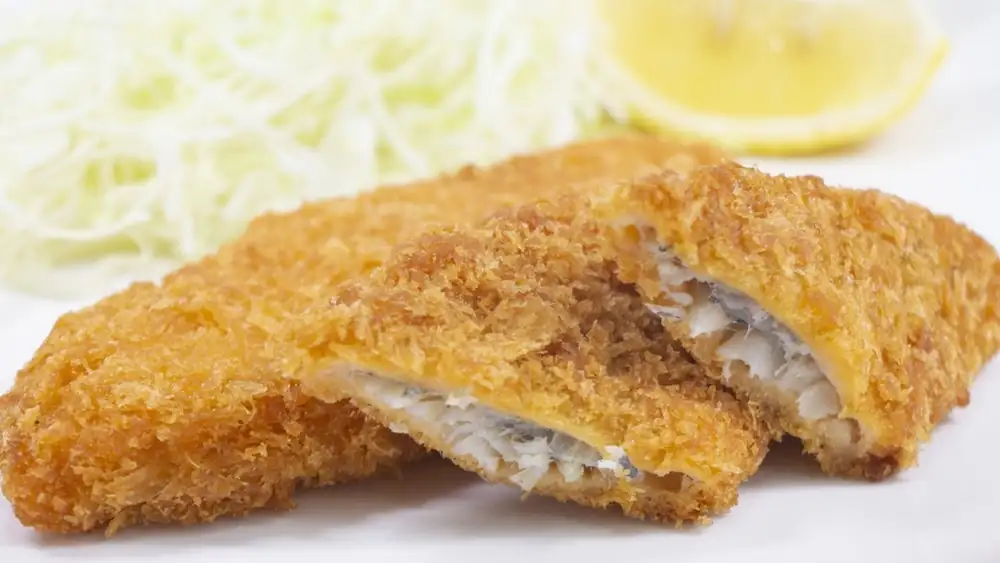
Therefore, it is said to be a fish that is suitable for deep-frying, and in the UK, it is used as an ingredient in fish and chips.
However, hake is rarely found in supermarkets in Japan, so if you'd like to try it, it's best to buy it online. Frozen fillets are available, which is a great advantage as it makes cooking easier.
What kind of hake is it?
As mentioned earlier, there are about 12 different types of hake, each with its own unique characteristics. Let's look at three of the most representative types.
New Zealand Hake
This is a representative species of hake, inhabiting waters of New Zealand and Australia at depths of approximately 400 to 1000 meters. Compared to other hake species, it has firmer flesh and less of a strong or unpleasant taste, making it ideal for white fish fry.
Cape Hake
This is another representative species of hake, inhabiting waters between 40 and 900 meters deep in South Africa and Spain. While frozen hake used to be readily available in supermarkets, it has become less common in recent years.
Decora
Also known as hoki, it inhabits waters off Chile and Argentina at depths of 30 to 700 meters. Compared to other hake species, it has thinner skin, resulting in a moist texture when fried as a white fish dish.
Hake has a mild flavor, making it suitable for a wide range of cooking methods. If you find it a little lacking in flavor, you can add herbs and spices, or richness with butter or cream. Here are some recommended ways to enjoy it, so please take a look!
fly
The most classic way to prepare hake is, of course, to fry it! Since it's low in fat and has a mild flavor, we recommend serving it with plenty of tartar sauce.
You can eat them in a packed lunch, but if you make them at home, you can enjoy the crispy and fluffy texture of freshly fried food.
Fried Chicken
Hake is also delicious when seasoned and deep-fried!
While soy sauce is a classic flavor, I also recommend giving it a Western twist with herb salt. A thinner batter will bring out the delicate flavor of the hake.
Meunière
Hake pairs well with butter, and when prepared as a meunière, it develops a wonderfully savory flavor.
Garnish with herbs such as dill or parsley to your liking for a refreshing flavor.
Cheese bake
Baking hake with cheese or mayonnaise adds richness and flavor to its mild taste, making it incredibly delicious. It's a flavor that even children will enjoy, so please give it a try!
Cream stew
If you're going to cook hake, I recommend a cream stew!
When you coat the plump flesh with the cream sauce, you can enjoy a texture that melts in your mouth.
Galician style
While Galician-style dishes are famously made with octopus, this dish is also delicious made with hake. It's simple—just boiled hake and potatoes seasoned with olive oil and paprika powder—but you'll be amazed by its deliciousness!
It's mild and delicious! Let's try hake!
This time, we introduced the characteristics of hake, including its origins, taste, and recommended ways to eat it. Hake is a general term for fish of the family Merlucciidae in the order Gadiformes, and is a white fish characterized by its mild and light flavor. You can eat it in bento boxes and prepared dishes, but the taste of freshly fried hake is exceptional, so please try it if you have the chance.



!["What ingredients do you always keep in stock?" <40,934 votes> [Tell us! Everyone's Clothing, Food, and Shelter "Everyone's Lifestyle Survey Team" Results Announcement, 667th Edition]](/static/img/a6a5b0a55d540fea_p.webp)