Sowing Dining Room: a project centered around corn
Dough is a topic of conversation at Siembra, the project that started as a tortilla shop and today has two branches: Siembra Comedor and Siembra Taquería, under the direction of chefs Israel Montero and Karina Mejía.
For people interested in the paths of the milpa as a farming system, and in nixtamalization as a fundamental cooking technique, Siembra is a destination and, perhaps, a case study, a place where the search engine is marked by the agricultural products that have been part of the country's food for years: corn, for example.
This grain is the axis that defines the personality and vocation of Siembra: placed at the center of the stage with a tortilla shop (where tortillas, masa, variations such as tlacoyos and some basic additions in the Mexican pantry, such as a good salsa, are sold), placed as the basis or inspiration of many dishes on the menu and, finally, placed as a decorative element, in the graphic resources and interior design of the place.
Modern cuisine
Despite this care for Mexican agricultural products - such as those native corn varieties obtained from an agroecological community in the neighboring state of Tlaxcala - I think it would be a mistake to think of Siembra and its branches as a place of traditional cuisine.
Resist the urge: at least at the beginning, when you read the terms Aztec soup or governor taco on the menu, and resist a little longer when the waiter puts a glass of thick horchata in front of you.
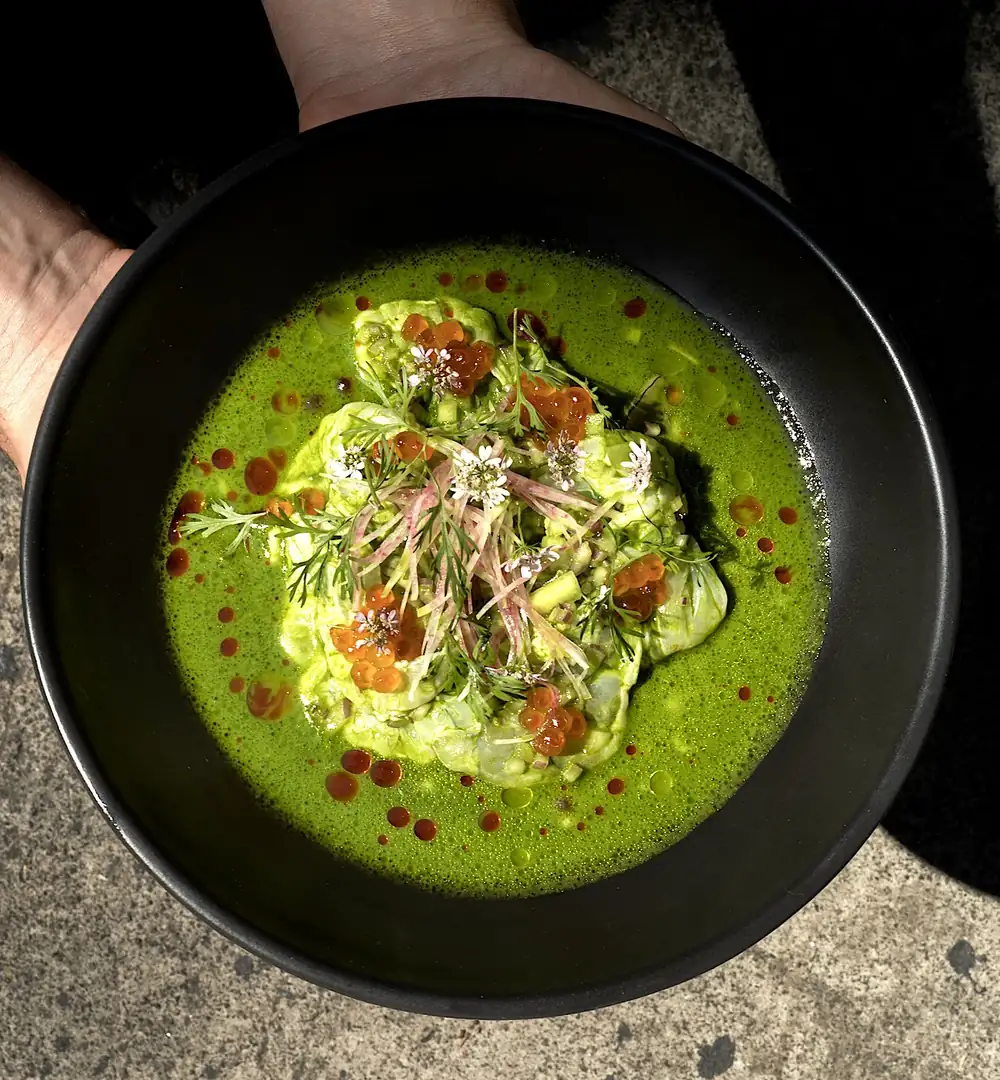
Open your perspective a little to see Siembra with a spirit firmly rooted in the present. It proposes a way of looking at the foundations of food culture (a taco, a molote, a soup) with a highly technical eye and, for lack of a better word, a more refined one. Siembra sheds the baroque, the flourishes, and the folkloric elements, appealing instead to the simplicity of a rich, well-executed cuisine.
Let's take the crab taco as an example: photogenic to begin with, and meticulously prepared. With a flexible tortilla, a thin and crispy fry, hints of curry, and a base of cabbage and dressing that make each bite deeper and more interesting.
Beyond the taco
Then you can turn to other expressions of street fried food and snack bars extrapolated to smaller but equally succulent versions, such as the humble bean and cheese empanada, ready to explode in the first bite, or the plantain molotes served with a small bowl of mole and cream to make that sweet and slightly pasty mixture that reveals Caribbean influences.
They could continue eating tacos (although that's what Siembra Taquería is for) or take a detour from corn with a dry noodle soup, a house dish that made a triumphant arrival in cantinas and restaurants, which here are served generously (and practically half an avocado) to share.
We must leave some room to return: to other expressions of the mass, such as tamales, or for the appetite to contemplate the organic half chicken, the rack of lamb and other pieces of resistance.
Then, buy tortillas and be happy.