When cooked spatchcock style, roast chicken cooks twice as fast and remains very tender
This Sunday at lunchtime, you're having friends over. You're planning a roast chicken (this kind of simple, comforting dish is always a hit), and a homemade clafoutis topped with seasonal fruit. In your mind, everything is planned: while the chicken cooks, you'll get started on the clafoutis.
When asked about this, chef Rita Higgins, head chef of Shwi, a restaurant specializing in grilled chicken, explained: "The spatchcock technique involves removing the chicken's backbone so it can be completely flattened. This allows for faster and much more even cooking, as the meat is uniformly exposed to the oven's heat." To do this, she begins by placing the chicken on a board, breast-side down and back-side up. Using kitchen scissors or a sharp knife, she makes incisions on either side of the backbone, from the tail end to the neck, following the bones on both sides. After removing the backbone, she turns the chicken over. She presses firmly in the center of the breast with the palm of her hand until she hears a cracking sound. "The chicken should flatten and stay perfectly flat," the expert chef emphasized.
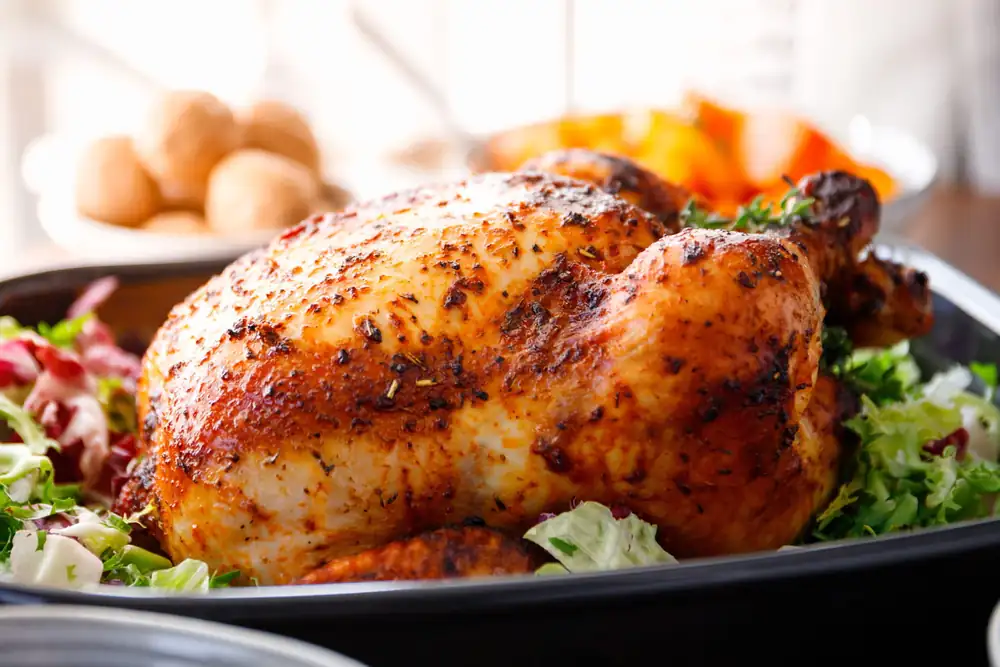
All that's left to do is brush the chicken with a marinade of olive oil, herbs, and garlic, then place it skin-side up on a baking sheet. She then spatchcocks the chicken and roast it for 30 to 40 minutes at 200°C (390°F), until the skin is golden brown. The chef's final tip: "Let it rest for 5 to 10 minutes before carving, so the juices redistribute throughout the meat." In just 30 to 40 minutes, compared to over an hour with conventional cooking, she gets a perfectly cooked chicken with juicy, tender meat.
Spatchcocking offers two advantages: it cuts the chicken's cooking time in half and cooks it more evenly. By using this method, you'll delight your guests with a perfectly cooked roast chicken, without having spent most of the morning watching the oven.