Love to Eat
Read the title of this article exactly as it is, think about what it evokes in you for a few seconds, and then try putting the comma between the two words. Cooking and loving consciously are probably two of the unique characteristics of our species.
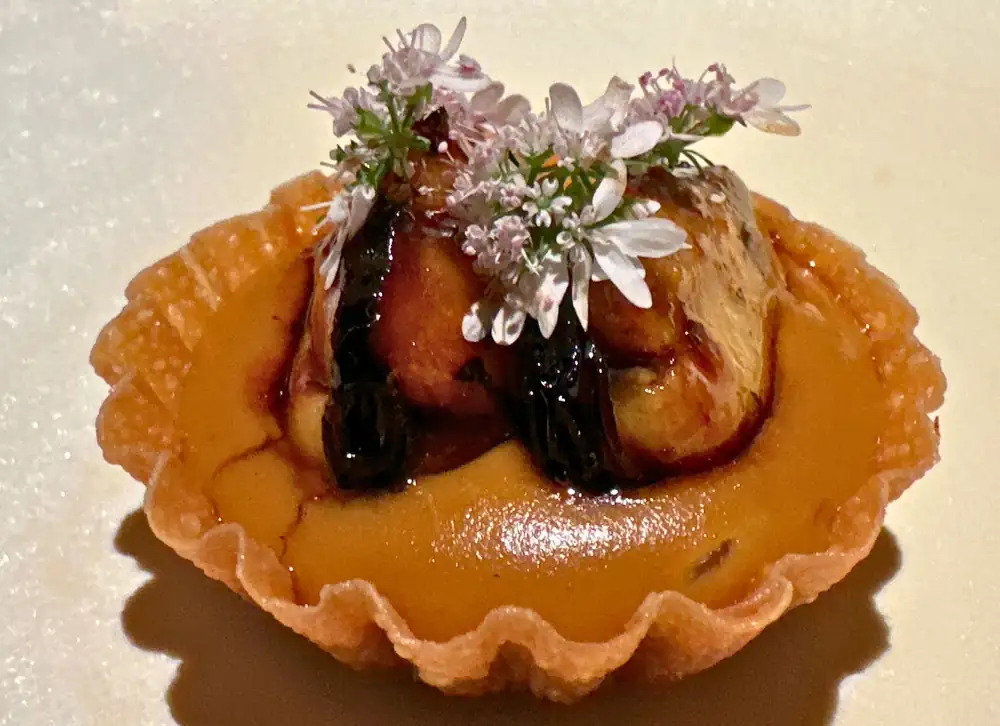
At Quintonil, beyond the incredible dishes as full of truth as they are of flavor, each service connects diners to the kitchen of origins, the kitchen of homes—refined memory—and the kitchen of love, the universal love of food and the love of Mexico. At Quintonil, nothing is overwhelming or surprising; everything seems to have been made by a grandmother with wise, slow hands, almost intuitively, as if the ingredients had spontaneously and naturally begun to converse. At the same time, the simple offering of a plantain fritter with escamoles (ant larvae) and melipona bee honey speaks of a privileged mind that navigates between popular and contemporary haute cuisine without needing to justify itself, without losing the naturalness in the construction of a bite that could just as easily have been the fruit of thousands of years of history as a creative spark on a stroll.
Jorge Vallejo is just a tiny bit away from reaching the peak of his profession, but he behaves like someone who has been living up there for a long time and has managed to keep fame and all its evil humors from going to his head, or even to his knees.
Vallejo is a chef of two minds. He can say one thing and then another seemingly contradictory one in just a few sentences or dishes, and in both, he speaks the truth. He acknowledges himself as a chef who cooks much more with his head than with the pots, and at the same time, beyond that intellectual pulse that connects him to the small group of chefs who create without touching a spoon, he affirms that cooking cannot be disconnected from its surroundings.
His cuisine is radically personal and radically Mexican, but I would also venture to say it has universal appeal because you don't need to know about the yucca and Ocosingo cheese gorditas or have ever eaten chicatana ants to enjoy this bite that connects the ancestral with the future through a flavor and texture as recognizable to the palate as it is disruptive to memory. You don't even need to put a piece in your mouth to salivate deeply; it's enough to read the description of roasted pork with coconut mole manchamanteles, beet reduction, and apple honey.
Quintonil is not just a root, it's also a plant and a fruit of the world. Sunflower seeds, that ancestral crop of the indigenous peoples of northern Mexico, speak in a green pipián—that sauce of life made with ground pumpkin seeds, tomatillos, and green chiles—along with Thai lime and basil, which arrived in Europe from Asia and was introduced to the Americas by the Spanish. The cocopache marinade—made with edible insects—transforms the briny flavor of a grilled branzino or sea bass, and transforms it again when mixed with cauliflower cream, the other vegetable that came from the Old World.
Vallejo's restaurant pays homage to its ancestral culture, starting with its name. Quintonil is a plant that grows wild or cultivated throughout the country and is served as a leafy green alongside tender corn or beans, enhances soups, or makes a simple side dish with chili and cheese. And if allowed to grow, it becomes amaranth, the pseudocereal used to make bread or the traditional alegrías (a type of candy).
The house of Vallejo and Flores is a little bit of all of that at once. They put it more beautifully: "Quintonil is a way of honoring the ingredients, the hands that cultivate them, and the culture that shelters them."
A restaurant is more than just what's on the menu. It's also a space and time for connecting with other human beings who serve you, teach you, and take care of you. Heaven forbid I use the dreaded word "experience," but you get the idea. The ceremony around the table, the guests, the tone of voice used when speaking or interrupting, the demeanor that is neither servile nor haughty—all of this forms the ritual of refined dining, where stories must be told to reveal what is unseen. That, too, is pure delight at Quintonil. Saúl, Jesús, and the entire family don't just serve you; they invite you to their table. And you leave that home comforted, happy to have realized that loving to eat, with or without food, remains one of life's greatest gifts.