Georgia, the untouched paradise (II wines)
Perhaps our society has ceased to be merely postmodern and has become simply mutant. Our tastes and preferences change faster than viruses themselves. The frenetic pace of stimuli we receive every minute accelerates this perpetual change. The world of wine is no stranger to this movement.
In Georgia, the first documented place in the world where wine was produced, between five and seven thousand years ago, the miracle of Vitis vinifera is experiencing a moment of splendor. Wine constitutes a substantial part of its national identity, its history, and, given the revolution that has been taking place over the last two decades, also a future full of hope.
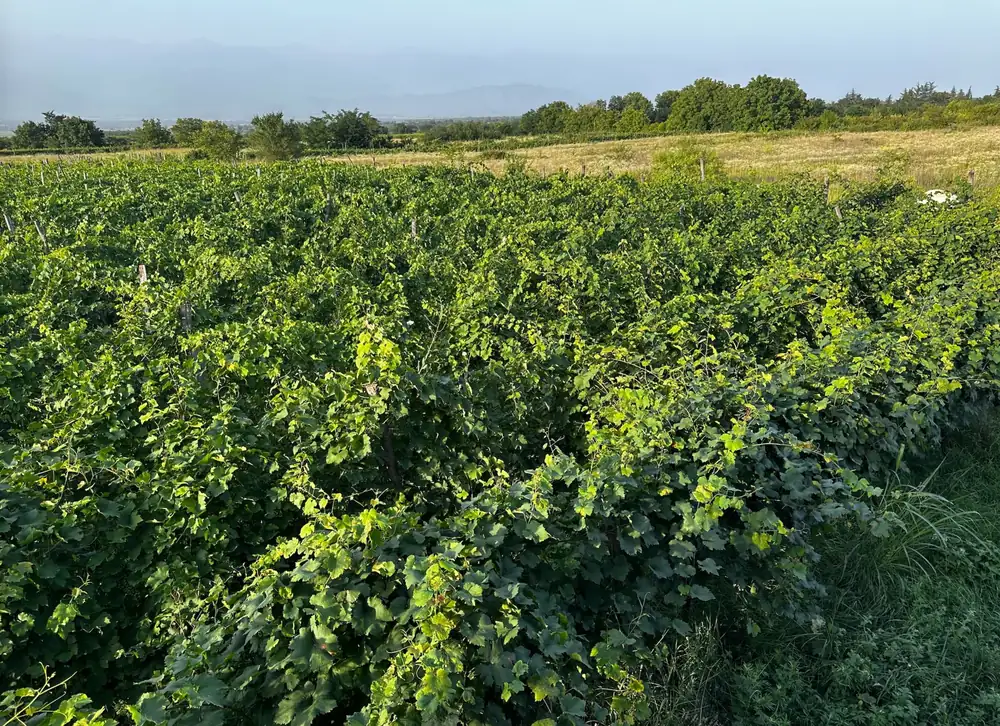
In this privileged corner between Asia and Europe, between the Black Sea and the Ural Mountains, with its cold winters and sunny summers, the vineyards thrive in paradise, and the biodiversity is staggering. There are hundreds of varieties, more than five hundred, many of which were nearly wiped out by the Soviet mandate to cultivate no more than four highly productive ones. To give you an idea, in the Kakheti region alone, which produces three-quarters of all Georgian wine, there are seventeen different appellations of origin.
The 'qvevri'
Georgia boasts many unique features that make it a veritable Mecca for viticulture: its varietal heritage, its history, the diversity of its climates and soils, over a thousand different wineries, and perhaps most importantly, the traditional system of winemaking in earthen vats, the 'qvevris,' declared by UNESCO as an Intangible Cultural Heritage of Humanity. Not all wines produced follow this process, which involves treading the grapes, placing the must, skins, and stems into the vats, sealing them with wax using the 'borgos' or lids, and then waiting, without further human intervention, for the wine to ferment naturally and clarify through decantation.
When this technique is used with white grapes, such as the renowned Rkatsiteli, Mtsvane, or Khikhvi, it results in orange wines, increasingly popular among the new generation of consumers worldwide who seek to feed their curiosity and knowledge and are willing to pay above-average prices when viticulture, grape varieties, and winemaking ensure that a piece of the land is captured in the bottle. 'qvevri' wines made in the traditional way are not for everyone. The extended contact, up to three months, between the liquid and the stems and skins produces very tannic, astringent profiles on the palate. However, nowadays there are also wines as smooth as a glove on the throat, the result of science and craftsmanship, both white and red, the latter made with the queen of Georgian reds: Saperavi.
As we mentioned earlier, the main characteristic of this country is its diversity. This is not only due to its castes and soils, but also to its climate. While the renowned climates of the Kakheti region could be considered more continental, those of western regions like Imereti or Guria, with their Black Sea influences, higher humidity, and higher altitude, are much cooler.
Georgian wine industry and crafts are increasingly looking to Europe and, in addition to white, red, and orange wines—both in their traditional style and in the winemaking style they call European—they produce countless products, including sparkling wines, and a high-quality Georgian grappa or pomace brandy, chacha, which is often used for toasts at banquets or supras and which had to live with the stigma of being the favorite liquor of the most infamous Georgian: Joseph Stalin.