You've been cutting garlic wrong all this time: the difference in taste is huge
Various culinary masters point out that chopping garlic is not just a preparatory step, but a decision about how you will season the dish. The same amount of garlic can be used for a mild, almost imperceptible flavor or for a pronounced aroma that will dominate the entire dish.
Why does cutting garlic affect the taste at all?
In a whole clove of garlic, even before it is cut or crushed, two key compounds are separated. When garlic is cut, chopped, crushed, or grated, the cell walls are damaged and a chemical reaction is triggered. Allicin is formed, a compound responsible for the characteristic pungent odor and spicy taste of fresh garlic.
That's why a simple rule applies: the more you cut or change a clove of garlic, the stronger and sharper its flavor will be.
If the garlic is then gently cooked for a longer period of time, its pungency gradually subsides and sweeter, nutty, and caramel notes develop.
How and in what dishes do we use a whole garlic clove?
The whole clove is intended for a mild and delicate taste, as it releases the least amount of aroma. Because the interior remains almost intact, only a portion of the flavors are released into the dish. The result is a mild, slightly sweet and nutty taste.
This type of clove is best suited for soups, stews, slow-cooked sauces, roasting meats, and garlic confit.
In such dishes, garlic adds a pleasant aroma to the dish without taking on the main role.
Crush the clove for a little more flavor
Crushing the clove lightly with the side of a knife releases more of the aromatic compounds, but the flavor remains mild. This is one of many chefs' favorite techniques for flavoring olive oil.
This type of garlic processing is most suitable for preparing oils, soup bases, long-cooked sauces, and braised dishes.
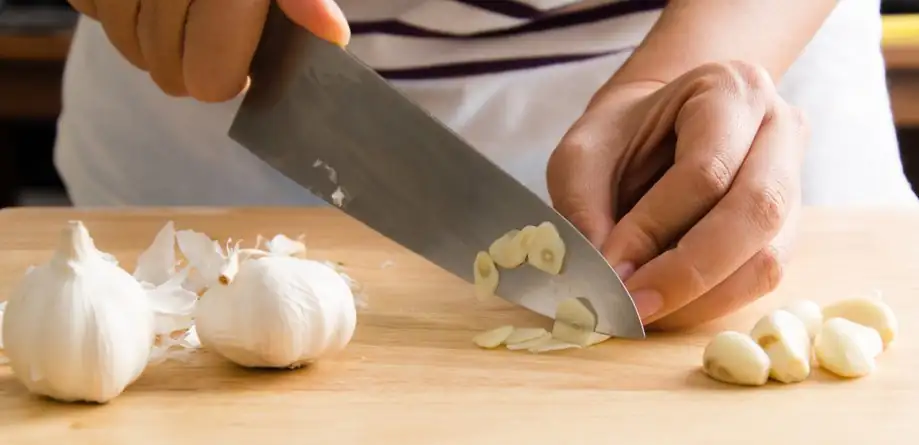
Garlic in thin slices
Thinly sliced garlic is ideal for pasta. The thin garlic cloves create a nice balance between flavor and tenderness. The garlic is still noticeable in the dish, but not overpowering.
It is best suited for spaghetti aglio e olio, gambas al ajillo, sautéed vegetables and mushroom dishes.
The advantage of cutting this way is also a pleasant texture, as we can actually see and taste the pieces of garlic.
Coarsely chopped garlic is a versatile choice
It is very similar in intensity to chopped garlic, the main difference being that the preparation is quicker and less precise. If appearance is not a key factor, this is often the most practical choice.
It is best suited for soups, stews, risottos, pasta sauces, and meat sauces.
The most common is finely chopped garlic.
Most recipes call for this form of garlic. Finely chopped garlic provides enough flavor to be noticeable, but doesn't overpower the other ingredients.
This is the most versatile way to use garlic. It is best suited for tomato sauces, roasted mushrooms, wok dishes, marinades, and roasted vegetables.
Garlic paste for lovers of intense flavors
Crushing the minced garlic into a paste releases even more aromatic compounds. The flavor becomes much more pronounced and penetrating. Professional chefs often add a pinch of salt to help create a smooth paste.
Garlic paste is best suited for garlic bread, stronger sauces, salad dressings, and marinades.
Garlic from a press: fast and powerful
If you don't want to get your cutting board and knife dirty, and you're not the type to chop garlic, you can probably use a garlic press. It's basically a quick fix that creates almost the same effect as garlic paste. It's quicker to prepare than the classic method of chopping and pressing, and the flavor is very intense.
This type of garlic is best suited for yogurt sauces, tzatziki, marinades, roasted vegetables, and meat dishes.
If you want a strong flavor without a lot of work with a knife, this is one of the simplest solutions.
Grating garlic gets the most flavor from the least amount of garlic
Grated garlic is the most potent form of all. Because the structure of the clove is almost completely broken down, the most aromatic compounds are released, which give it its characteristic pungency. Even a small amount can create a very pronounced garlic flavor, and in some cases, grated garlic can even overpower other flavors in a dish.
Grated garlic is therefore best suited for aioli, vinaigrettes, dips, Asian sauces and cold dressings.
Advice from top chefs
Many chefs recommend letting garlic rest for about ten minutes after chopping or crushing it before adding it to the pan. This allows more aromatic compounds to develop and the flavor to become richer and more pronounced.
Be careful, never burn the garlic!
The biggest mistake when preparing garlic is that high temperatures quickly burn the garlic and change its flavor. Especially finely chopped, pressed, or grated garlic can become bitter after just a few seconds of excessive heat.
Therefore, a simple rule applies: the oil should not be too hot, add the garlic just before the other ingredients, and fry it for only a short time.
Vir: Serious Eats
Allicin is a sulfur compound that is only formed when the cells of garlic are damaged by cutting, pressing, or grating. In an intact clove of garlic, the precursors, the amino acid alliin and the enzyme alliinase, are present, which are separated. When the cell walls are broken, these two substances combine and, through a chemical reaction, create allicin. This compound is not only responsible for the characteristic pungent odor and burning taste, but it is also attributed with a number of medicinal properties, including antibacterial and anti-inflammatory effects.
Garlic confit is a culinary technique in which whole cloves of garlic are slowly cooked in a large amount of fat, most often olive oil, at a very low temperature. This process completely softens the garlic, removes its pungency and transforms it into a sweet, creamy ingredient with a rich nutty flavor. The garlic prepared in this way can be used as a spread on bread, mixed into mashed potatoes or used to flavor various dishes.
Aioli is a traditional Mediterranean sauce, whose name comes from the Provençal words for 'garlic' (ail) and 'oil' (oli). It is traditionally prepared by emulsifying garlic, salt and olive oil in a mortar, creating a rich, creamy texture. Although often mistakenly equated with mayonnaise with the addition of garlic, true aioli is more intense and does not contain eggs, its thickness being provided only by the oil carefully mixed into the garlic paste.