Aramburu, the survivor of Argentine fine dining
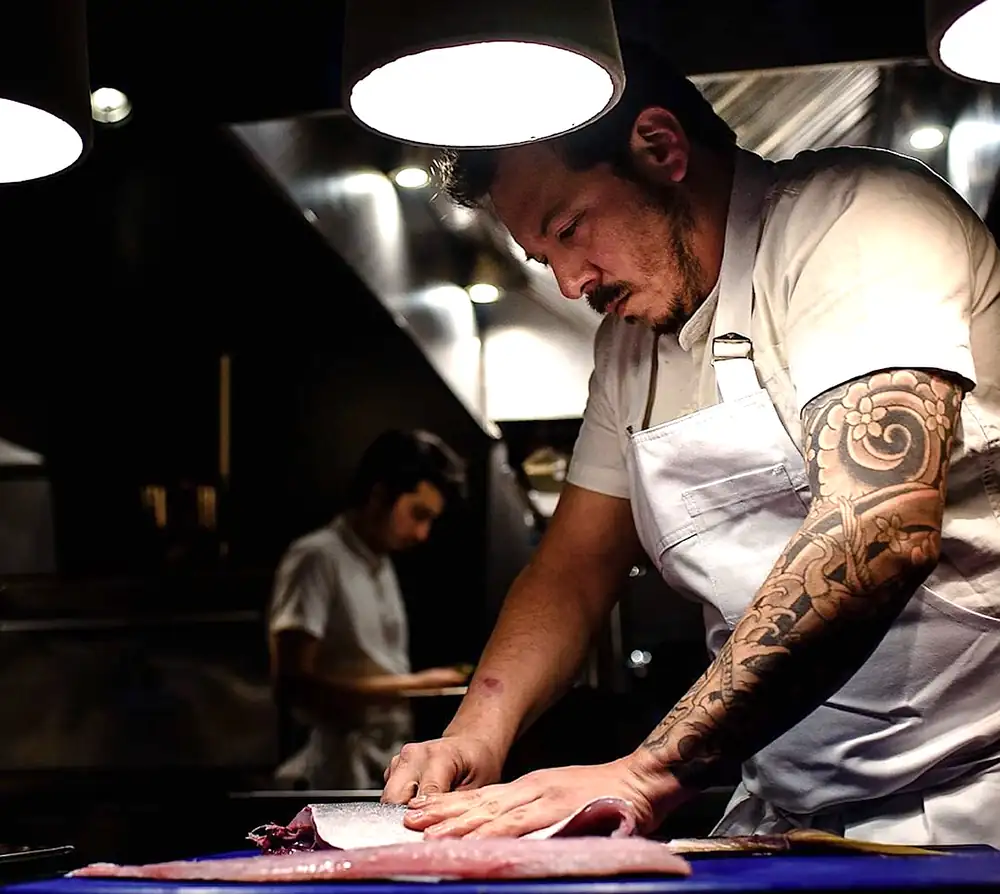
Seen through today's eyes, it's an exception. Or rather, a survivor. An emblem of what for many years was understood as luxury in gastronomy, a faithful representative of fine dining that, for many, has gone out of fashion.
Aramburu was founded in 2007. It wasn't the first, but it was among the pioneers in offering tasting menus in Argentina, relying on techniques learned during internships and work in Michelin-starred Europe and the new Spanish cuisines. What's striking is that, instead of opening in gastronomic or tourist hotspots—as was the norm—it opened in Constitución, a working-class neighborhood with a well-earned reputation for being dangerous.
In 2019, after two years of renovations, it moved to Recoleta, a more logical location, and with a grand new look. When asked if it was a mistake to have opened in Constitución back then, Gonzalo responds quickly, almost offended: “Not at all, I enjoyed it immensely; everything we are today stems from that. Being there was my way of starting out. It was the only place I could afford, and it served as a learning experience. There I gained freedom, I began to believe in myself. Even then we were doing haute cuisine; we didn't let ourselves be limited by the neighborhood. What's more, the current Aramburu isn't so different from what it was back then; we've only gained in structure and comfort. But the spirit is the same as always.”
In Constitución I gained freedom and began to believe in myself; we made haute cuisine, the neighborhood did not condition us.
For the past decade and a half, this restaurant was part of a select group of so-called haute cuisine establishments, along with Tegui, Chila, El Baqueano, La Vinería de Gualterio Bolivar, Tarquino, and others. Of all of them, only Aramburu and El Baqueano remain today, the latter relocated to the higher elevations of Salta's capital city, along with a few new openings, such as Trescha and Mercado de Liniers. “It's true that I gradually found myself alone. But it's also true that we were never many. And for several years, I was a step behind the rest. I didn't have the structure or the budget of a Chila or a Tegui. In comparison, my place was a pigsty. Only now are we finally on par. And while many of them decided to close their doors, I don't question Aramburu's style. I'm convinced that we have a place in gastronomy, both here and around the world.”
The question of what constitutes fine dining in Argentina is unavoidable: many of the most successful restaurants consciously distance themselves from this rigid framework of demands. “It implies punctual service, a showmanship. There's almost a dress code; people prepare themselves to come, they have a different predisposition. We always strive for high quality with the best products, prioritizing creativity. That creativity needs to be cultivated: before, we did it right there in the dining room, brainstorming future dishes. Now we're more organized; we meet with Tatiana (my head of what would be the creative department) in the morning, surrounded by books, kitchens, and notes, tasting dishes, combinations, and ideas. And always seeking the synthesis. Every cuisine is a world unto itself; fine dining is about the care given to the product, the creativity, and the experience you offer the customer.”
A frosted cocoa butter olive filled with green olive juice; oysters with green oil, squid, vinegar, and Uruguayan caviar; the fantastic venison tartare with nori seaweed, all topped with venison carpaccio and shizu leaf; the unsuccessful artichoke mousse with pheasant ragu and fried leek… The courses come out quickly, perfectly timed. Among the best are the king crab sticks wrapped in carrot and beet paper, with their crispy cauliflower spines.
Each dish is barely explained by a few of its basic ingredients: at Aramburu, there's not much storytelling. Diners don't know that the king crab arrives alive at the restaurant, that many of the vegetables come from a small garden in Cardales, or that the suckling pig is fed organic grains. “Perhaps we lack communication. For a long time, I saw something over-the-top about gastronomy, where everything has a story behind it, but then it doesn't work on the plate. I run from those kinds of places,” he says. And he insists that, at 47, he's already been through other stages: “I'm older, more focused. I want to avoid mistakes, leaving nothing to chance. This way of thinking might be more boring, but I like it.”
Are you bored?
“Sometimes, yes. At the same time, we’re not a three-Michelin-starred restaurant. We don’t meticulously place every herb on the plate, searching for that perfect detail. When I go out to eat at restaurants around the world, I tend to choose two-Michelin-starred restaurants over three-Michelin-starred ones; I find them more fun. That’s why I strive for Aramburu to have a casual feel: the menu isn’t overly elaborate, we don’t go overboard, we allow ourselves a bit of playfulness.”
The entire menu unfolds on the ground floor, culminating in the final savory course: duck breast with Jerusalem artichoke and lime purée, black truffle, and fresh turnip. Desserts and sweet drinks then continue upstairs on the first floor. Gonzalo's future plan is to enhance the upper floor. He also says he wants to improve the wine pairings, which are currently adequate but lack any real surprises. "I've always approached investment more as a chef than as a businessman. I preferred spending money on a new oven to improve service, rather than using it for the wine cellar we so desperately need."
Several times during the interview, Gonzalo says he's older, more mature. He admits there were difficult times in his kitchen, that he was difficult himself. He explains: he grew up in an era of militaristic kitchens, where violent fights were commonplace. Today, he says he's calmer. He's a chef who listens to his diners and critics. “The customer knows what they like. How could I not listen? You told me the artichoke didn't convince you. I discussed it with others, and there were different opinions. I decided to replace it: now we make a grilled suckling pig that we serve in a mango with a passion fruit and wine foam. I'm always listening, correcting, learning, and changing.”
The vast majority of the ingredients are Argentinian, but Gonzalo isn't an extreme advocate for local products, nor is he one of those who tries to acquire unique rarities from the market. “We're not DiverXo with a €700 menu. Here we offer fine dining that costs €70. Keeping my budget in mind, I try to get everything of the highest quality, without losing sleep over having what no one else has.”
In the latest edition of Latin America's 50 Best Restaurants, Aramburu ranked 36th, dropping ten places from the previous year. “Being on the list is great, it's incredibly helpful, but I also understand that I'm not working to be there right now. I don't travel much, I don't invite chefs to my kitchen. When I have to cook elsewhere, I feel like I don't do it well, that it doesn't represent Aramburu. And being outside the mainstream means I lose my place. That's how it works, and I understand it.” At the same time, he has high hopes for the announcement the Michelin Guide will make on November 24th in Buenos Aires, presenting its stars in Argentina for the first time. “It can give us more visibility, and also enhance the resumes of the chefs working here. I think the guide will benefit everyone; it will further elevate our gastronomy, with the stars, the Bib Gourmand awards, and the commendations.”
Beyond having at least 50% foreign customers (from Europe, the United States, and now many from Brazil, Chile, Uruguay, and Paraguay), Aramburu's current menu doesn't include beef. “Foreigners appreciate it. They get off the plane and they're already eating a steak. The paradox is that the ones who find it hardest to suddenly not have beef are the Argentinians themselves. When I give them duck, they look at me strangely.”
With two children (Isabel, 10, and Pedro, 1), Gonzalo is enjoying a good time. More than just surviving, the restaurant is thriving, with two full services per night. “This might sound obvious, but you have to be happy. I try to be happy in the kitchen. I'm lucky: I started with next to nothing, grew, and today I'm still cooking with the same freedom I had at the beginning.”
Photos provided by Aramburu.