Should winemakers and sommeliers fear artificial intelligence?
Artificial intelligence (AI) is rapidly revolutionizing various sectors, and the beverage industry is no exception. The question arises: can AI replace winemakers, sommeliers, and brewers? These professionals base their work on decades of experience and training.
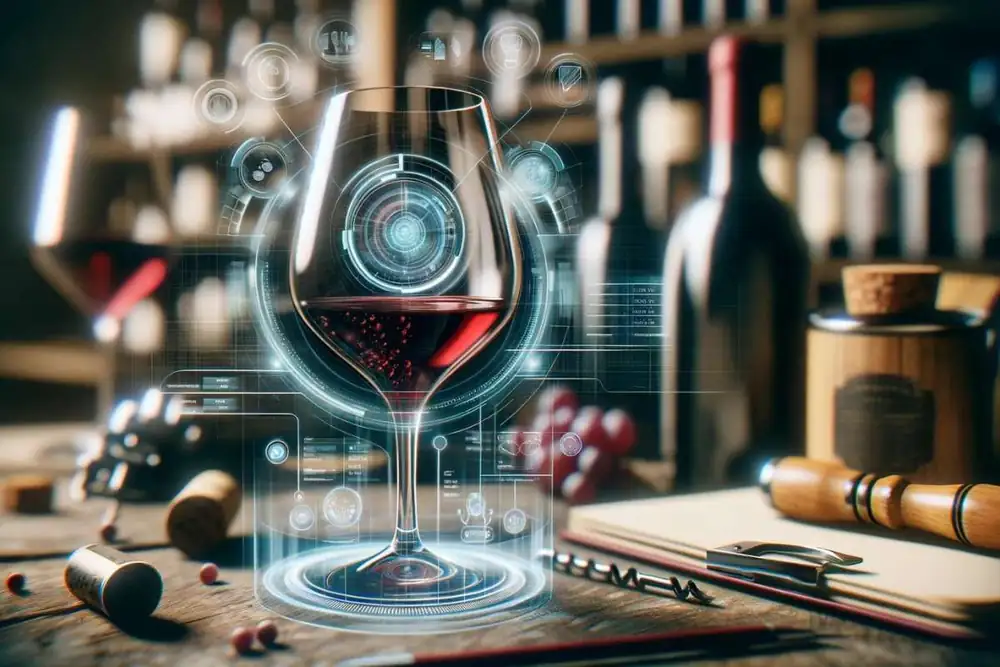
One of the most exciting developments in the wine industry is the introduction of the so-called "electronic tongue" (e-tongue). This instrument, equipped with seven selective chemical sensors, can detect changes in all soluble organic and inorganic compounds in liquid matrices, essentially mimicking human taste. A recent study from Washington State University, reported by the online magazine Beverage Daily, compared the e-tongue to a human sensory panel in detecting microbial spoilage of a Riesling wine. The results were surprising: the e-tongue was able to detect changes in taste as early as the seventh day of storage, while the human panel did not perceive significant differences until the thirty-fifth day.
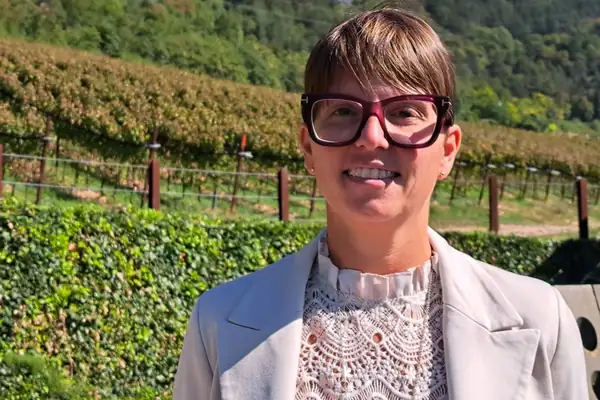
Professor Carolyn Ross, a member of the Institute of Food Technologists and a professor of food science at Washington State University, explained: "Sensory fatigue occurs when many samples are evaluated and human sensitivity is compromised. For example, if someone has to evaluate 100 red wine samples in a short period of time, their ability to detect the wine's sensory properties eventually declines." This problem doesn't affect AI, which can continue evaluating samples without losing sensitivity.
Despite these advantages, Ross doesn't believe AI will completely replace winemakers and sommeliers. "E-tongue cannot replicate the complexity of human sensory systems, which integrate many different aspects of wine, including aromas, non-volatile flavor compounds, and mouthfeel," Ross said. "I think that, over time, e-tongue, along with many other wine measurements, could be used to build predictive models of sensory response, but sommeliers still need to evaluate more than just compounds—they need to consider aromas, mouthfeel, and more."
A similar application is found in the brewing industry. Researchers at the VIB-KU Leuven Center for Microbiology and the Leuven Institute for Beer Research in Belgium are using AI to create a clearer and more accurate way to describe beers. They chemically analyzed the beers, measuring the concentrations of hundreds of aroma compounds, and a tasting panel evaluated these beers based on 50 criteria. Using AI, they linked the chemical data with sensory perceptions, allowing them to predict the key aromas and final rating of a beer without the need for human tasting. This approach improved the taste of a Belgian commercial beer by adding aromas predicted by the AI model to increase the beer's quality.
However, Kevin Verstrepen of VIB-KU Leuven doesn't believe AI will replace brewers or consumer taste tests anytime soon. "No, I don't think AI will replace brewers or consumer taste tests anytime soon," said Verstrepen. "Our models connect chemical composition with consumer perception and appreciation. We tested this by adding complex mixtures of aroma compounds predicted by the AI model to existing commercial beers to improve the beer. And it works!"
The potential of AI doesn't stop with wine and beer. For example, orange juice brand Tropicana insured the taste buds of its "Master of Orange" for £1 million, recognizing the rarity and importance of these skills. Nathalie Leenknecht, a "supertaster," is responsible for selecting the best oranges and varieties to ensure product consistency.
Another area where AI is demonstrating its potential is the spirits industry. Some distilleries are experimenting with AI algorithms to optimize the aging process and improve the flavor profiles of their products. These tools can analyze millions of combinations of aromatic compounds and suggest the best strategies for achieving a high-quality product.
Artificial intelligence offers powerful tools to improve and optimize the production and quality of wine, beer, and spirits, but the role of human experts remains crucial. Technology can support and enhance the work of professionals, but the sensitivity, experience, and artistry of the human craft are still irreplaceable. The future of the beverage industry will likely be a synergy between artificial intelligence and human expertise, leading to even higher-quality products.