Labor and social responsibility: approaches and critical issues
“The modern development of the wine sector has introduced a series of critical issues related to social responsibility and human rights,” says Tom Owtram, co-founder and CEO of the Sustainable Wine Roundtable (an independent, non-profit organization that unites the wine community around a shared vision of sustainability). “The wine industry has been slow to proactively address these issues, primar
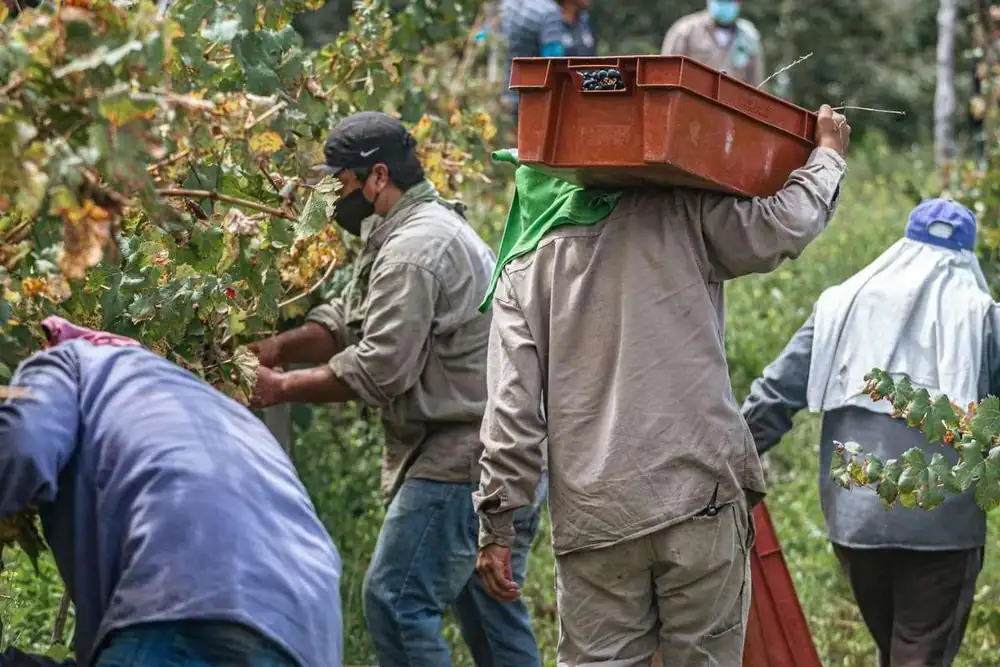
The tragic deaths of workers in Champagne during the last harvest in September 2023, for example, highlighted how scorching temperatures, exacerbated by climate change, can pose serious health risks to workers. Maxime Toubart, president of the SGV (Syndicat Général des Vignerons de la Champagne), the main Champagne growers' union, said: "It's the first time it's happened and the first time it's been this hot [in September]. We're not used to harvesting in these temperatures."
According to Charles Goemaere, Director of the Comité Champagne, the region has tasked a select group of professionals with implementing new measures to ensure the safety of harvesters in the face of climate change, as well as address broader concerns regarding housing, recruitment practices, and working conditions.
As SevenFifty Daily reports in an interesting focus on the topic, human rights concerns within the global wine sector, not just in Champagne or France, extend beyond the risks associated with harvesting in extreme heat, especially as the industry becomes increasingly reliant on migrant labor to address the shortage of local workers.
The Institute for Human Rights and Business (IHRB) reports that there are nearly 170 million migrant workers worldwide, with a significant presence in the agricultural industry. Neill Wilkins, head of the IHRB's migrant worker program, says that currently 1 in 20 workers is a migrant. In Italy, the association "No Cap," which fights gangmastering and abuses in agriculture, claims that the exploitation of migrant workers is systematically practiced in the vineyards, including in the Chianti area, the province of Asti, and Puglia. Migrants are often asked to pay to secure employment abroad and are forced to take out loans to cover these costs.
Migrants frequently encounter working and housing conditions, as well as payment terms, that differ markedly from what was promised or initially agreed upon. "Sometimes they work the first year just to cover the cost of their recruitment," Wilkins continues. "And they can't leave those inhumane conditions. These are all indicators of forced labor... Furthermore, they also face discrimination from the local population."
Wineries like Tablas Creek in Paso Robles and Domaine Bousquet in Mendoza have managed to avoid the risks associated with service providers by investing in full-time employees. This approach not only helps ensure fair treatment for vineyard workers, but also provides the wineries with a more reliable and skilled workforce. However, employing full-time harvesters requires the winery to undertake a complete restructuring of its operations aimed at optimizing the skills of its workforce year-round.
Wineries are turning to certifications that take a comprehensive approach to social and environmental sustainability. B Corp certification is increasingly sought after; the Italian Equalitas standard (which, unlike B Corp, is specifically aimed at the wine industry) was launched in 2015 and has grown significantly in recent years.
Certifications are an essential and appropriate tool for promoting a more socially ethical industry. "We strongly believe in certifications," says Anne Bousquet, President and CEO of Domaine Bousquet. "Simply complying with the law may not be enough, but aligning with these certifications provides assurance that the right choices have been made to pursue improvements in corporate social responsibility."
Other producers, while generally supportive of certifications, point out that many don't effectively address social responsibility issues. "Not all certifications have the same level of rigor," says Francesc Cartanyà, HR manager at Familia Torres. "We need to ensure they go into sufficient detail and set a minimum bar high enough to address the major challenges we are facing today."
The voluntary nature of certifications means that achieving meaningful change across the industry requires broader, systemic efforts by industry organizations, distributors, and local and regional governments. In this sense, the actions of alcohol monopolies and global distributors can serve as crucial mechanisms for effectively addressing social responsibility and human rights issues across the industry in the coming years.
Owtram expects social responsibility requirements to soon become a prerequisite for market access, which will encourage more manufacturers and brands to take proactive steps: “Retailers will make human rights a key issue and will want to see a minimum level of performance in this area of sustainability.”
To contribute to this goal, SWR is actively engaged in developing collaborative actions and labor standards tools, specifically to provide practical guidance to the global wine industry on how to address labor challenges. Given the vast geographical scope and multiplicity of stakeholders involved, the project is expected to encounter several obstacles in building broad consensus. However, collaborative strategies such as this are likely the most effective tools for addressing labor issues on a global scale, efficiently and comprehensively.
“We know there are challenges around the world, and the deeper we dig, the more we might find,” Owtram said. “But that's precisely why the industry must come together to find a way forward: solutions can only be found through a collective approach.”