
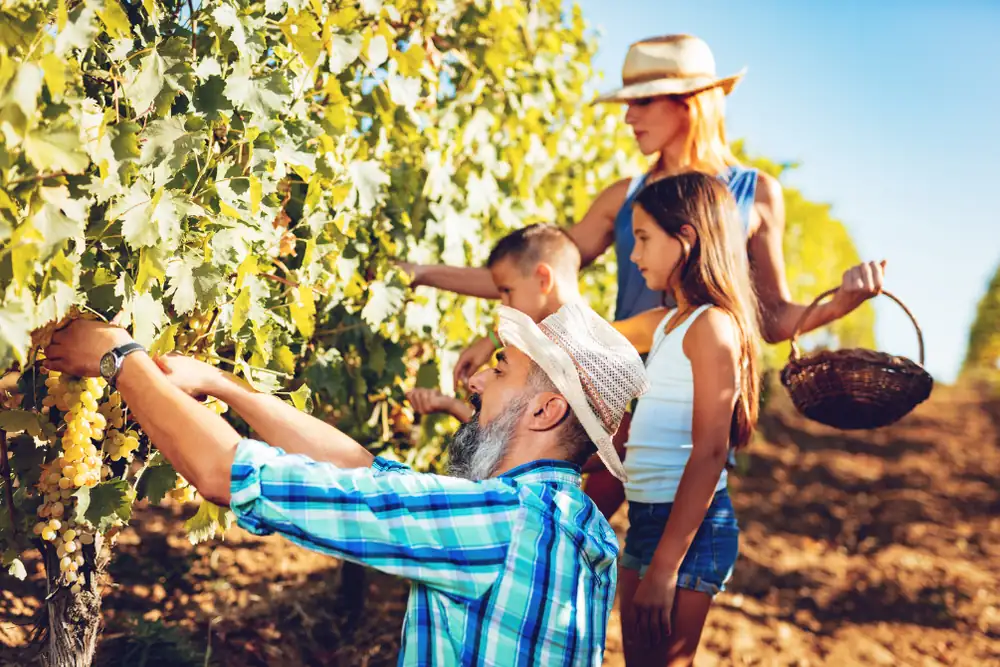
Touristic grape harvest: everything you need to know
The touristic grape harvest is rapidly gaining popularity as one of the most engaging experiences in the world of wine tourism. This phenomenon, which is clearly distinct from the traditional grape harvest, allows visitors to immerse themselves in winemaking traditions, offering an authentic glimpse of life in the vineyard.
What is the tourist harvest?
Tourist harvesting refers to the unpaid, short-term grape harvesting activity carried out by tourists. This experience, organized in dedicated spaces within wineries, is closely linked to stays in local accommodations and visits to the cellars and tastings. It is therefore a recreational and cultural activity that allows participants to discover where it all begins, picking grapes directly from the vine.
The touristic grape harvest not only brings visitors closer to the world of wine, but also revitalizes the concept of shared agriculture. This activity offers a unique experience, allowing enthusiasts to experience moments of symbiosis with the production and daily life of wineries. It demonstrates the dynamism and capacity for innovation of the agricultural sector, creating authentic experiences that enhance the local area.
Rules and safety: the rules of tourist grape harvesting.
- It does not involve the provision of any emolument in cash or in kind (art. 2) and must be:
- Limited to a few hours, alternately in the morning or in the afternoon;
- It cannot be carried out more than twice in the same week at the same company;
- The harvest rows must be recognisable and distinguishable from those where the normal harvesting activity takes place, excluding mixed performances of the two activities;
- The land registry and cadastral coordinates where the tourist grape harvest takes place must be reported, in advance, to the one-stop shop for productive activities (SUAP) or equivalent office;
- To be carried out under the supervision of qualified company representatives/tutors with adequate training, in compliance with the relevant local regulations;
- Ensure that tourists and their representatives wear identification tags or bracelets with the words “tutor” and “tourist grape harvester” written on them;
- Ensure the health and safety of tourists, including the equipment and clothing provided;
- Prohibit the use of agricultural machinery and the loading and unloading of grape crates by tourists;
- Take out tourist liability insurance before starting your business;
- Report the activity to the competent local municipality via the SUAP platform or equivalent service.
Company participation and future prospects.
The National Wine Tourism Observatory, curated by Nomisma Wine Monitor on behalf of the National Association of Wine Cities, reveals that only 19% of wineries are fully aware of the tourist harvest protocol. Fifty-one percent have heard of it, while 30% are unaware of it. Despite the protocol, only 7% of wineries have taken steps to offer this experience in 2023, while 34% plan to do so in 2024. The remaining 57% of wineries do not intend to implement it or will suspend this initiative.
Harvest tourism represents an extraordinary opportunity for wineries to promote their local area and engage visitors in an unforgettable experience. Although many companies still need to adopt this practice, the future outlook is promising. With appropriate regulation and special attention to safety and the authenticity of the experience, harvest tourism can become a cornerstone of wine tourism, further enriching the cultural and recreational offerings of Italy's wine regions.