Burmese Food Takes the Stage in Bay Ridge
What might be Brooklyn’s sole source of mohinga, Myanmar’s beloved fish noodle soup, and laphet thoke, the country’s enticing fermented tea leaf salad, recently opened steps away from 86th Street — not on the southern edge of Bensonhurst’s Chinatown, but in Bay Ridge.
Burmese Harp (8510 Fourth Avenue, at 86th Street) is the first restaurant for husband-and-wife owners Thein Tun Aung, known as Tony, and Aye Moe Khine. The couple was born in the 1970s in Yangon’s Chinatown and came from Myanmar to the United States 20 years ago.
The restaurant is one of a handful of Burmese spots that have recently opened around the city, with others including Burmese Bites in Elmhurst, Little Myanmar in the East Village, and Rangoon in Chelsea.
This summer, the couple took over a narrow space that was the longtime home of a restaurant called Top Thai. Assuming that Burmese food alone would be too risky, the couple resolved to offer a longer menu of sushi and cooked Japanese food. The name of their restaurant, Aung explains, was inspired by both cultures — it’s a nod to the 1956 film The Burmese Harp, about the spiritual journey of a former Japanese soldier in postwar Burma.
The focus for the Japanese menu is on takeout and delivery, Aung says, adding that perhaps customers who stop by might look into the Burmese menu, too. The small dining room sends all the right cues: Burmese-themed artwork; the meditative sounds of the saung-gauk, as the traditional harp is known; and a miniature harp in repose behind the counter. Our table needed no such enticements: The Burmese dishes are the draw.
Assorted fritters ($10) are described by their Japanese name, tempura, which rightly describes the lightness of the batter. But the vegetables — kidney bean, onion, squash, and taro, as well as tofu — are typical of the dish under its Burmese name, a kyaw sone. Even without the accompanying tamarind chile sauce, these are an excellent way to begin a meal. Another worthy starter is the fermented tea leaf salad known as laphet thoke ($10). The tea leaves, imported from Myanmar, add a mild astringency to a salty-savory jumble of dried shrimp, shredded cabbage, fried garlic, tomato, sesame seeds, chickpeas, and peanuts. It’s best to get a variety of these in every bite; it’s worthwhile to sweep up the straggling bits with the lettuce leaves underneath.
The larger-format dishes ($11 each), listed under the menu headings “salad and stir-fry” and “soup,” all contain the word “noodle.” This still leaves room for variety. Rainbow salad is a hand-mixed “little bit of everything,” Aung explains — including supple vermicelli and egg noodles, crunchy bean sprouts and cabbage, soft tidbits of tofu and potato, and chewy shredded dried shrimp — although, once mixed with fish sauce and tamarind sauce, it’s more golden bright than rainbow-hued.
Myeik noodles, named for a seaside city in Myanmar’s southern peninsula not far from the border with Thailand, are comparatively drab. The excitement comes from the kiss of the frypan on flat rice noodles tossed with shrimp, squid, and baby octopus, as well as egg, chickpeas, and bean sprouts — plus chile sauce, to taste — evoking a Burmese kway teow.
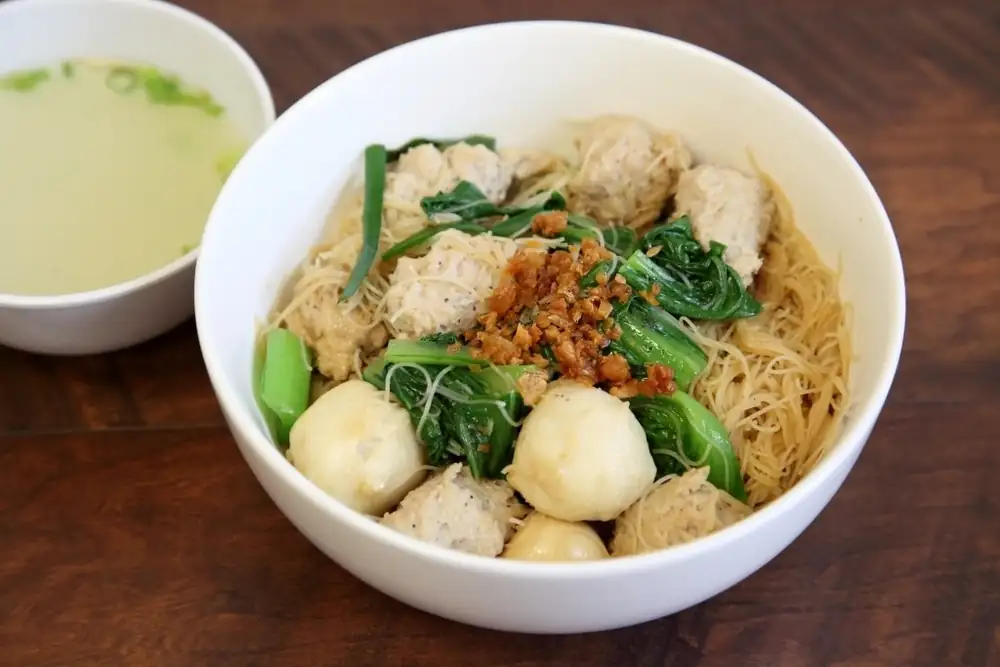
Condiments like that chile sauce appear when the chef feels they’re warranted. When kyae ohh garlic noodles arrived, so did a pepper shaker that would be at home in any diner; it offered seasoning that did wonders for the heap of rice vermicelli, once we dug it out from beneath fish balls and minced chicken. The dish would have benefited, however, from a heavier hand with the garlic oil.
Over in the soup section, the defining ingredient of ohn no khauk swe, identified simply as “coconut noodle,” is coconut milk, thickened by chickpea flour. Together these swamp a tangle of egg noodles fortified with chicken, onion, and egg. Flakes of chile pepper, slivers of onion, and, best, wedges of lime cut the richness.
If you’re sharing dishes, it’s wise to add condiments only to your bowl. This is especially true for the potent fish sauce that accompanies Myanmar’s national dish, mohinga. True, this fish noodle soup is already laced with ginger, lemongrass, and garlic, but stirring in a little fish sauce adds umami oomph. Also essential atop every spoonful: the split-pea crackers called peh gyaw. Like the laphet, these are sourced from Myanmar.
Back in Yangon, Aung recalls, his wife’s party trays of desserts were much in demand. We tried three ($7 each): jiggly, scallop-edged agar agar, ruddy squares of banana suji, and sago with a brûléed coconutty topping. The last has the most interesting textures, but the suji, moist semolina cakes freckled with white poppy seeds, were the most indulgent. Like just-in-time brownies at a potluck, they arrived warm and vanished fast.