Alta Alella invests 2.5 million
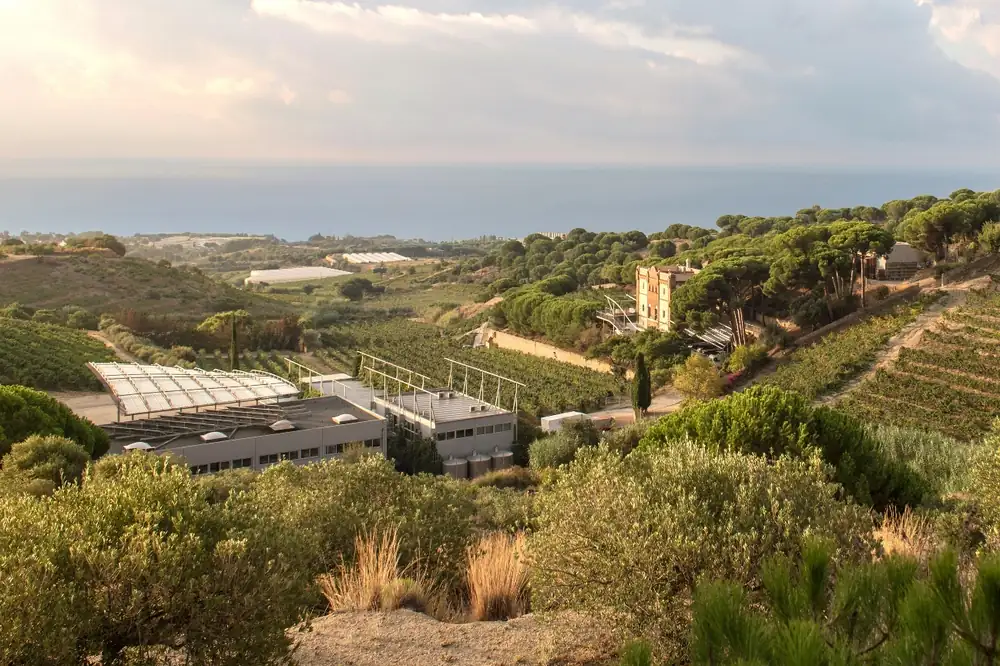
The family-run winery, which has produced organic wines since its founding, announces a €2.5 million investment in developing its winemaking operations. This investment will primarily be used to acquire new hectares of vineyards in Alella-Tiana, as well as technical facilities and tools for vineyard preservation.
Marqués de Riscal responds to climate change. The Marqués de Riscal winery presented the results of its work on vineyard rejuvenation and adaptation to climate change at an event held at the Higher Technical School of Agricultural, Food and Biosystems Engineering in Madrid. Francisco Hurtado de Amézaga explained the path taken in recent years with two clear objectives: regrafting vines to rejuvenate the vineyard and adapting its cultivation systems to combat the uncertainties of climate change. He described the regrafting policy in its vineyards in the Rueda Designation of Origin, initiated by the winery in 1995. Three years later, in 1998, it applied the same program to vineyards in the Rioja DOCa, although it was in 2017 that the company decided to fully commit to this system. Since then, it has regrafted 180 hectares of vineyards. The idea of regrafting arose after observing that the vineyard planted around the 1970s wasn't producing the same results as the older vineyard. The dilemma was between uprooting the vineyard or regrafting it, something that, according to Hurtado de Mendoza, wasn't well-received. They opted for regrafting using rootstock from the older vineyards, which was yielding excellent results. One of the advantages is that the vine has a more established root system, in addition to the quality of the plant being regrafted.
Bodegas Ysios presents its first rosé. The winery, located in the heart of Rioja Alavesa, launches Ysios Rosé, its first foray into the world of rosé wines. Made with selected, hand-harvested grapes, it represents, according to the winery itself, the expression of Garnacha from old vines. The variety comes from the Rincón de Olivedo and La Pedriza areas in Tudelilla. The wine combines Garnacha with varying proportions of Viura and Tempranillo.
The Alicante Designation of Origin (DO) paid tribute to the winegrowers who spearheaded change. The DO Alicante selected five winegrowers from the region who played a leading role in the transformation between the final harvests of the 20th century and the renaissance the wine-growing area has experienced in the first two decades of the 21st. The honorees were Juan Serra Ivars, 89, originally from Benissa but with vineyards in Teulada, representing the Marina Alta region; Vicente Rico Correas, 83, and his brother-in-law, Jose Luis Pérez Pastor, 63, both from Pinoso; and Juan Francés and Francisco Ruano, winegrowers from Villena. Their stories and careers served as the basis for a tribute video. “They are the ones who have brought the vineyards from the post-phylloxera era to the present day, and that has immense value in our region,” said the president of the Regulatory Council, José Juan Reus, during the video's presentation. “Without them, there would be no vineyards today, and no one had ever thanked them,” he added.
Viore's first organic wine. Bodegas Viore presents its first organic wine, Viore Organic, made with grapes from a single vineyard in Lavajo Redondo, Rueda. Lavajos are depressions in the terrain used in Castile and León to store rainwater. The sandy loam soils of Lavajo Redondo are rich in organic matter, and its vineyards are certified organic. The soil's nutrients result in an abundant variety of flowers, and its natural management, without pesticides, synthetic fertilizers, or herbicides, attracts a rich diversity of insects and animals.