“At least we live and cook”
Director-writer Ang Lee, following his Oscar-nominated The Wedding Banquet, has come up with a film that is passionate, captivating, entertaining and meticulously crafted. Food, Drink, Men, Women is a tightly woven, rich story about family dynamics, emotional complications and the profession of chef.
The film centers on Mr. Chu, a venerable Taiwanese chef who is a gruff, widowed father trying to raise his three unmarried daughters. Chu was once Taipei's greatest chef, and his expertise is still sought after today, even though he is slowly losing his sense of taste. But Chu is still the man restaurants call in case of emergency; he can easily defuse problems, even when preparing for a wedding with hundreds of guests.
Chu's character is particularly touching. Food is her only means of love and self-expression, while she is unable to communicate with her own daughters. One of the film's greatest strengths is the multi-threaded story that always ends up meeting at the dinner table. The three sisters struggle in different ways with their happiness, their desires, each other, and their father. The youngest, Jia-Ning, works at a fast-food hamburger chain and then falls in love with her best friend's son. The eldest, a lonely and religious teacher, Jie-Jen, who is traditionally expected to take care of her father for the rest of her life, is unable to pursue love. The middle daughter, Jie-Chien, who is a successful businesswoman, tries to break out of the sometimes extremely oppressive environment of the family and the pressure of her father's precise, ritualized meals, while she herself does not know exactly what she wants from life. Their stories provide an accurate picture of the complexity of love relationships, as well as the diversity of Taiwanese culture, which blends Chinese, American, and Japanese influences.
The diversity of Taiwanese cuisine
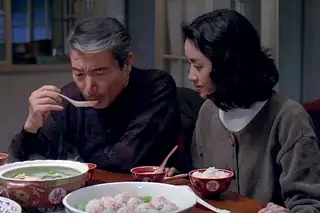
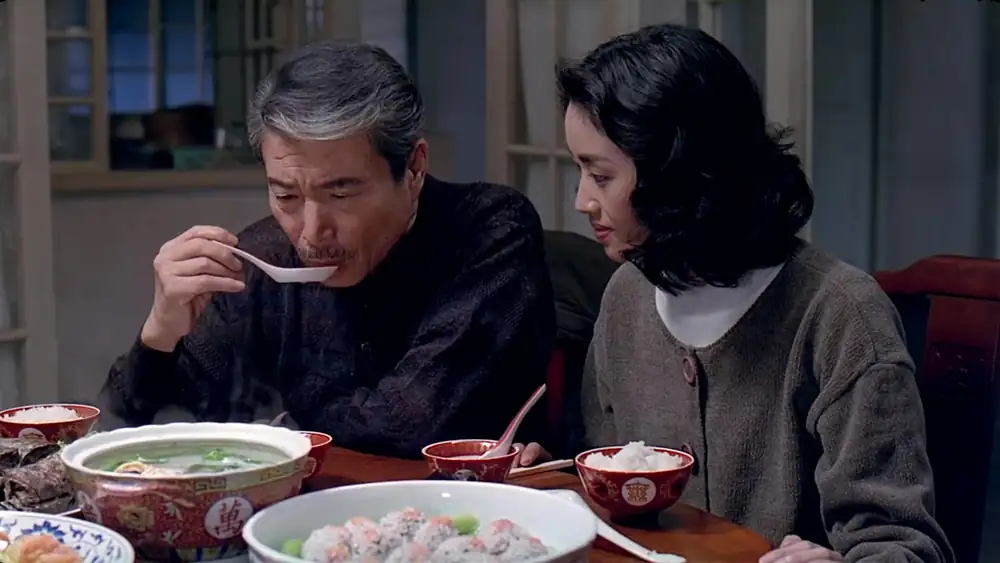
In the first quarter of an hour of the film, Chu prepares a traditional Chinese dinner. Every Sunday, the whole family has dinner together, and although this tradition is important only to him and represents a serious sacrifice for his three daughters, they still meet every week. Chu's feast includes soups, Peking duck, frog, shark fin soup, crab-filled dim sum and other delicacies. We see the preparation in stunning frames, Chu's cooking is ritualistic, routine, full of love. The richness of the colors, textures and movements is almost hypnotic, we are there, we feel the smell of sesame oil, the crunch of vegetables.
The attention to detail, whether it's preparing dim sum or skinning a fish, highlights the rich cultural heritage of Chinese gastronomy. They not only impress the viewer aesthetically, but also have an intense emotional impact.
Cooking is care, eating is conflict.
In the film, food takes the place of unspeakable words. Mr. Chu shows his care and love through food, even if he cannot always openly discuss his feelings with his daughters. However, the meals reflect not only the father's emotions, but also the hidden desires, conflicts and changes in their lives. The characters struggle with various frustrations, desires and romances away from home, all of which they bring to Sunday dinners. This is where the secrets are revealed, the big decisions made by the family members. The food (annoyingly often) remains untouched, since not eating symbolizes repressed emotions and seemingly unspeakable desires and conflicts. These scenes are particularly memorable, sensitively depicting a social conflict - the wind of inevitable change - that reaches every family, every Sunday dinner.
Generational contrasts
The film beautifully captures how tradition and modernity clash in Taiwan's rapidly changing society. Mr. Chu is a master of classical Chinese gastronomy, which he has perfected over decades. However, his daughters represent the modern world, where respect for food takes a secondary role. The generational differences between family members and their relationship to tradition give the story an exciting dynamic.
There is something infinitely passionate about Eastern films about gastronomy, which can be partly attributed to the fact that in a medium that often operates with less emotion and even fewer words, what cannot be expressed otherwise can best be expressed through actions.
Food, Drink, Men, Women is one of the most sensitive films on the subject, incomparable, intelligent, soft, and entertaining. It teaches us about connection, conflict management, and also that if we can't tell someone how we feel about them in any other way, we should cook for them, and they will know everything from that. A meal prepared with love and devotion sometimes means more than any words.
It is definitely not worth sitting down to it on an empty stomach.