The salon lung in the history of Hungarian cuisine
“(...) one sits down to eat pájsli with a certain preparation, in addition to being full, one also wants to heal, like, for example, cabbage soup,” explains Gyula Krúdy in his article The History of Gábli.
Pork lung is a classic offal dish from Central Europe, and is most popular in Austrian, Hungarian and German cuisine. It is similar to the Austrian “Saure Lunge” (sour lung) or the German “Beuschel”, which are also made from pork lungs, heart and other offal.
In Hungarian cuisine, the salontődő probably spread due to the gastronomic influences of the Habsburg Empire, especially in the 18th and 19th centuries, when Viennese cuisine had the greatest influence on Hungarian food. The salontődő became popular in both peasant and bourgeois cuisines, as the offal was cheap, yet nutritious and tasty dishes could be made from it. Its golden age actually owes its existence to the meat shortages of World War I, when offal came to the fore, so its history and path are much like that of tripe.
Originally, the version made from veal and served with sour cream and pickles was called "szalontüdő". Later, as Béla Fehér and Zsuzsanna Gálffy point out, the name stuck to all versions. Unfortunately, today, we have access to relatively few places to eat this delicacy, which was once on the menu of almost every restaurant we come across, and which is most often made from pork.
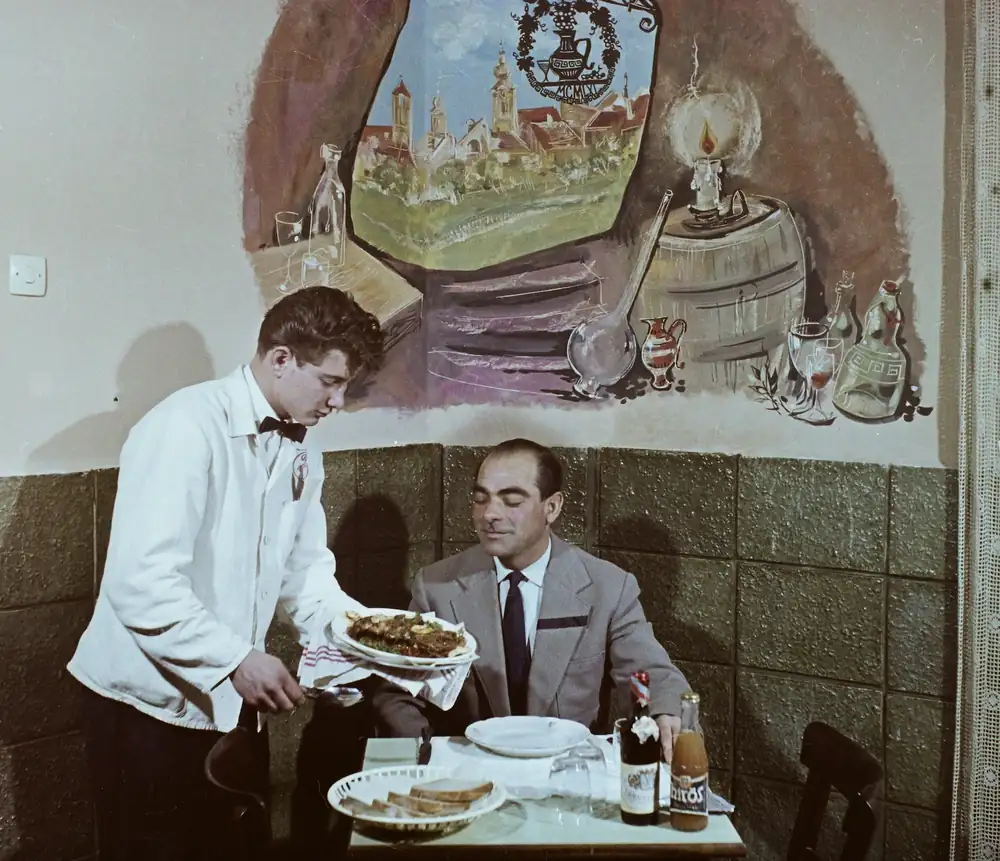
The salontő was typically considered a dish to be eaten in a restaurant, because its cooking requires very careful preparation and some expertise. It is traditionally served with buns, which absorb the sour, juicy sauce well. The sour taste is its essence, lemon, vinegar, and sometimes mustard are also added.
First recipes
(...) it should be juicy so that it can be eaten with a spoon, because this is the first secret of pájsli. The second secret is that the lung should be cut into small, fingernail-sized slices, because then the food will be soft. The third secret is that not just a handful of lemon should be added to the food, as in modern restaurants, but a lemon cut in half – writes Gyula Krúdy in 1929 about the secret of the perfect salón lung.
Lungs as an ingredient can be found in the first important surviving cookbooks, for example in the cookbook of M. Tótfalusi K. Miklós S. The recipes also include lung strudel, fried lung, and lung porridge. Lung porridge has many similarities to salóntúg, is strongly spiced, and vinegar is also added. According to the author of the recipe, it is 'a very good dish'.
Pneumonia
Boil the lungs together with the bacon, and after removing the bacon, chop them very finely with parsley leaves and red onion, and add beef juice to it, finding a suitable sauce; but it must be left quite thick, and when you want to serve it, beat an egg in vinegar, mix it with the hot lung porridge, add pepper, ginger, saffron to it, and as soon as you have cooked it, just until it boils, serve it, a very good dish.
Later, in the 1889 cookbook of Frigyes Glück and Károly Stadler, we can also find numerous lung-based recipes, among which, in addition to sour lung, we can also find exciting dishes such as 'Puerto Rican Soup', which is made from calf, pork or lamb liver and lung, ground with egg, and then served with sour cream and lemon.
Here is their sour lung recipe, which uses calf's lung:
Sour calf's lung
Wash the calf's lungs and heart and cook them in salted, vegetable water — in which we also add a bay leaf or two. When they have cooled, cut them into thin strips. Chop a little green parsley, a small head of red onion and some marjoram very finely, mix them and add a pinch of anchovy paste and the same amount of mustard. Add all this to a good brown batter, in the fat of which we have previously fried a spoonful of powdered sugar. Sprinkle a pinch of paprika on top, fry them together for a few moments, then dissolve them in the cooled juice in which the lungs were cooked. Stir constantly, season with pepper and add a spoonful each of good wine vinegar and lemon juice. Boil for a while longer and now add the chopped lungs and cook for 25-30 minutes over moderate heat. When it is ready, season with a spoonful or two of sour cream and bring to the boil again. When serving, drizzle with a little stew juice, if available, and fry a fried egg on top. Add a quartered lemon to the side, and serve with a bun rolled in sour cream fat as a garnish.
The salontődő is an exciting and valuable dish that many people are returning to the kitchens of restaurants. As we mentioned, fewer and fewer people make it these days, but we can occasionally find it in the kitchens of N28, Rosenstein, or the Anyukám Mondta restaurant. And of course, not least at Lajos Bíró.
Bacon lung recipe from Lajos Bíró
Ingredients for 10 people:
200 g calf's lung
1000 g veal heart
500 g red onion
half a teaspoon of whole black pepper
4-5 bay leaves
only
200 g duck fat
100 g granulated sugar
160 g fine flour
2 cloves garlic
100 g pickled cucumbers
20 g kapribogyó
100 g mustard
1 lemon
50-100 ml vinegar
half a teaspoon of ground black pepper
For serving
bun dumpling
citron
sour cream
snidling
Clean the heart – remove the membranes, fat and bronchi – and place it in a saucepan. Pour enough water to cover it and add 300g of sliced red onion, the whole pepper and 2-3 bay leaves. Sprinkle a heaped tablespoon of salt, bring to the boil and cook, covered, over low heat for about 2 hours until soft.
Remove the soft lungs and heart from the juice, let them cool, then cut them into small cubes.
Heat the fat in a saucepan slightly, then caramelize the sugar until light brown. Add the flour and fry for 1-2 minutes more. Then add the remaining onion, which we chopped very finely, the crushed garlic and 2 bay leaves. Strain about 2 liters of the lung broth. Cook for about 30 minutes, stirring until it has the consistency of a sauce, adding a little cooking water if it is too thick.
After removing the bay leaf, blend it in a thermomix until smooth and strain.
Add the cucumbers and capers (cut the larger ones in half) cut into thin strips, season with mustard, lemon juice and vinegar to make it spicy. Season with pepper and salt if necessary, and finally fold in the chopped offal. Buns are a good side dish.
Garnish with lemon, sour cream, and perhaps a few drops of paprika oil, and sprinkle chopped chives on the bun.