“A restaurant is always about the guest” – brunch, community and generational change at Gléda
A new chapter is opening in the life of Gléda Buda: alongside classic restaurant values, a brunch concept, a health-conscious direction and a young, emerging team are taking center stage.
How do you evaluate the past period, what justified the new direction?
János Deli: Last year gave clear feedback that we need to renew ourselves to some extent. Dinner traffic and alcohol consumption decreased, while the health-conscious attitude became stronger. These are not unique phenomena, but global trends that we also have to adapt to. We have already started in this direction – with vegetarian dishes, free options – but now it has become clear that we also need to respond structurally. That is how brunch came about.
What does this mean in practice for Gléda?
Deli János: We kept what worked well. The lunch menu, which represents an outstanding price-value ratio, and the a'la carte offering will remain. In addition, breakfast and brunch will be available from 9 am, which gives the place a new focus. And we will continue the dinner experience in the form of private dining, in a more intimate, personalized way.
How is the new menu shaping up?
Pál Skamla: Basically, we start from what works and what our guests like. The classics – for example, our paprika chicken, which is a daily staple on most tables, or our iconic cottage cheese csusza – will definitely remain. At the same time, we are releasing elements that have taken a back seat, such as steaks.
And for brunch, we seek balance: we want to offer healthy, yet Hungarian dishes. We don't serve American pancakes, but classic Hungarian pancakes, there are egg dishes, bun bread, Hungarian cold plates, but also Eggs Benedict, with sourdough bread.
Where is the line between tradition and innovation?
János Deli: It's a constant search for balance, because the restaurant is fundamentally about the guest. If we pay attention to them, they will show us exactly what is needed. We had a dish that was added to the menu at the request of a specific guest, and it has since become one of the most successful dishes. We don't close ourselves off, but we react - we shape the offer by listening to the guests.
What did you expect from this change?
János Deli: To make Gléda even more of a community space. A place where you can sit down for a morning coffee, work, meet or celebrate. If we achieve this and the guests feel good, then we are successful.
How long can brunch be a lasting trend?
Pál Skamla: Home office, lifestyle changes and the habits of younger generations all point to a lasting demand for brunch. It is more than a late breakfast or early lunch: it is also a social experience, as people come not only to eat, but also to spend quality time together. They can choose from a variety of delicious and consciously composed dishes, which are also more affordable than a three-course lunch.
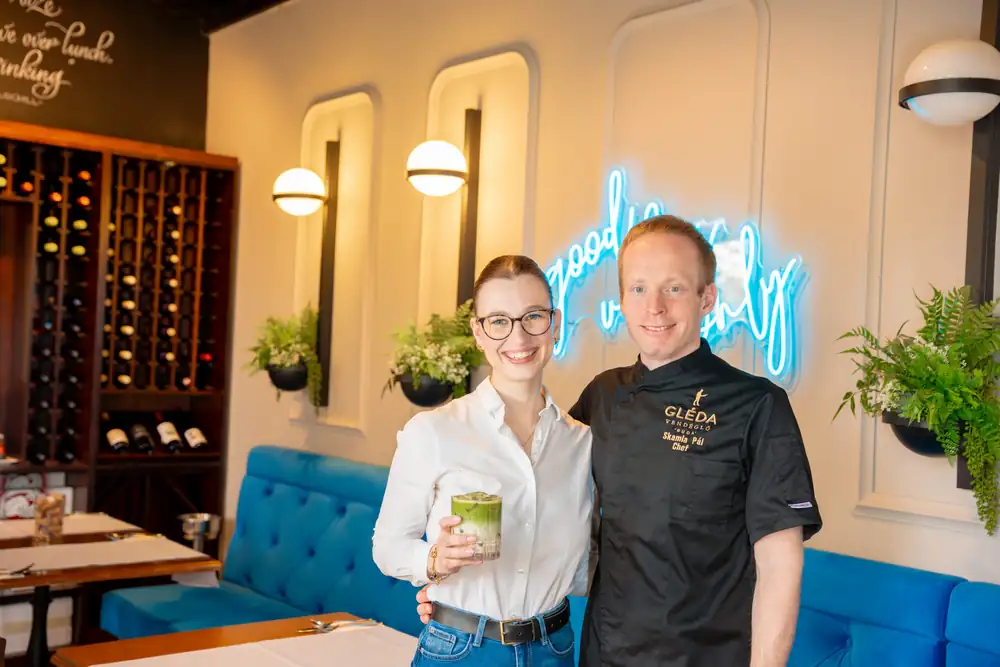
Pál and Barbara played a major role in creating the brunch concept and menu: János, why is it important for you to step back a little now?
János Deli: Because I believe in generational change. They are already comfortable in this world, they grew up with me. My job now is more to mentor them and help them find their own path.
I have always believed that if someone puts energy and work into what they do, it is my duty to support their development. Pali is a good example of this: when he came to us, he was still a beginner chef, and today he works as a head chef. We have worked together a lot in recent years, constantly discussing professional, managerial and human issues. This joint thinking and dialogue has worked very well, and it is especially good for me to see that not only are we moving forward together, but he is also developing on his own path.
At Gléda, you strengthen each other as colleagues, and in your private life, you form a couple. How do you manage to maintain the balance between your roles?
Pál Skamla: Our story actually started at Gléda: we tried out what it was like to work together, and then what it was like to work separately. Barbi continued at Onyx, and I stayed here. In the end, we came to the conclusion that we work better professionally and personally if we are headed in the same direction. Hospitality is an intensive genre, so it is natural that there are tensions, but since we work towards common goals, these are quickly resolved. There are no sharp contradictions, rather our work is characterized by continuous consultation and joint thinking.
Barbara Dzjaja: Maintaining the boundaries between work and private life is a conscious joint effort. It is not always easy, as we often view the operation of a restaurant from a professional perspective even when we ourselves are guests, but it is very important to have a life outside the restaurant. We try to follow Jani's advice and not talk about work at home. However, it is absolutely to our advantage that we are aware of each other's tasks, we know the processes that would not exist without each other.