The small Sicilian town that fuels the world's almond mania
Avola, in the heart of Sicily’s Ionian coast, may be a name that few people know at first. But behind the modest town name lies the center of a globally recognized success industry: the almonds produced here are considered among the best in the world.
Centuries of tradition and generational work are deeply rooted in the fertile lands of Avola. The example of third-generation farmers who grew up in the town shows that the quality of almonds is no coincidence: intensive irrigation techniques introduced by the Arabs allowed this ingredient to become a cornerstone of Italian confectionery over time.
History of Avola
Avola, often referred to as the hexagonal city, is considered a true melting pot of Mediterranean cultures. Its privileged location on the Sicilian coast made it a golden land that attracted the Greeks, Romans and Byzantines, all of whom left their mark on the town. Although the earthquake of 1693 destroyed much of this heritage, it has helped Avola to exist today as a living mosaic of Sicily's layered past.
Today, Avola's past is evident in its baroque churches, historic buildings, ancient recipes and stunning landscapes. The town's calm resilience is also reflected in the daily lives of its residents: children munching on almond biscuits, and elders pouring soap mass into molds to make traditional scibina by hand. The creativity preserved over the centuries lives on here, manifesting itself in a quality of craftsmanship rarely found in nearby cities.
The process of almond cultivation
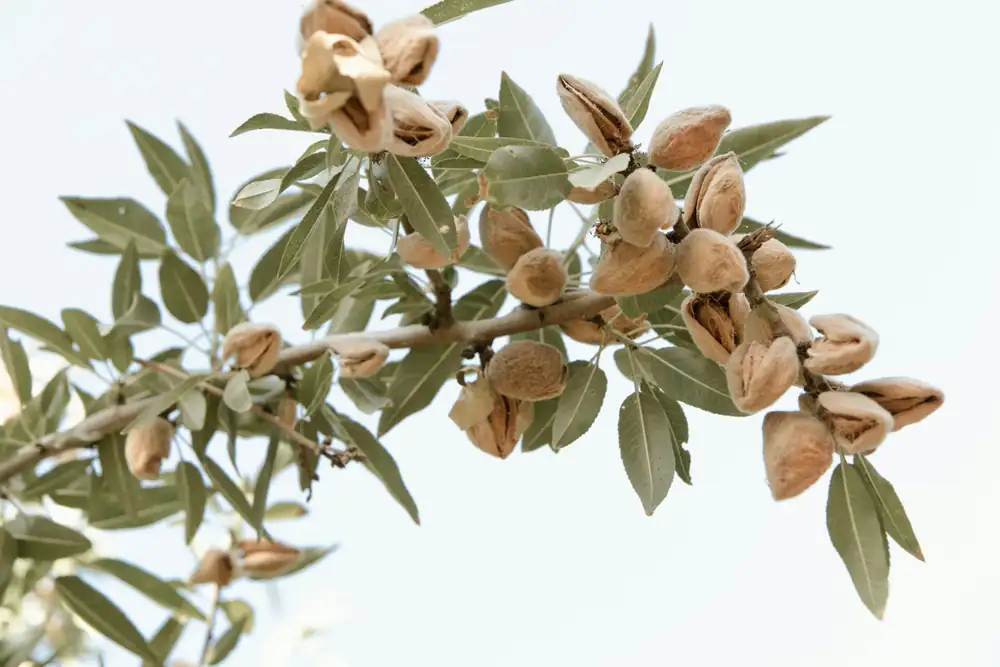
The cultivation of Avola's almond trees, or mandorlos, follows the rhythm of nature. The trees are carefully planted by hand, spaced apart so that their roots can take hold deep in the volcanic soil. The result of this careful selection is also evident in the harvest: the crop is picked by hand, and the Pizzuta almonds are carefully separated from the trees by shaking the branches. Farmers now work without any artificial tools, unlike in the old days when irrigation was essential.
A significant proportion of Avola almonds are used as an ingredient in traditional Sicilian sweets – marzipan, rich cassata or sugared almonds. In addition to the kitchen, they are also highly valued in the cosmetics industry: their oils and creams are known for their soothing effects.
The almond trees of Avola are still cultivated today with methods far removed from modern agriculture. They were probably among the first plants to be introduced by the peoples who conquered the Sicilian coast. The town's porous soil lives in symbiosis with the dry summers and mild winters of southern Italy - a climate that ensures the healthy flourishing of almonds of unparalleled quality.
One of Avola's oldest and best-known producers is Nastasi Mandorle, a family-run business with two factories in the town, just a few kilometres from Syracuse. The company's roots date back to 1898, when entrepreneur Lorenzo Nastasi, together with his two sisters, began growing almonds in the surrounding fields.
Nastasi follows the tradition of dry farming, relying entirely on natural rainfall and the nutrient-rich soil of Avola. Due to the special conditions and the summer flowering, the harvest takes place from July to September: the almonds are carefully peeled and then dried in the sun for three days to preserve their sweet oil and their woody skin, called mallo.