Situation report from Kami's Kisvendéglő: seven years of work behind stable operation
Conscious construction: stable team, continuous development.
The past two years have been about fine-tuning the operation at Kami’s Kisvendéglő. The place has become more balanced, decisions and daily processes are more transparent. “I used to be more unpredictable, but now I consciously strive for calmer communication – this is also felt by the team,” says Kami.
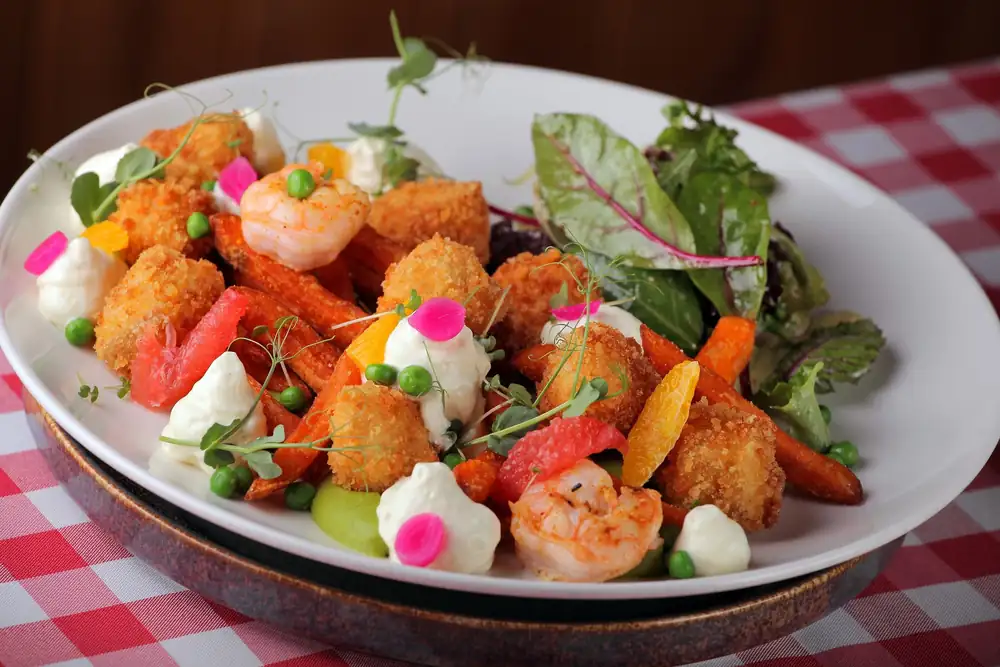
The change was also reflected in the kitchen: in the case of the menu, the intensive changes were replaced by a more gradual build-up, allowing more time to work out the details.
The operation based on a solid foundation is also reflected in the team. One of the most difficult points in the hospitality industry is retaining the workforce, but here, an environment has now been created that can be built on in the long term. “This is the first spring when we didn’t have to rebuild the team, which is a huge step forward,” says the chef-owner. Predictable operation, calmer communication and development opportunities together create an environment that is attractive to those working in the profession.
The development is also continuous in the background. Kami has recently consciously returned to learning: attending courses, competing, reading. “A lot of new ideas come at this time,” he says. These inspirations are reflected in the details of the dishes, while the character of the kitchen remains consistent. And the team is also actively involved in the process, so the ideas are developed together.
Social media has attracted a wider audience to Kami
The restaurant's reputation has also noticeably increased. After a previously restrained social media presence, the Kami family is now using technology more consciously, which has also brought in new guests. "Although I used to say that I didn't like marketing, I saw that more and more content was appearing that added value. I thought we could find content that we could identify with." The video format and regular social media presence not only made the place visible, but also broadened the audience.
The composition of the clientele has changed dramatically in recent years. In addition to the previously typical 40-50 year old group, younger guests have also arrived, while regulars are still present. The public is choosing more consciously, and the restaurant is increasingly becoming a destination. “Whoever comes to us wants to come here, it’s a decision, since we are in a location in Újpest where there are few guests coming in from the street,” says Kami.
The need for experience is increasingly emphasized, time spent at the table, attention and personalization are all part of what guests are looking for today. “They are looking for an experience, it matters how we speak to them, what the atmosphere is like, whether they meet the person who makes the whole place.” For this reason, Kami is increasingly present in the guest space, which creates a direct connection with guests and makes reactions immediately visible, so that feedback is incorporated into the operation. This kind of presence also affects the thinking in the kitchen. The dishes are constantly evolving, and fine-tuning often depends on small changes. “There was something that I thought would work, but then I saw that the guests approached it differently. In those cases, we modify the concept.” The structure of the plate, the distribution of flavors and the presentation are all areas where feedback brings tangible changes.
The name is not always the omen itself
The name often creates a preliminary image in the guests, which takes on a new meaning with the first courses. The term “kisvendéglő” evokes a simpler, more traditional offering, while the plates display a consciously structured, elaborate cuisine. “Many people arrive expecting a classic restaurant and are surprised by what they get. These dishes come naturally to me, but I can see in the guests that it is an experience for them.”
Dishes that have proven themselves over time are gaining more and more importance in the menu. Lamb, for example, has been on the menu following guest feedback. “At first it was just an offer, but then several guests said how happy they were with it. Today, we consume 30 kilos of it a week.” Classic desserts have also gained new momentum, for example, the return of poppy seed cake shows how open-minded guests are. “It takes time to build trust in a restaurant and a chef. However, when that is achieved, guests are more willing to rely on recommendations from colleagues.”
Time is also part of the experience.
The conscious consideration of price-value ratio is playing an increasingly important role in guests' decisions. High-quality ingredients and consistent kitchen work justify a higher price, backed by a stable experience. "A dish may be ten percent more expensive, but it is made from much better ingredients, and fortunately, guests see and understand this." Several decisions are made in the operation that prioritize the experience. "For example, we do not have a service charge, which is a conscious decision. I believe that the guest should decide what they value what they receive."
One of the conscious elements of the operation is time management, in Kami Kisvendéglő, the meal functions as a longer program, where the preparation process and the time spent at the table are also part of the whole experience. “We communicated a lot that we need to give time to the meal. When this approach meets the needs of the guests, the time spent with us becomes much more relaxed. The goal is for our story to span generations – and when the child tells the family to come to us, that means more than anything.”