The dessert that can't be beat
Non plus ultra is one of those desserts whose name immediately indicates its position in the world of sweets – meaning “no further, no higher, this is the maximum”.
A name that precedes everything
The term non plus ultra is of Latin origin and originally referred to the edge of the world. The term was later used to denote perfection and peak performance, which is how it was transferred to the world of gastronomy. It denotes a dessert that was considered outstanding in its time, and its name itself tried to make this clear. At the turn of the 19th and 20th centuries, these terms were treated quite gallantly, so cakes from that time carry a message in their name as well as their taste. Non plus ultra gained meaning in this environment, where a dessert meant both an experience and status.
From patisseries to homes
Although its origins are not tied to a single confectioner or workshop, the non plus ultra became known in the world of urban pastry shops, where smaller, elegant cakes played an important role in the range. These pieces fit well with the coffee house culture, were easy to eat, yet provided a spectacular and distinctive experience. However, during the 20th century, their role gradually changed, the range of pastry shops changed, and the emphasis increasingly shifted towards desserts that could be stored and transported more stably, and the market for small cakes declined. However, instead of disappearing, the non plus ultra moved into the world of home baking and family occasions, where its form and taste continued to live on, just in a different environment.
Meringue and a sense of proportion
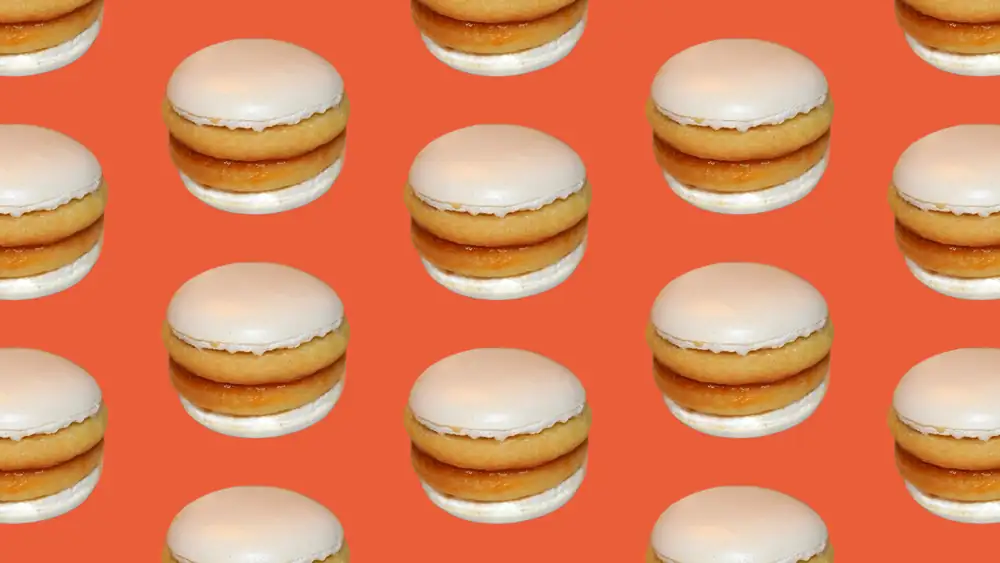
The base of the cake is a crumbly, buttery pastry, topped with meringue, then topped with jam or cream. The structure may seem simple at first glance, but the execution requires great care, as the meringues must remain light and crispy, while still holding the filling and retaining their shape.
The role of the jam or sometimes the cream is also multifaceted, on the one hand it connects the two elements and also balances the sweetness. In several versions, the base is covered with chocolate, which gives the cake a deeper flavor and an extra texture.
In the case of a well-made non plus ultra, the different layers reinforce each other: the combination of crunchy and creamy creates the experience that still maintains its popularity today.
What happened to the once popular dessert?
The decline of the non plus ultra can be explained by several factors. Meringue is a sensitive ingredient that reacts quickly to humidity, making the cake more difficult to store and less predictable. The fragile structure also makes transportation difficult, which is a serious consideration in modern confectionery operations. Changing consumption habits also played a role in its having to take a back seat. The emphasis has increasingly shifted towards more durable, more spectacular and easier-to-handle desserts that better suit the needs of today's catering industry.
Why is it worth rediscovering?
The growing interest in classic cakes could put the non plus ultra back in the spotlight. Its structure, the contrast between textures and its name together give it a character that still makes it exciting today. For contemporary pastry, it is a base that can be reached back to, fine-tuned proportions, rethinking creams, or even brought back into the range in a cleaner form.
Non plus ultra, as prepared by Gabriella Szikra
In Gabriella Szikra's interpretation, the non plus ultra is a dessert that brings back the atmosphere of classic bourgeois confectionery, while being consciously structured in its structure and proportions. "The dough is a crumbly, buttery base that gives the cake a stable hold, on top of which is the Italian meringue foam, which provides a lighter and silkier texture than traditional meringue. The two layers are held together by homemade apricot jam, which not only provides a contrast in taste, but also organizes the dessert into a unity." During preparation, technique plays a prominent role: resting the dough and whipping the foam at the right temperature fundamentally determine the end result, since the meeting of textures gives the character of the dessert. "The meringue applied with a piping bag gains support during baking while maintaining its lightness, and at the end, the joining of the layers creates the balance that makes the non plus ultra a spectacular and timeless cake," explained the chef-owner of A Konyhám Stúdió 365.