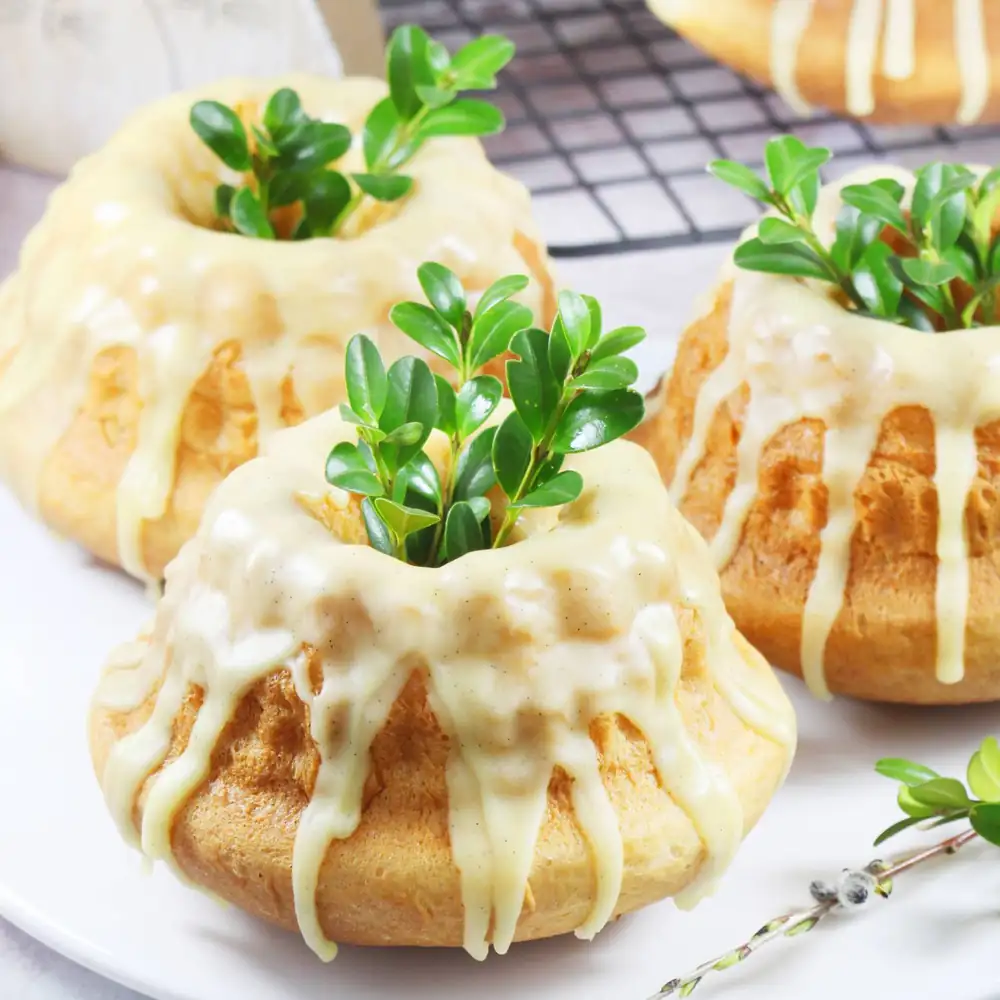
Easter cupcakes
Beautiful and fluffy Easter cupcakes are a great choice for a sweet holiday treat. Yeast cupcakes topped with a delicious frosting are the best idea for mini Easter cupcakes for a basket.
- simple yeast dough - detailed instructions and lots of tips - the best mini yeast muffins
Preparation time: 30 minutes Total dough rising time: 1 hour 30 minutes Baking time: 25 minutes Number of servings: 6 large muffins Energy value 353 kcal Carbohydrates 60 g - Including sugars 25 g Protein 7 g Fat 9 g Diet: low-fat, vegetarian.
- 2.5 cups of wheat flour - 400 g
- 3 medium egg yolks - about 55 g
- about 1/3 cup of sugar - 70 g
- less than 3/4 cup of warm milk - 180 ml
- 1 package of dry yeast - 7 g
- 1/4 stick of butter - 50 g
- 1 tablespoon of vanilla paste
- a pinch of salt
- 5 heaped tablespoons of powdered sugar - 120 g
- 5 tablespoons of lemon or lime juice
- 1 tablespoon of vanilla paste
- optionally a bit of yellow food coloring
Easter cupcakes
My glass holds 250 ml. Remove the eggs and milk from the refrigerator in advance so that they are at room temperature.
The calories were calculated based on the ingredients I used. This is an approximate calorie count, as your ingredients may have a different calorie count than the ones I used. When calculating the calories, I also included the frosting I used to cover the cupcakes.
To bake these mini yeast muffins, I used a muffin pan with recesses. The pan has six recesses with a chimney. Each recess holds 200 ml of muffin. Bake at 170°C (350°F), middle rack with top/bottom baking options. Baking time: approximately 25 minutes.
Easter cupcakes recipe
Sift 2.5 cups of all-purpose flour (type 450-550) into a bowl. You'll need exactly 400 grams of flour. Add a pinch of salt, about 70 grams of caster sugar, and one 7-gram sachet of dried yeast.
Also add to the bowl with the dry ingredients: three medium-sized egg yolks; 50 grams of softened or melted and cooled butter; less than 3/4 cup of slightly warm milk and a tablespoon of vanilla paste.
Tip: If you want to use fresh yeast, you'll need 25 grams of it. Then, prepare a starter. To make the starter, in addition to the yeast, you'll also need to trim some of the dough ingredients. So, the starter ingredients are: 100 ml of milk – 2/5 cup (the milk can be slightly warm, but not hot), two tablespoons of all-purpose flour, 25 grams of fresh yeast (1/4 of a 100-gram cube), and a tablespoon of sugar. Place the warm milk, fresh or dried yeast, sugar, and flour in a separate bowl. Rub the yeast into the remaining ingredients. Mix thoroughly, cover with a cloth or plastic wrap, and set aside in a warm place for 20 minutes. After this time, the starter should rise and become very foamy. You'll have a thick foam. Add the entire starter to a larger bowl with the remaining ingredients for the yeast muffin batter.
Mix everything together with a wooden spoon or silicone spatula. Transfer the bowl with the dough to a stand mixer fitted with a dough hook. Knead the dough for at least 5 minutes. After kneading, the dough should be perfectly smooth, but still quite sticky and looser than dough for croissants, for example.
Leave the kneaded dough in the same bowl or transfer it to a larger one to let it rise. Cover it with a cotton cloth or clear plastic wrap. Set aside in a warm place to rise for about 60 minutes. The dough should be puffy and rise significantly.
Prepare six muffin tins (with a minimum capacity of 200 ml each). I used a muffin tin with small chimneys. Grease the inside of the tins with melted butter or oil.
Lightly grease your hands with a knob of butter or a little oil and remove the dough from the bowl. Oiled hands will prevent the loose dough from sticking to your hands. Bring the dough together into a single mass. Break off pieces of dough and transfer them to the baking tins. Fill the cavities no more than 3/5 full. Within a few minutes, the dough will begin to rise again and may even triple in volume.
The photo below shows the cupcakes after 30 minutes of rising.
After about 30 minutes of the second rise, begin preheating the oven. Place the muffin tins on the middle rack of an oven preheated to 170 degrees Celsius (top/bottom heat). Bake the Easter muffins for about 25 minutes. They will rise further and brown beautifully during baking.
After baking, open the oven door slightly. After five minutes, open it all the way and remove the muffin tins. You can remove the muffins from the tins immediately after baking. Transfer them to a cooling rack.
After baking, my cupcakes measured approximately 10 x 7 cm and weighed about 130 grams each. You can frost the Easter cupcakes, but only after they have cooled completely. To make the lemon vanilla frosting, place five very heaping tablespoons of powdered sugar (120 grams) in a small bowl. Add five tablespoons of freshly squeezed lemon or lime juice (or water, if necessary) and one tablespoon of vanilla paste.
Mix everything thoroughly with a spoon. If you want your icing to have a slightly lemony color, I recommend adding a little yellow food coloring. You can replace the coloring with a pinch of turmeric or a bit of saffron essence soaked in rubbing alcohol.
Tip: You can also use two egg whites you have left over from baking Easter cupcakes and make them.
Royal icing. This icing is perfectly white and opaque. You can also add vanilla paste to it.
Decorate the cooled Easter cupcakes with the prepared icing. The icing will set on the yeast cupcakes in just a few minutes. If your Easter cupcakes have a chimney, you can fill the cavity in the center with catkin or boxwood branches. You can also add colorful Easter-themed sugar decorations or mini chocolate eggs.
Enjoy your meal!