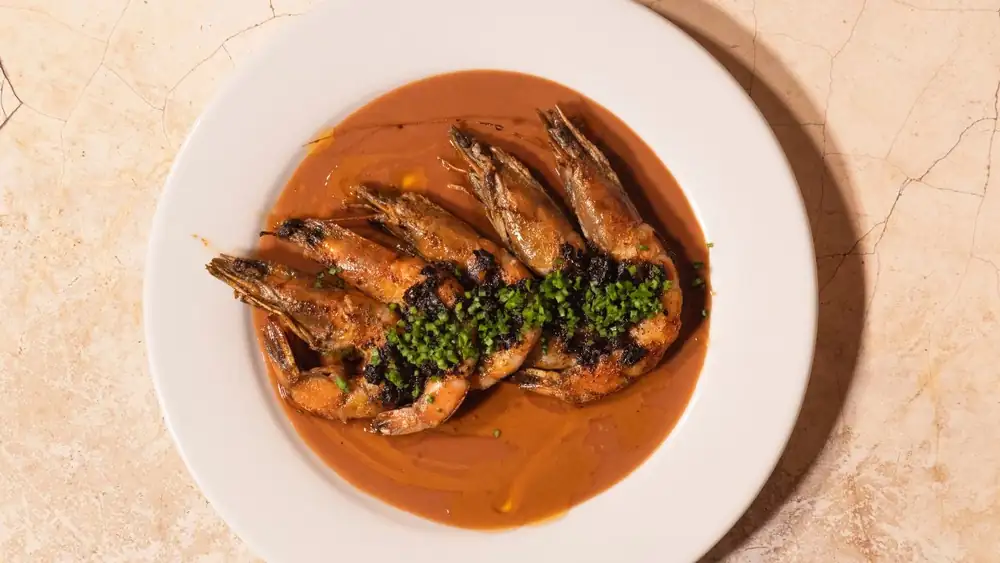
Izel: Ferments and exploration of Veracruz territories in Mérida
Located within the luxurious and charming boutique hotel Casa de las Palomas, in the heart of Mérida, Izel is the project of the young chef Pablo Luque, under a concept of contemporary Mexican cuisine with Veracruz roots in combination with the richness of Yucatecan ingredients.
The result of this fusion is the reinterpretation of recipes from the different regions of Veracruz (the Huastecas, the Totonaca, the Capital, the Sotavento, the Mountains, the Papaloapan, the Tuxtlas and the Olmeca region), enriched with ancestral preservation and fermentation techniques, combined with the use of local ingredients.
A disruption in the traditional cuisine of Mérida's rich gastronomic scene, resulting in visually striking dishes, full of flavor and with a deep history and roots in the Veracruz region where the chef originates.
Pablo Luque has worked in the kitchens of renowned chefs and restaurants, including those of Raquel Torres, a leading figure in traditional Veracruz cuisine, as well as Mikel Alonso and Gerard Bellver at Biko and Lur, and Luis Palmeros at El Cuarto Blanco. He is also an avid reader and student of René Redzepi's Noma, specializing in pickling, fermentation, and preservation techniques.
On the shelves at Izel, you can see fermentation jars that not only beautify the high walls of the restaurant, but also bear witness to the careful process of transforming ingredients carried out by the chef.
Menu of exploration and original twists
In its early days, Izel, like any good luxury boutique hotel restaurant, focused its menu on breakfast. This remains its signature. We highly recommend their chilaquiles with Xico mole, featuring an original twist where the chef ferments the cacao and chilies used, giving the mole a unique flavor that retains its Xico identity while enriching it with new tastes. We also recommend their brioche bun with creamy free-range egg, crispy bacon, and an original fermented raspberry sriracha sauce.
We also suggest their egg casserole in fermented chile meco sauce, with Valladolid sausage and, if you prefer something sweet, their "torrejas" of roasted pineapple with coconut cream and citrus aguamiel are not to be missed.
In the lunch and dinner section, Luque, through his fermentation laboratory and his philosophy of permanence, offers the most unique flavors resulting from a deep exploration of ingredients in all their facets.
We dare to break free from the constraints of eating only fresh, local, and seasonal ingredients, and we venture into fermenting everything that intrigues and delights us. It doesn't matter if there are no tangerines on the trees; we've preserved them in our collection of ferments. We're not from here, we're from everywhere,” Pablo tells us exclusively for Food&Wine in Spanish, as we share a table and a fermented soursop soda.
Therefore, we highly recommend not missing their two tasting menus, both the one that highlights the High Mountains and Totonacapan region, and the one that highlights the Sotavento and Barlovento regions.
Standout dishes include their picadita of braised pork in red recado sauce with chicatana ant salsa macha, paired with a Negroni made from 3-year-fermented Valle de Bravo cherries. Also noteworthy is their texmole of ayocotes (a type of bean), pibinal corn, chilacayotes (a type of squash), and chochoyotes (a type of sweet potato), which showcases their fusion of Veracruz recipes and Yucatecan ingredients. This dish is paired with a fermented soursop soda. And we especially recommend their red “tlatomile” (a type of pipián) with perfectly cooked turkey that retains its juices, accompanied by white sweet potato and ciricote (a type of berry).
From the seafood section, we recommend their fish empanada filled with minilla fish and XO-cured crayfish belly, paired with a fermented pineapple tepache margarita. Also noteworthy is their very Veracruz-inspired "vuelve a la vida" (return to life) cocktail of shrimp, octopus, and lacto-fermented "bruja" sauce, paired with a mango and cardamom kombucha. And don't miss their catch of the day with a unique enchilpayado of dried chilies and fermented plantains, served with a lovage mojo (another fermented ingredient).
Sustainability, fair trade and value chain
For Pablo, sustainability is a must in his kitchen. Through fermentation, he says, he can do his part to minimize food waste and overexploitation, using out-of-season ingredients without harming the environment or threatening farmers' livelihoods. He is also involved in "Fishing with a Future," a sustainable fishing project that promotes best practices and supports local fishermen, which in turn contributes to obtaining higher-quality seafood.
Likewise, it seeks to ensure that its suppliers also do things differently. A prime example is its supplier of free-range eggs from Granja Centella, a fascinating project by a couple from Monterrey (Karen and Fernando) who, concerned about the amount of chemicals and hormones in poultry products, decided to change the entire system and establish their farm in Mérida.
Other projects being worked on at Izel include “Green Heritage”, “Living Seed”, “Impetus” and coffee from producer Carlos Cadena.
Thus, fermentations, kombuchas, meads, lacto-fermentations, pickles, jams, hyper-freezing of grains such as coffee or cocoa, are some of the techniques with which Pablo Luque experiments at Izel, his restaurant-laboratory, to embark on the preservation of fruits, chilies, vegetables, grains, meats and diverse elements that will become a gastronomic proposal with unique and original flavors that have come to burst onto the scene of the many culinary proposals of Mérida.
Without a doubt, a chef and a restaurant to keep a close eye on and not to miss trying on your next visit to "the white city".
Izel
Calle. 64, #417, Col. Centro Histórico, Mérida.