Ground beef and minced beef: are they the same thing?
In the vast world of the internet, when you search for a recipe you can sometimes find sites from other places and then, you run into a big dilemma: one of the ingredients says "minced meat" and you don't know if it is the same as "ground meat".
In everyday language we often use the terms interchangeably. However, in gastronomy and technical terms, they are not exactly the same.
Next, we'll unravel this culinary mystery so you know exactly what you're buying and how it affects your dishes.
The fundamental difference: the cutting method
The main difference between the two lies not in the animal of origin, but in how the meat is processed. This drastically changes the texture and behavior of the product when cooked.
Minced meat: the art of the knife
Traditionally, minced meat is meat that is finely chopped using a sharp knife or a mincing machine with sharp discs and blades.
The result: It retains small, defined pieces or granules. Tissues and muscle fibers are cut cleanly.
Cooking results: By better preserving its cellular structure, it retains much more of its natural juices. It's ideal for dishes where you want to feel the texture of the meat in every bite.
Ground beef: the power of pressure
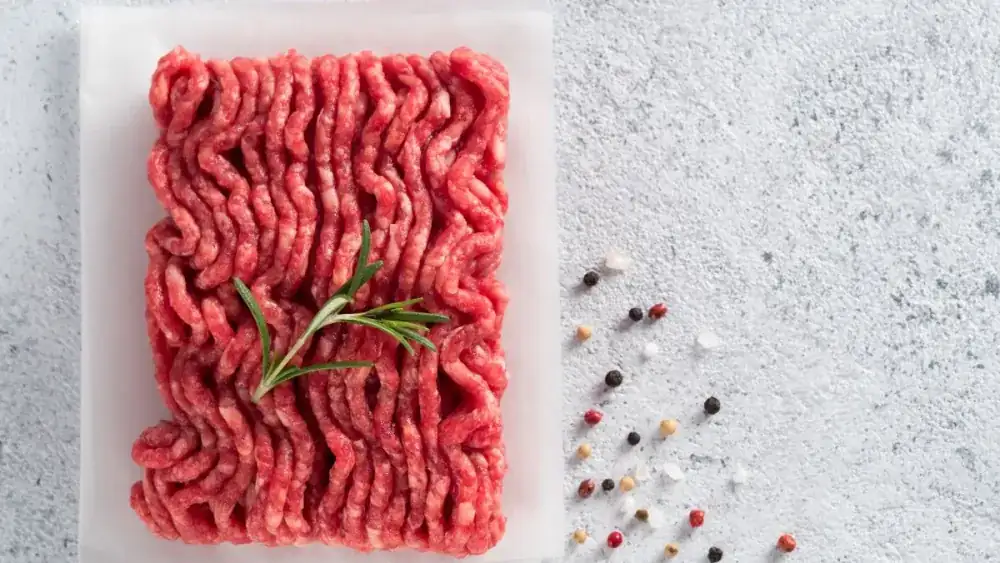
Ground meat, on the other hand, goes through a more intense grinding process (usually a friction or extrusion mill) that literally crushes and grinds the fibers.
The result: it becomes a much more homogeneous, compact and smooth paste.
Cooking result: When the fibers break down completely, it tends to release more water and fat quickly. It blends very easily, making it perfect for combining with other ingredients.
Which one to choose?
To clear up any doubts you might have in the kitchen, here's a quick guide to their differences and best uses:
Minced meat: characteristics and uses
- Texture: It has a granular consistency; small pieces of meat can be clearly distinguished within it.
- Juiciness: It is high, since the clean cut helps it to better retain its juices inside during cooking.
- Easy to mold: requires a little more pressure or the help of a binder (such as egg or breadcrumbs) to bind well.
- Ideal for: gourmet burgers, steak tartare and traditional empanada fillings.
Ground meat: characteristics and uses
- Texture: It is a pasty, soft, and visually very compact mass.
- Juiciness: It is medium-low, since having the fibers broken by the pressure, it tends to release its liquids and fats quickly in the pan.
- Easy to mold: it molds very easily due to its homogeneous consistency.
- Ideal for: meatballs, meatloaf and meat-based sauces such as Bolognese.
The geographical factor: a mess of labels
It's important to pause here: the Spanish language is as rich as its recipes. In many Latin American countries (like Mexico, Colombia, and Venezuela), the term "carne molida" is the standard for referring to either of the two varieties you find in the supermarket. In contrast, in Spain and Argentina, "carne picada" is the universal term.
Beyond the name, always pay attention to the fat percentage. Good beef (ground or minced) for hamburgers should have a ratio of 80% lean to 20% fat to ensure flavor. If it's for a Bolognese sauce, a 90/10 ratio will work perfectly.
Does the difference really matter? If you're a cooking enthusiast, yes.
If you're grilling hamburgers, use ground beef (or ask your butcher to grind it once on a coarse griddle); you'll notice it's much juicier and has a premium texture. But if you're stuffing peppers or making a meatloaf where you need everything to be nice and tight, ground beef is your best friend.
Next time you go to the butcher shop, you won't be going in blind. Enjoy your meal!