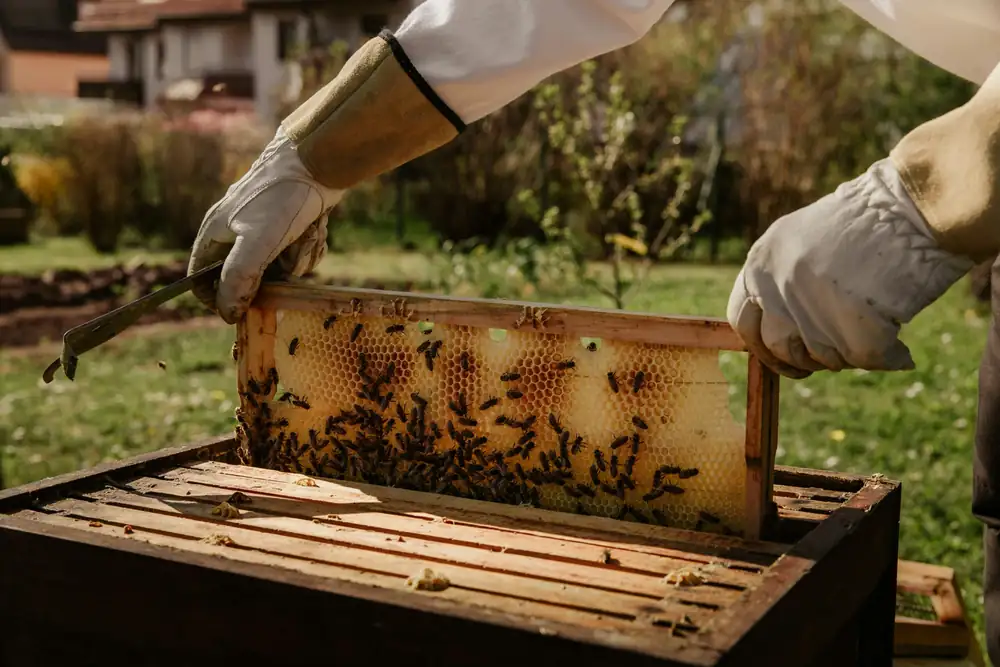
What makes honey one of the world's most sustainable foods?
This is especially interesting given that honey is a natural sweetener and bacteria are known to love sugar. Although it can crystallize over time, becoming thicker and grainier, it retains its quality when stored properly. But what is behind this special property?
When a food spoils, it is actually taken over by microorganisms – bacteria, fungi or molds. These organisms generally prefer moist environments, moderately warm temperatures, a pH close to neutral and an abundant supply of oxygen. It is no coincidence that most preservation processes change these conditions. Drying removes water, heat treatment kills a significant proportion of microbes, an acidic environment inhibits their reproduction, and airtight storage limits their access to oxygen.
The natural durability of honey is ensured by several factors. Its unique chemical composition and the transformation process carried out by bees create an environment in which most microorganisms cannot multiply.
Bees produce honey from flower nectar, which is initially a warm, water-rich, sugary liquid. At first glance, it may seem like an ideal breeding ground for bacteria, but by the end of the process, it has become one of the world's most durable natural foods.
Bees begin to transform nectar on the way to the hive. They reduce its water content, increase its acidity with the help of enzymes, thereby inhibiting the growth of many microorganisms, while breaking down more complex sugars into simpler forms. The nectar then enters the cells of the spleen, where the transformation continues.
One of the most exciting steps in the process comes next: the bees begin to fan the nectar with their wings. The air flow gradually evaporates the remaining water, similar to how air movement accelerates the evaporation of sweat from the skin. As a result, the nectar, which initially contains 70 to 80 percent water, becomes increasingly concentrated.
Fully mature honey usually has a water content of only 15–18 percent. The sugar-to-water ratio is so high that it is practically impossible to create a similar concentration using traditional methods. This natural process is what makes honey one of the most durable foods in the world.