A Central European classic shot in poppy seed
A dish that was born with potatoes
The story of noodles begins with an ingredient that is now a natural part of European cuisine, but was unknown in the region for centuries. The potato arrived in Europe from South America in the 16th century, but it only began to spread widely in the second half of the 18th century. In the Habsburg Empire, during the reigns of Maria Theresa and Joseph II, its cultivation was consciously encouraged, as the tuber played an important role in alleviating famines with its reliable yield.
As potatoes became more common in households, new dishes were gradually created from them. Boiled potatoes mixed with flour proved to be a cheap, filling and easy-to-shape ingredient, from which dumplings, dumplings and various rolled pastas were made. Noodles also developed from this medium, so their history actually dates back only two or three centuries.
His name is not Hungarian either.
The name noodle is of German origin, the word comes from the term Nudel, which today primarily means pasta, but in the past it was a much broader concept. In German-speaking areas, various dumplings, rolled pasta and potato preparations were also referred to with this word. Through the linguistic and gastronomic connections of the Carpathian Basin, the term became Hungarian and gradually began to refer exclusively to this potato pasta.
Although many people think of it as a typically Hungarian dish, noodles are part of a much larger Central European family of dishes, known as Schupfnudel in Austria, often called Fingernudel or Bubenspitzle in Bavaria, and similar potato noodles can be found in Slovenia, the Czech Republic, Slovakia, and Croatia. The kinship is obvious at first glance: boiled potatoes, flour, hand-rolled shape, and short cooking. The differences are more in the serving and flavoring, which have taken completely different directions depending on the region.
Dessert or side dish?
This is perhaps the most interesting question in the history of noodles. In Hungary, most people know them as a sweet dish, the cooked noodles are rolled in breadcrumbs toasted in butter and then served with cinnamon sugar or jam, but sometimes poppy seeds or nuts are added. In many families, they are served as a stand-alone lunch or dinner, especially on Fridays or fasting days.
In Austria and southern Germany, on the other hand, a savory version is often made, served with fried onions, sauerkraut, mushrooms, or with meat dishes, so the same potato pasta plays a completely different role in the meal.
The meeting of poppy seeds and breadcrumbs
The character of Hungarian noodles is defined by two ingredients that are important players in Central European and Hungarian cuisine in their own right. Breadcrumbs toasted in butter until golden brown can be traced back to Austrian confectionery and home cooking traditions, and the reason for their popularity is that they simultaneously add crunch, an exciting aroma and a delicate crust to the dough, while preventing the noodles from sticking together. Poppy seeds are an even more characteristic player: along with bagels, poppy seed rolls, strudel or kalács, noodles are also among the dishes in which poppy seeds have become a defining flavoring. This pairing seems so self-evident today that it is easy to forget how much of a specific Central European tradition they preserve.
Few ingredients, great attention
The recipe for noodles may seem simple at first glance, as it only requires boiled potatoes, flour, eggs and a little salt, but in practice it all depends on the potato. Due to the different water contents of different varieties, no two recipes are exactly the same. Potatoes with a high starch content produce a lighter, looser dough, while waterier varieties require more flour, which can easily make the end result heavier. This is why a distinctive family knowledge developed that is difficult to learn from a recipe book. The consistency of the dough was often determined by touch rather than precise quantities, and rolling and shaping became a sequence of movements passed down through generations.
Noodles are often compared to Italian gnocchi, as both are made from boiled potatoes and flour, but the two dishes developed independently. Gnocchi continues to exist in Italian cuisine almost exclusively as a savory dish, served with various sauces and cheeses. Noodles, on the other hand, gradually became a dominant feature of sweet cuisine in Central Europe, while the savory version also retained its place in several countries. This difference is a good example of how the same basic idea can create completely different culinary traditions.
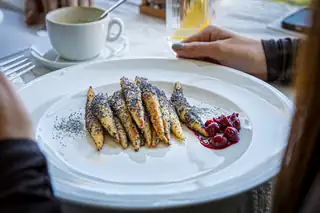
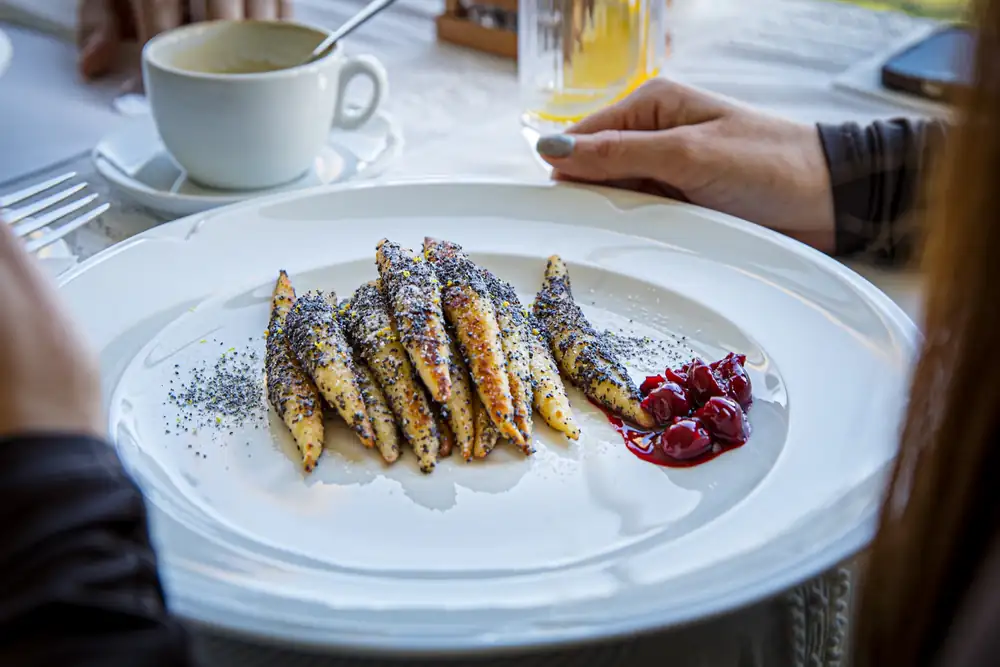
Poppy seed noodles, as prepared in the kitchen of Petrányi Cellar and Wine Terrace
In the kitchen of Petrányi Pince és Borterasz, poppy seed noodles are a classic dessert that is associated with both personal memories and respect for tradition. For head chef Endre Ruga, the dish evokes the kitchen of his grandparents, which is why the restaurant also follows the principle of preparing well-known dishes while preserving their original character, instead of reinterpreting them at all costs.
The base of the noodles is boiled potatoes, still hot, which are then left to cool completely to retain as little moisture as possible. This makes the dough lighter and easier to shape. The cooked noodles are then fried in butter in a pan, where they are golden brown and then lightly caramelized with powdered sugar. The dessert is finally finished with a generous amount of ground poppy seeds and freshly grated lemon zest, which adds freshness to the rich flavors. According to the chef, a spoonful of homemade plum or cherry jam completes the experience, as its acidity nicely balances the sweetness of the poppy seeds and caramelized sugar.