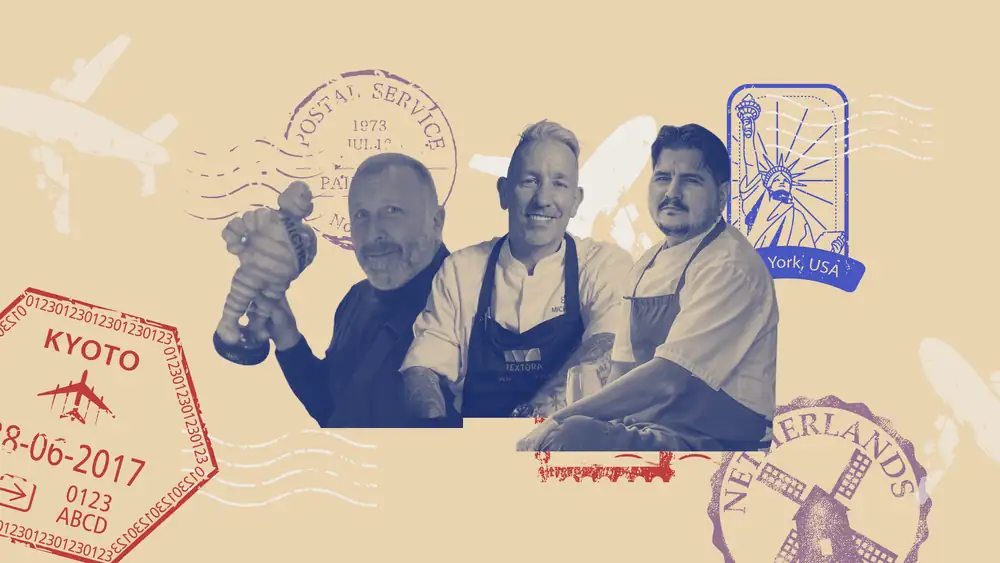
Copenhagen, Lisbon and the Silk Road: a travel guide from three gastronomic experts
András Jókuti: There are places that can surprise you even for the umpteenth time.
If you ask anyone about gastronomic destinations, András Jókuti is certainly one of them. The author of Víláevő visits several continents every year and also regularly organizes small-group gastronomic tours. His recommendations for 2026 include destinations that he himself will return to during the year. “It was easy for me to compile this list, since I will be visiting most of these places this year. I have been organizing gastronomic tours to some destinations for years, because I find that they can impress even seasoned travelers.”
This time, Copenhagen tops the list, which he believes can continually renew itself over the years. “Perhaps nothing better demonstrates the power of Copenhagen than the fact that I always find something new after many visits. The return of Noma is an event in itself, but what’s really exciting for me is that you can experience the natural philosophy of the New Nordic movement and the futuristic world of Alchemist in the same city.”
He also says that the Danish capital is at its most attractive in the summer. “The whole city comes alive at that time. The long days, the people swimming in the harbor, the parks and the waterfront create a very special atmosphere. Copenhagen almost turns into an outdoor living room.”
However, one of the most anticipated trips of this year is taking him in a completely different direction: “I have long wanted to visit the most important stops on the Silk Road. The more I read about the region, the more I became convinced that Central Asian cuisine is one of the most underrated gastronomy in the world.”
After Kazakhstan, this time it's Uzbekistan, where historic cities and local cuisine come together to create a unique experience. "Samarkand, Bukhara or Khiva are fascinating destinations in themselves, but for me it's just as exciting to taste the local versions of the same dish. For example, plov is prepared according to different recipes in each city, while oven-roasted lamb or freshly baked breads also provide a very special experience."
András has mentioned the Faroe Islands as one of his favorite destinations for years. “For me, the Faroe Islands are one of the most perfect places to escape mass tourism. It is a wild and peaceful region, whose special character is given by the stunning landscapes and exceptional seafood.” According to him, the gastronomy of the islands builds on the local characteristics in an exemplary way. “The waters here are among the cleanest and coldest in the world, which means langoustines, sea urchins, scallops and other seafood of exceptional quality. All this is combined with a restaurant culture that builds on local traditions with extraordinary confidence.”
And if you’re looking for an authentic summer destination within Europe, he also highly recommends Andalusia. “The Atlantic coast has maintained its own rhythm even in high season. Although the almadraba tuna season is over by this time, the area is still a fantastic destination. These towns are used much more by locals than by foreign tourists, so a morning churros con chocolaté on the oceanfront has a completely different feel than in the more crowded Mediterranean resorts.” It’s no coincidence that several of these destinations are on his itinerary this year. “These are the destinations for which I still book flights with the same enthusiasm as the first time.”
Renátó Kovács: It's almost impossible to eat badly in Lisbon.
“In the summer, when you finally have some time to relax, you are guided by completely different considerations than on weekdays,” says Renátó Kovács. As the chef of Hilda and one of the owners of Voilá, the father of two small children, he wants to relax with his family, but gastronomy does not take a back seat during his vacations. “At such times, I don’t want to be in the kitchen either. It’s important that we feel good, but as a chef, I automatically pay attention to the local hospitality. If possible, I always ask for recommendations from people who live there or know the city well.”
His last great gastronomic experience was in Lisbon, where he would love to return – this time in the summer months. “Lisbon is incredibly strong from a gastronomic point of view. We were there in January, but I feel like I missed it because of the weather. If I could choose a summer destination now, I would probably go to Portugal again.”
In the city, an old friend, Dávid Liptay, a pizza expert living in Portugal, helped him navigate, so he reached several places that he probably wouldn't have found as a tourist. "One of the greatest experiences was Alfredo. The chef has Vietnamese and French roots, which is reflected fantastically in the dishes. French technologies and Asian flavors were present at the same time, every dish was incredibly vibrant."
Lisbon’s natural wines were also a pleasant surprise. “I’ve had some bad experiences with natural wines before, but in Portugal I tasted some that were incredibly clean, elegant, and kept their natural character.” He lists Time Out Market as a must-stop, but he’s equally enthusiastic about the city’s breakfast spots and pizzerias. “Lupita Pizza has been on my list for a long time and it didn’t disappoint. The vodka tomato-based pizza I tried there was so inspiring that I ended up trying one of the pizzas at Voila. We also found plenty of great brunch spots, and even a simple smashburger was outstanding. I felt like it was really hard to eat bad in Lisbon.”
Although he enjoys discovering new gastronomic experiences abroad, summer has also meant Lake Balaton for him for years. “We regularly return to Csopak. I really like Buborék, we start the day there almost every morning, then we can go on a bike ride to Tihany, have a good ice cream or a beach buffet. These are just as much a part of the Balaton experience as a dinner at Kistücsök.” Among the classic Balaton places, he also regularly visits Hétlépcős in Füred. “There are some iconic dishes that you simply cannot miss. One of these is the Hétlépcős velős toast. These are the places that are good to return to year after year.” According to the chef, this is what makes gastronomic trips really exciting: the character of a city or a region is often defined by an excellent bakery, a bistro or a beach buffet, as much as by a top gastronomic restaurant.
Ákos Sárközi: Portugal is worth exploring by car.
For Ákos Sárközi, Portugal is much more than a favorite travel destination, as at the beginning of his career as the chef of Textúra and Borkonyha, he worked at a two-Michelin-starred Portuguese restaurant, Vila Joya, which was a defining stage in his professional development. This summer, he returned to the country with his family, this time from a completely different perspective. “If I had to recommend just one destination, I would definitely say Portugal. I owe a lot to this country professionally, but it was a completely different experience to return this time. This time, we rented a car and traveled the country from Lisbon to Porto. During a road trip like this, it is much easier to deviate from the usual routes and really get close to the local gastronomy.” According to the chef, it is these detours that provide the most memorable moments of a trip.
“We sampled different dishes at olive oil farms, took part in a cooking school where I could cook with locals, and discovered lots of small restaurants that we probably would never have been able to visit on a classic city tour.” What she particularly appreciates about Portuguese hospitality is its pride in local ingredients and traditions. “One of the greatest experiences was Canalha Comporta. It’s an incredibly lovely place, where everything is about local identity. They work with excellent ingredients, offer honest flavors, and I felt throughout that they really wanted to show what Portuguese cuisine means to them.” Although their trips are usually carefully planned, they always leave room for spontaneity. “If a restaurant we’ve chosen isn’t full, we always ask the host or locals where they go. Our best experiences have come from these recommendations. Once, during a trip, the driver recommended a small bistro, and later we saw him having lunch there himself. There’s probably no more authentic recommendation than that.”
As a chef, he naturally observes every restaurant with a professional eye, but he tries to be present primarily as a guest. “I never sit down at a restaurant looking for faults. I want to feel good, but at the same time I inevitably notice the professional details. However, I always give my opinion only afterwards. I don’t want to influence those I travel with, and I also don’t forget that unexpected situations can arise at any time in hospitality. Maybe that’s why I’m a much more patient guest than the average person.”