“It sounds simple in words, but it’s actually extremely meticulous” – Tiago Sabarigo on the behind-the-scenes details of lobster, rack of lamb and Queijada de Évora
I would like to learn a little more about lobster fishing. At first glance, it seems like a clean, “simple” catch, but there is serious technical knowledge and a lot of thought behind it. Where did the idea come from, and what did you want to express with it?
This is one of my favorite dishes from our new tasting menu, which debuted in May. I first made a dish like this over ten or fifteen years ago when I was working at Gordon Ramsay’s Michelin-starred restaurant, Pétrus in London. Lobster ravioli is his signature dish. (Gordon Ramsay’s lobster ravioli has been one of the chef’s most famous signature dishes for decades: a lobster filling wrapped in thin pasta is complemented by an intense crab bisque and herb butter sauce – ed.)
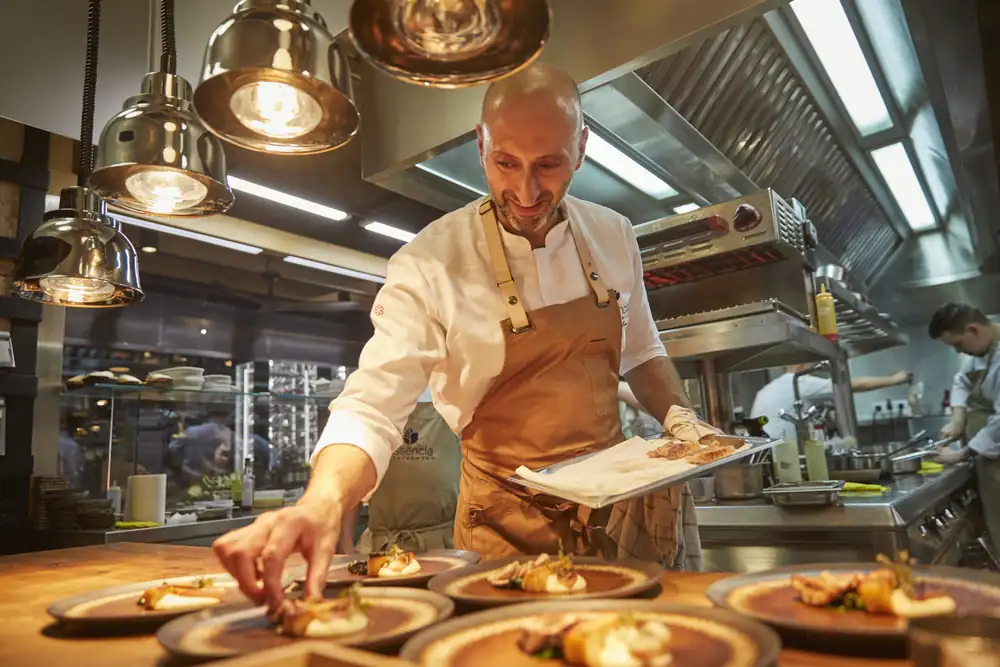
Here at Essência, we poach the lobster in butter, then use the remaining parts of the lobster that don't end up on the plate as a very delicious, refreshing ravioli filling with basil and coriander. We also offer a rich lobster sauce and Chinese cabbage, which we flavor with orange and vinegar.
This dish is so refreshing and exciting at this time of year, and I think it's the perfect crab dish. It may sound simple, but it's actually a very meticulous preparation.
Technically, what was the biggest challenge in creating this dish, and what is the element that guests often underestimate?
For example, it is crucial how long we cook the lobster (it arrives fresh from the UK every week), how long we mince its meat for the pasta filling, or how long we leave the pasta in the boiling water, as it is important that the inside of the ravioli is soft, but we cannot overcook either the pasta or the filling.
There is a fine line between crumbly, flawless crabmeat and crabmeat cooked a few minutes too long, which can unfortunately lead to a terrible end result. So it is worth paying attention to precise timing. We are talking about a delicate ingredient, so it must be handled with care.
Please tell me about the lamb loin prepared "Palóc style", accompanied by green beans, butter beans and polenta, and seasoned with dill!
Our guests have a very good relationship with this dish, probably because of their memories of palóc soup. This is the main course on our current tasting menu, so it is the last course that guests eat before desserts.
It’s important that the entire menu is balanced so that it’s not too heavy. We’re talking about six to eight courses, with side dishes, bread, snacks, and everything else. Even if we always put together five- and seven-course menus, there are still plenty of extras and surprises that people can encounter during the experience.
The main course consists of a very slowly grilled rack of lamb and a tócsni, which we cook à la minute. It also comes with a green and butter bean salad, which has dill, parsley and lemon zest. We offer sour cream, seasoned with dill oil and fresh dill. The salad is served on top of the tócsni, decorated with edible flowers. The palóc sauce – which tastes like the well-known palóc soup – is placed on the edge of the plate, its color harmonizing well with the shades of dill oil. This is one of my favorites.
How do you think it is possible to get good quality butter beans at home?
Our vegetable supplier always brings very high-quality ingredients. At the beginning of the season, the butter beans weren't that good, but now they're perfect, as are the green beans. You can also find them in the Great Hall. Although there are some vegetables that we specifically order from abroad, we try to get almost everything from Hungary. Interestingly, Portuguese green beans are much longer than those here, you have to cut them with a knife to make them easier to eat. For example, my mother loves them with practically everything, they can be combined easily. They are a very common vegetable in Portugal.
The menu closes with Queijada de Évora, a dessert deeply rooted in Portuguese culinary traditions. Why was it important for you to reinterpret this classic, and how do you find the balance between respecting tradition and your own creative voice?
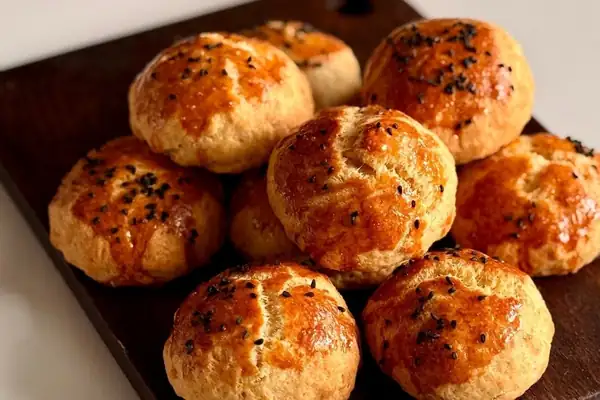
Queijada de Évora is actually a Portuguese cheesecake, a classic dish from Évora. In the restaurant we serve it with pineapple and mint. Despite the cheese, it is sweet on its own, so we need to add a little acidity and freshness. It is a delicious dessert, our guests love it very much.
The pineapple is caramelized and then it appears on the plate in the form of a gel and a sauce. We also add mint oil. We try to use every part of the pineapple so that there is no waste. This is typical of all our dishes, we try to use every part of the ingredients so that they are wasted as little as possible.
Is the process for making mint oil similar to that of dill oil?
The process is almost exactly the same, but we need to cook it for a much shorter time so that it doesn't lose its color, as mint is very sensitive to heat (if you immediately put it in ice-cold water, it's easier to preserve its bright green color).
Looking at the entire menu, we perceive a dialogue between the two culinary worlds, rather than simply the introduction of Portuguese cuisine to Hungary. Can we say that this has now become the defining philosophy of Essência?
Yes, that's the goal. If a guest who comes to us has been to Portugal, they can recall the memory of that trip. And if they go in the future, they can relate how much they have already gained a glimpse of here. The same is true for Hungary. This way, memories can be created from both cuisines at the same time.