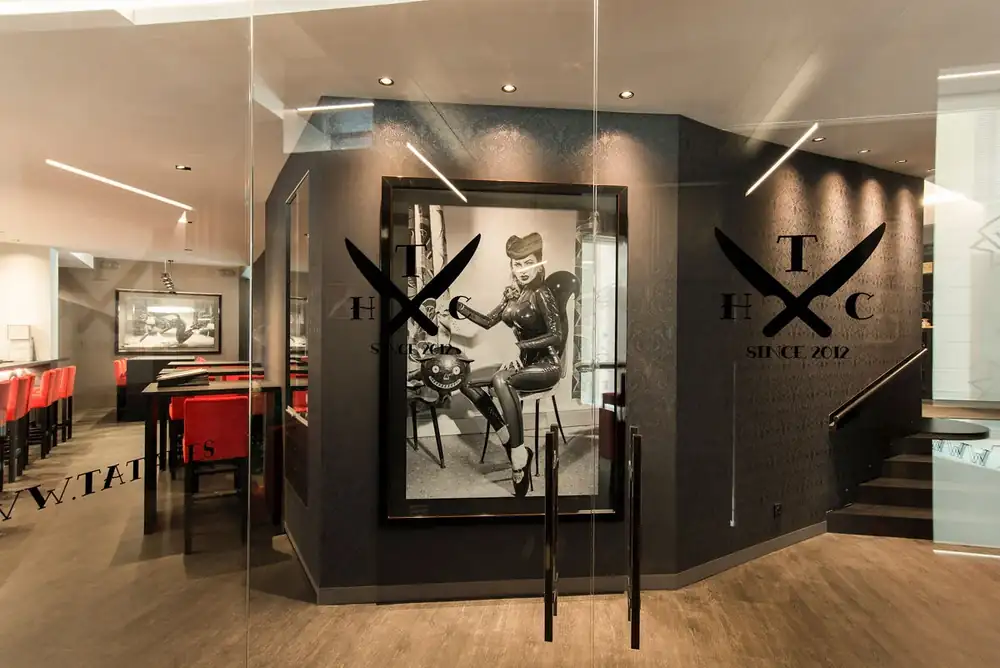
Tatau: rock&roll and tattoos that look to tradition
Some things haven't changed at Tatau restaurant in Huesca (Azara Street, no number. 974 042 078) after 13 years. It was the first bar in Spain to earn a Michelin star, and that bar, and that spirit, live on in the corner where they welcome customers for vermouth.
When you first visit, you might expect to find woks, blowtorches, and flames leaping from the stovetop in the open kitchen. And, at the helm, chefs in short sleeves and caps. Nothing could be further from the truth. What you'll find are Le Creuset pots and Staub cast iron pans, the tools of a classic cuisine of stews, soups, and roasts. A lifetime investment, ideal for expressing on the plate the respect for tradition that Tonino's cooking embodies. No fusion or other modern trends.
The high tables also contribute to that transgressive feel, which disappears as soon as you sit down. The stools are very comfortable. And then, of course, there's the pristine and elegant black tablecloth, the glassware, the crockery… There's no wood, but there is porcelain. And if it were up to Tonino, there would be more silver and elegant red curtains would hang from the ceiling to the floor.
“Tatau is a reflection of who we are, our tastes, hobbies, and character, both in the kitchen and the dining room,” the couple reflects. Tonino is “very” interested in culinary culture, traditions, saints' day desserts… the way things are made and old recipes. Preserving them from oblivion and believing that there's a reason behind every dish is one of his guiding principles. “I have to look back and have something familiar come to mind.” That's how he updates the menu.
This 13-year journey has yielded a great deal in shaping the culinary experience at Tatau. First there were tapas and small plates, then an à la carte menu, later several set menus, and now, to keep everything under control—costs, waste, and quality of life—the 'menu du jour' (87 euros, drinks not included) has become the main attraction, a French-inspired daily menu, the place where this chef feels most comfortable.
It resembles a tasting menu or gastronomic menu in its length, but it has a different feel. The citrusy dry Martini, to whet the appetite, is served at the bar, reminiscent of the original Tatau. A nod to those tapas and small plates, where a croquette or a sophisticated fresh pistachio from Alto Aragón with cod fritter and romesco sauce from Somontano are essential.
The bread ceremony. This is how formally the kitchen team presents the bread that Tonino makes every day. “By searching, learning, and asking questions, I've managed to create the bread I couldn't find anywhere else, just like they made it in the Pyrenees 60 years ago.” Organic Aragón 03 flour, water, salt, and a day of fermentation result in a loaf that's served with olive oil from the Verdeña variety of Loscertales and dead olives from Aragón. This presentation is dangerous because it's hard to stop. With this bread, Tonino wants to offer a “real” pan con tomate (bread with tomato). “I'm getting hanging tomatoes regularly now, and all that's left is to get the bite-sized portion just right.”
Trout from the Cinca River, asparagus from Novillas, morels… Seasonality and identity. This latter concept is very much in vogue at Tatau. Their kitchen doesn't focus on ceviches, but rather on escabeches, and wherever there's a good stock, Tonino is always there, keeping a watchful eye.
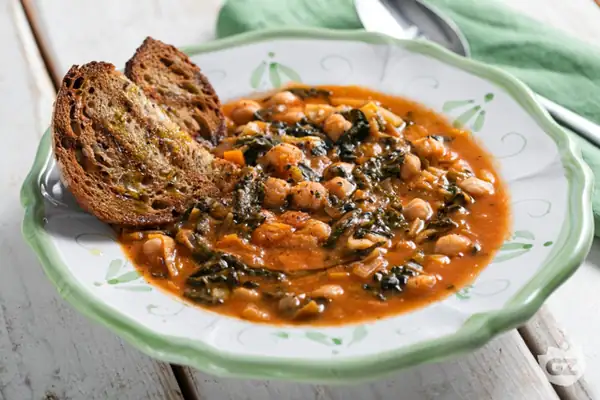
The pig from La Fueva, a happy, free-range pig raised in the Aragonese Pyrenees, is another example. “They just slaughtered 25 pigs, and there won't be any more for a few months. You can't just buy whatever you want; they call you, and the lot has everything,” he explains. He manages to include, in one of the latest menus, a ragôut of white beans from Ganxet, a croquette made from pork knuckle, and, using the pig's trotters, he makes some 'boca bits' (a type of pastry).
Products that may seem humble, but are of high quality. It's rare to see lobsters at Tatau that have endured who-knows-what journeys to reach your table, or teardrop peas transported in plastic trays. Tonino seeks a direct relationship with the producer and the product, as when he visits Ángel's apiary to select honey from the nearby Sierra de Gratal.
Something similar happens with the Monegros capon, which is first presented whole, fresh from the oven, and then portioned, perfectly cooked and at the ideal temperature. Like the veal from the Broto Valley, served in a surf and turf style alongside a bite of monkfish with a romesco sauce. Aragonese products combined with Catalan techniques and roots—the land of Tonino, where he grew as a chef. What would he be without his picadas (a Catalan sauce) prepared in his marble mortar?
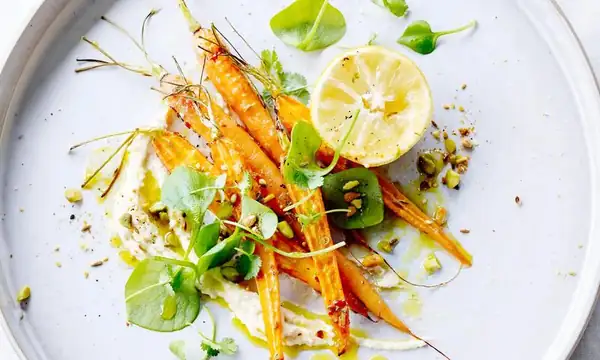
Pear from La Litera, licorice root from Ontiñena, and honey. Again, simplicity that is used to great effect. As the meal nears its conclusion, one gets the feeling—the open kitchen doesn't lie—that apart from the evocative background music, everything has flowed smoothly without noise or stressful movements. On the contrary, harmony prevails in the coming and going of the cooks and waiters. Surely, everything has been planned and rehearsed to create a masterpiece where words are superfluous.
The three chefs who run the show finish as they began: dressed in immaculate white with their heads covered, as tradition dictates. Not a single blemish on their attire. Aránzazu manages the dining room with the expertise gained from her time at the Basque Culinary Center. Then, when service ends, she becomes the mastermind, responsible for balancing the books and keeping anyone in line.
For coffee, tea, petit fours, and a little after-dinner conversation, customers get off their stools and head to a corner with sofas and low tables. And now, the perfect ending, a lovely moment to unwind, reflect, and feel that the visit to Tatau was well worth it.
Right
Address: Calle Azara s/n, 22001 Huesca.