Lamantia and the waiters: “It's not about the salary, young people want a different life.”
Lamantia, the waiters, and the young people: "It's not about the salary, young people want a different life." Every time this topic comes up, there are two instinctive, Pavlovian reactions.
“Young people can't take it anymore”
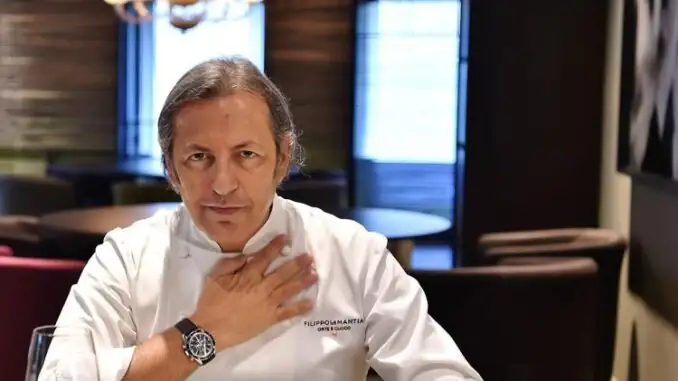
Then there's the more calm reasoning (but it can still be done). Filippo La Mantia does so, in part. He explained his position on Radio 24 today, after the controversy of recent days (though he had also said the same to Cook, of the Corriere): "I have three children, so I could never speak ill of young people. I simply said that when we stopped for the lockdown, many groups, myself included, were essentially locked at home and we focused on our lifestyles, in our case, on the restaurant industry. There are many like me whose lives are compromised, in the sense that we do the work that requires us 360 degrees, but the kids, the young people, probably couldn't stand a job that didn't allow them to live a practically normal life, and they don't want to do that anymore." Then he adds, and here the controversy begins again: “It has nothing to do with salaries, and for goodness sake I can't say that everyone who pays waiters, cooks, bartenders, and dishwashers treats them like gold, but in my category we have a reputation to uphold and we will never allow ourselves to treat people badly.”
Waiters and chefs, everything has changed in 40 years
So let's try to think. Restaurant work is incredibly hard. For chefs (not the TV ones, but the real ones, the ones in the kitchen). For the kitchen staff and the dining room staff, those we still obtusely call waiters. It's tiring work, often in difficult conditions, in cramped, hot, unhealthy, unsafe environments. Having established this, it must be added that things have changed considerably in recent decades. In the post-war period, chefs didn't exist, and cooks were unknown to most, often locked in the kitchen for hours with no exposure to the world or any fame. Waiters, on the other hand, at least those in the best restaurants, were respected figures who built solid careers. It's no coincidence that waiters in the best restaurants were often of a certain age. In 40 years, the situation has reversed: cooks have become stars, acclaimed chefs, and in some cases well-paid (only in some, of course). And waiters have gradually lost social standing and become casual workers: working in the dining room is no longer a profession to be chosen to embark on a career, but a stopgap or a transition to be made when young, before looking for something else.
We need a revolution in timetables and mentality
And here we come to the question. Why don't young people want to work in dining rooms anymore? Because they have low social standing and an equally low, sometimes very low, relative salary. But there's another issue, which Lamantia mentioned: quality of life. The world has changed for some time now, and the lockdown has changed it further, triggering a wave of resignations even from well-paid and prestigious jobs. People, especially young people, who are more sensitive to change, no longer want to dedicate their lives to work. They don't want to sacrifice family, hobbies, free time, friendships (life, in short) to a stressful and poorly paid job. In fact, they no longer want to dedicate it to stressful work, even if it's well-paid. It's a lifestyle revolution that hasn't yet reached the workplace. Just as companies are struggling to embrace smart working, restaurants are struggling to embrace better working conditions: healthier environments, decent wages, and flexible, non-mileage-intensive working hours. Until the mindset of owners and chefs changes, there won't be enough staff in the kitchen and dining room. If it does, people might decide to dedicate part of their lives to this profession, investing time and energy.
Of course, if we wanted, we could reduce it to the same old, tired old couple of arguments: lazy young people and exploitative entrepreneurs. But perhaps that way, we're stuck and only fueling pointless gastronomic populism, without addressing the real problem.