Leticia Landa awarded the BCC World Prize
Some people succeed in gastronomy by opening a restaurant;
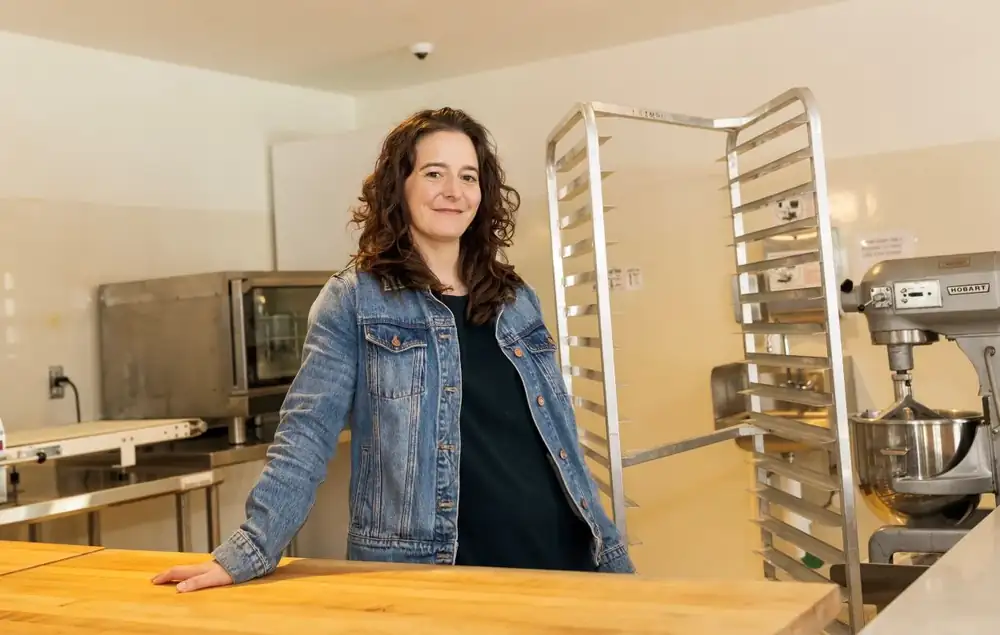
Although she doesn't wear an apron herself, Landa sees the kitchen as a space of opportunity for those seeking a fresh start. It's no coincidence that, for many migrants, the hospitality industry is the gateway to the economy of their host country. In this process, they often encounter bureaucratic and financial hurdles that can dash their hopes and their desire to work. The non-profit organization La Cocina has spent two decades helping people of various nationalities overcome these obstacles and has supported more than a hundred businesses in the San Francisco Bay Area. The €100,000 prize money, awarded by the Basque Culinary Center and the Basque Government, will bolster this collective effort.
Landa joined the project in 2008 as its third employee, but her leadership has been key to the organization's success. Born in Texas to Mexican immigrants, she studied Anthropology at Harvard and found in La Cocina a way to combine her two passions: food and people. For her, the act of cooking has a political dimension, and the fact that she primarily supports women stems from a simple logic: "When women earn money, they create opportunities for their children and families." This startup incubator guides them through technical training, assists them with paperwork, and, above all, provides them with a space to experiment, make mistakes, and try again until they manage to open their own restaurants.
Cook with awareness
Since its inception in 2016, the Basque Culinary World Prize has sought to recognize culinary figures who use their talent to improve the world around them. Over the years, it has honored names such as José Andrés, for his work leading World Central Kitchen; Colombian chef Leonor Espinosa, for her support of indigenous communities; Xanty Elías, for her culinary education project in schools; and Fatmata Binta, for her advocacy of African nomadic cuisine. This year, the jury—comprised of chefs such as Gastón Acurio, Mauro Colagreco, Narda Lepes, Elena Arzak, Pía León, and Josh Niland, among others—also awarded two special mentions.
One award goes to Brazilian João Diamante, raised in a Rio favela, for his project Diamantes na Cozinha (Diamonds in the Kitchen). Trained at Alain Ducasse's school, he returned to his country to offer free cooking and baking courses to underprivileged youth. His restaurant, Dois de Fevereiro, is a celebration of Afro-Brazilian identity. The other award travels to Tasmania, where Welsh-Australian Matthew Evans decided to leave his life as a food critic to understand "why one carrot tastes better than another." He discovered this by cultivating his own farm, Fat Pig Farm, and becoming one of his country's leading advocates, with television programs, documentaries, and books that raise awareness and encourage uncomfortable questions about what we eat.
The jury's decision was announced at the newly opened headquarters of the Basque Culinary Center in the Gros neighborhood of San Sebastián, GOe (Gastronomy Open Ecosystem), which is specifically designed to incubate projects related to food innovation beyond the restaurant sector. Following its official inauguration on Monday, the center today hosted the first edition of Talaia, a forum for reflection on the sea that brought together chefs, scientists, and thinkers, as well as a meeting of the BCC's advisory board, made up of some of the world's most influential chefs.