Has your ham turned green and “fluorescent”? Here's why it happens and when to worry
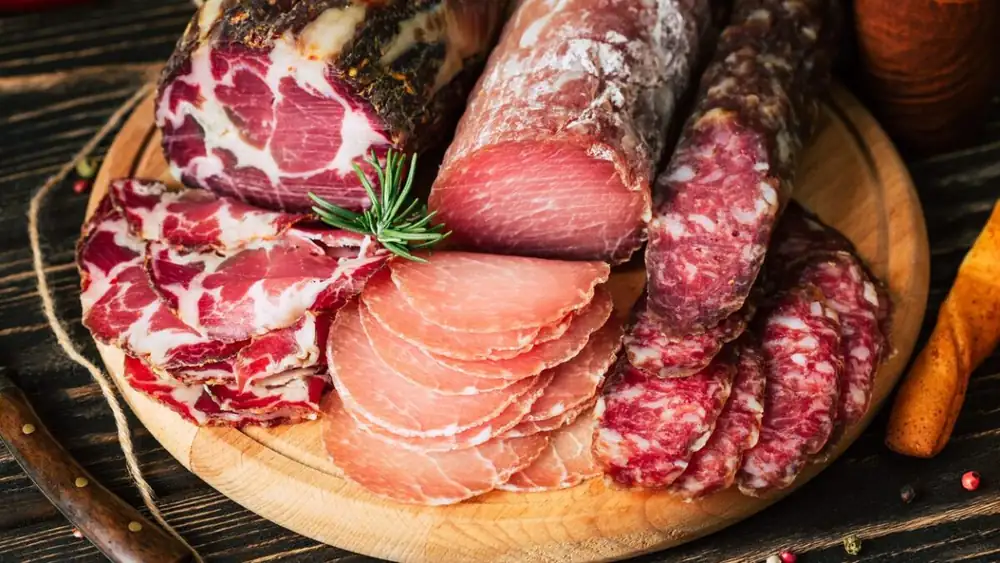
A rainbow of sorts appears on the slices of prosciutto in the tray: shades of green, blue, pink, and yellow, giving the impression of being almost fluorescent.
What is flesh iridescence and why does it occur?
Seeing it can be surprising and astonishing: it's hard to expect an iridescent sheen on cuts of beef and pork, such as steaks or roasts, hams, and cured meats, as abnormal colors, when present, immediately lead to suspicions that something is wrong, potentially leading to the risk of eating a food that's dangerous. Being cautious is always a good thing, but it's also important to know that the iridescence of meat is a completely natural and harmless phenomenon. This brilliant, multi-colored effect is generally linked to the diffraction of light by muscle tissue. Muscle tissue is composed of various elements, including fibers, which in turn are made up of fibrils (better known as myofibrils). When the blade cuts against the grain, it cleanly dissects the myofibrils, creating a microscopic "diffraction grating." Light strikes these periodic structures and is diffracted, generating interference patterns that reflect the colors of the rainbow: a bit like what happens with precious stones. This is particularly visible when the muscle fibers are cut perpendicularly, a technique also known as "countergrain" and frequently used because it makes the slices of meat more tender and easier to chew.
When is it best to be careful?
So far, we've discussed a curious yet certain manifestation, always referring to steaks, roasts, pastrami, or cured meats such as prosciutto crudo, prosciutto cotto, and bresaola, which are based on whole muscles and lean cuts. Iridescence is most noticeable in cured meats made from whole muscles (such as prosciutto and bresaola, where the salt treatment and clean cut enhance the microscopic network), but disappears in minced meats and salamis, where the muscle fibers have been broken down and recombined haphazardly. It is minimal or absent in light-colored meats such as chicken, due to the different structure and density of muscle fibers, which rarely create the perfect geometry necessary for the optical phenomenon. Traditional raw ground meat (used for making meatballs, ragù, or hamburgers) is also related to minced meat used in cured meats: fibers altered from their original shape are unlikely to produce iridescence, and it's therefore possible that green or bluish hues are a symptom of bacterial contamination or the ongoing process of deterioration. In general, cooked meat is safer, as most harmful microorganisms are killed by high temperatures. However, if you have any doubts about its safety, it's crucial to analyze aspects other than color: note whether the consistency is slimy or viscous, whether there are actual dark spots, whether the smell is pleasant, and, in the case of packaged deli meats, whether the packaging is bulging or bulging. These are all clues that allow you to determine whether or not the product is safe to consume.