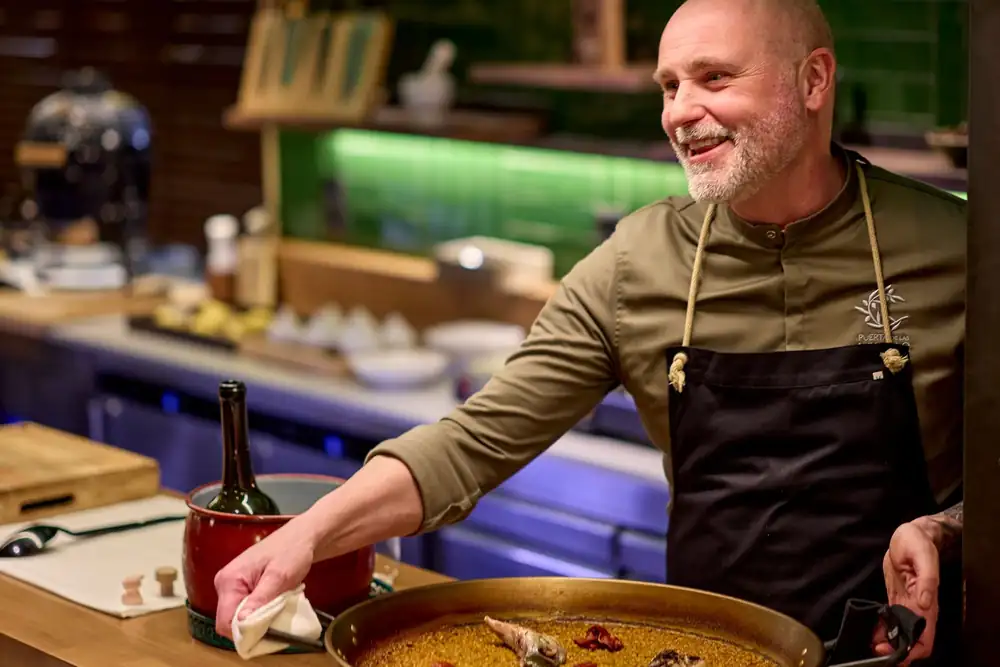
Barbecho, rice dishes by Rodrigo de la Calle for lunchtime at El Invernadero
An ideologue of gastrobotany (that is, the fusion of gastronomy and botany) and a pioneer for two decades of that vegetable cuisine that is currently triumphing in the world, the Madrid native Rodrigo de la Calle is considered one of the most important green chefs in the world, as evidenced by the recognition of his capital restaurant El Invernadero, which boasts a Michelin star, a green star and
What perhaps not everyone knows is that when De la Calle burst onto the Madrid culinary scene 20 years ago, just into his thirties and after having worked at some of the most prestigious restaurants in early 21st-century Spain (Goizeko Kabi, Mugaritz, Quique Dacosta's El Poblet, Martin Berasategui), his first restaurant, R. de la Calle, located in the beautiful and regal town of Aranjuez, achieved considerable renown thanks to his skill with rice dishes, which for a time were his calling card. Then, as fate would have it, in subsequent projects, rice dishes gradually gave way to vegetables until they finally found their home at El Invernadero.
But it is true that the chef has never completely forgotten them, as evidenced by the fact that in 2018 he opened Paella Power in the San Miguel Market, which has been the prelude to the project started in 2026, Barbecho, dedicated to the grain and which, from the very moment of its launch, promises to become one of the must rice restaurants in Madrid.
The name, taken from the rural world that De la Calle knows so well (his father was a farmer), alludes to the practice of alternating crops and rest on the same land, in this case, the same room. Because El Invernadero, which is only open in the evenings during the week (in two shifts, at 7 pm and 9:30 pm), becomes Barbecho (Fallow Land) at lunchtime from Tuesday to Friday, which, among other things, allows the space to be profitable, as these are not times for extravagance or lost profits…
Besides rescuing his rice-growing roots, Barbecho allows Rodrigo de la Calle to recover his innkeeper spirit: he is the one who, with great warmth and a touch of traditional humor, personally attends to customers behind the bar or at the tables, takes orders, gives suggestions, and resolves any doubts that customers may have.
Four starters, five rice dishes (with the option to order any rice dish you fancy when making your reservation), and two desserts make up a formula as simple as it is effective. It begins with a complimentary appetizer: kimchi with cream and napa cabbage, a perfect awakening for the taste buds. This is followed, as it should be in any self-respecting Levantine rice restaurant, by bread with a delicate aioli and tomato sauce. Dangerously addictive.
The playful starters, in order of disappearance as the master Abraham García would say, are a white prawn ceviche salad with 4 vinegars (two Japanese, one of chardonnay and another of rice) with chicory; a very potent (excessively potent) croquette of beef ribeye trimmings; unctuous artichokes from Tudela in pil-pil sauce and a fun version of the potato omelet, made as if it were a Japanese tamagoyaki (rolled omelet), with grated truffle and liquid yolk on top to give it a juicy, betta-like touch.
And then comes the rice. Prepared in diffusers installed in the kitchen, in the Alicante style, with flavorful stocks, not water. The dry rice with carabineros prawns and spinach, the one with amberjack belly and roasted peppers, and the oxtail with carrots are all very tempting. But with the option of ordering a chicken, rabbit, and snail rice that evokes the Alicante countryside, Pinoso and Xinorlet, there's no room for doubt.
Made with the Molina Roca Dynamite variety and polished to 44 percent, it arrives loose, whole, conveniently degreased, and generously filled with chunks of meat, including extra-large mountain peppers. A rice dish that even a die-hard Alicante native could find little to criticize… if anything at all.
After seconds of rice—the portions are thankfully generous—it's time to cleanse the palate with a bit of a very unusual Manchego cheese with a white rind and seaweed inside, accompanied by quince paste. And to top it all off, a truly spectacular dish that could easily be on the menu at El Invernadero: a fruit salad of mango and persimmon, elderflower liqueur, and bourbon with vanilla ice cream. The best dessert I've had in a long time.
There's little to say about the service, as it's the chefs themselves, as is typical in Rodrigo de la Calle's restaurants, who oversee the service, with the chef himself leading the way. As for the drinks, in addition to the seaweed beer from Muiño de El Espinar, there's a small but more than adequate selection of wines by the glass, including sparkling and fortified wines, which, in the opinion of many, myself included, are the best pairings for rice dishes. Guests can also bring their own wine for ten euros per person.
Rice dishes range in price from 30 to 40 euros per person, and the menu offers a set lunch menu that includes half portions of three of the starters (why not all four?), rice, dessert, water, and bread, for 85 euros. It's not exactly cheap, but the pleasure-to-price ratio (as the great Sacha would say) is more than fair. Among other things, because getting a good paella in Madrid isn't exactly an easy feat.